Robophilosophy 2026 kicked off on August 11, 2026, at University College Dublin (UCD) in Dublin, Ireland. Held under the theme „Connected Futures – Nature, Robots, and Society“, the conference runs from August 11–14 and brings together researchers from a wide range of disciplines to explore how robotics and artificial intelligence are transforming human societies and the natural world. On the first day, Prof. Dr. Oliver Bendel from the FHNW School of Business presented his paper „Towards a Discipline of Animal-Machine Interaction: Ethical and Design Challenges of Machines in Animal Habitats“ in the session „Environmental Robotics and Society“. From the abstract: „As autonomous and semi-autonomous machines such as robots and drones increasingly enter animal habitats, new ethical and conceptual challenges emerge. This article proposes animal-machine interaction (AMI) as a distinct discipline concerned with the design and governance of technologies operating in relation to animals. After clarifying core concepts and delineating AMI from related fields, the article highlights the role of machine ethics in developing animal-friendly systems. Selected application examples illustrate how machines can reduce negative impacts on animals and, in some cases, support animal survival through animal-friendly design. The ethical discussion addresses both opportunities and risks of technological intervention in animal habitats. It is becoming clear that AMI is an increasingly important field of research, but one that must remain open to critical reflection and reorientation.“ The proceedings, containing all conference papers, will be available in late 2026. For those who don’t want to wait: Oliver Bendel recently published a short book on animal-machine interaction with Springer.
The ACI 2026 International Conference will take place from December 2–5, 2026, on the FHNW campus in Brugg-Windisch, Switzerland, marking the first time the event is held in continental Europe. Registration is now open, with Early Bird rates available until September 30, 2026. The conference continues a tradition that has brought the Animal-Computer Interaction community to Glasgow, North Carolina, Newcastle, Bloomington, Milton Keynes, Haifa, and Atlanta, reinforcing its position as a leading venue for research at the intersection of animals and technology. As the field continues to grow, researchers and practitioners explore how technology shapes animals’ lives, welfare, cognition, and social dynamics while developing animal-centered systems and methods that embrace multispecies perspectives. The conference maintains its commitment to interdisciplinary collaboration across biology, technology, and cultural studies, supporting work that seeks to design ethically grounded, welfare-enhancing, and inclusive technological futures for all animals, humans included. ACI 2026 also features a Special Issue on Animal-Machine Interaction. The proceedings will be published in the ACM library. The conference will be hosted by Prof. Dr. Oliver Bendel, FHNW School of Business.
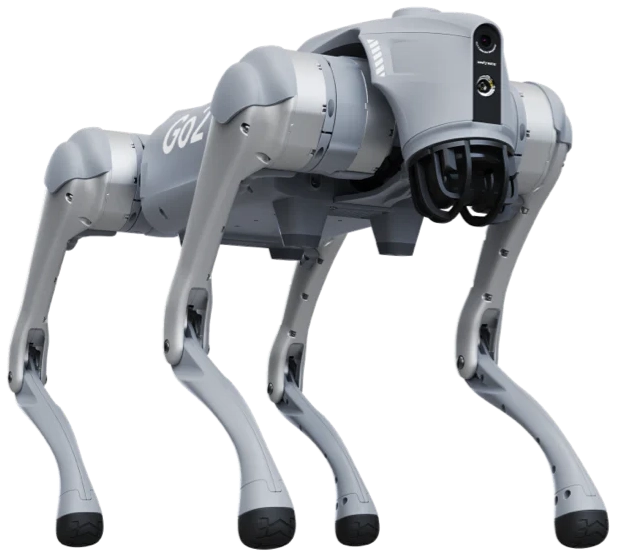
Im neuen Buch „Tier-Maschine-Interaktion“ von Oliver Bendel (Springer Gabler, 2026) werden zahlreiche Projekte vorgestellt, die Begegnungen zwischen Tieren und Robotern bzw. Drohnen zum Gegenstand haben. Dazu gehört die „Robodog“-Studie, die 2025 an der Hochschule für Wirtschaft FHNW durchgeführt wurde. Selina Rohr untersuchte, wie Haushunde auf den vierbeinigen Roboter Unitree Go2 – von Projektinitiator Oliver Bendel Bao genannt – reagieren und wie ihre Besitzer solche Roboter in gemeinsam genutzten öffentlichen Räumen wahrnehmen. Es zeigte sich, dass die meisten Hunde vorsichtig, aber nicht aggressiv waren. Das Interesse nahm zu, sobald sich der Roboter bewegte, während visuelle Modifikationen kaum Wirkung zeigten. Solche Projekte sind wichtig, weil Begegnungen zwischen Tieren und Robotern ständig zunehmen, in der Landwirtschaft, aber auch in Ballungsgebieten und Haushalten. Gerade erleben robotische Vierbeiner wie Spot und Unitree Go2 sowie robotische Zweibeiner wie Digit, Apollo, Figure 03 und NEO einen Boom, wobei letztere als Allzweckroboter vermarktet werden. Sie alle müssen nicht nur menschenfreundlich, sondern auch tierfreundlich gestaltet werden. Das Buch „Tier-Maschine-Interaktion“ kann über link.springer.com/book/10.1007/978-3-658-50921-7 heruntergeladen bzw. erstanden werden.
Oliver Bendel’s paper „Towards a Discipline of Animal-Machine Interaction“ has been accepted for presentation at Robophilosophy 2026. The renowned conference on the philosophical aspects of social robotics has been held since 2014 and will take place in Dublin this year. Autonomous and semi-autonomous machines such as robots and drones are increasingly moving into natural and urban environments, leading to a growing number of interactions between animals and machines and raising corresponding new ethical and conceptual challenges. This article proposes animal-machine interaction (AMI) as a distinct discipline concerned with the design and governance of machines that encounter animals. After clarifying core concepts and delineating AMI from related fields, the article highlights the role of machine ethics in developing animal-friendly systems. Selected application examples illustrate how machines can support animal survival and well-being, while the ethical discussion addresses both opportunities and risks of technological intervention in animal habitats. It is becoming clear that AMI is an increasingly important field of research, but one that must be constantly reoriented and questioned. Oliver Bendel has participated in the biennial conference series since 2018. That year, he delivered a keynote speech in Vienna alongside Hiroshi Ishiguro, Guy Standing, and Joanna Bryson. His book „Tier-Maschine-Interaktion“ („Animal-Machine Interaction“) was recently published by Springer Gabler.
Am 20. April 2026 ist das Buch „Tier-Maschine-Interaktion“ von Prof. Dr. Oliver Bendel bei Springer Gabler erschienen. Es gehört zur Essentials-Reihe, in der schmale Bücher (50 – 60 Seiten) erscheinen, in denen alles auf den Punkt gebracht wird. Das Forschungsfeld hat Überschneidungen mit der Tier-Computer-Interaktion (Animal-Computer Interaction). Man spricht auch von Animal-Machine Interaction. Aus dem Klappentext: „Dieses essential gibt eine kompakte Einführung in die Disziplin bzw. das Forschungs- und Anwendungsfeld der Tier-Maschine-Interaktion (TMI). Es zeigt, wie Tiere und Maschinen in unterschiedlichen Kontexten zusammentreffen und miteinander bestehen, welche Chancen und Risiken sich daraus ergeben und welche Perspektiven sich für Wissenschaft, Wirtschaft und Politik eröffnen. Ziel ist es, die Leser für die Potenziale und Herausforderungen der Tier-Maschine-Interaktion zu sensibilisieren, Orientierung im interdisziplinären Diskurs zu geben und Anregungen für Forschung, Entwicklung und Entscheidungsprozesse zu liefern.“ Oliver Bendel beschäftigt sich seit 2012 mit der Tier-Maschine-Interaktion und hat mehrere tierfreundliche Maschinen entwickelt. Dies ist nach zahlreichen Artikeln und Buchbeiträgen sein erstes Buch zu diesem Forschungsfeld. Es enthält zwei Abbildungen, drei Tabellen und mehrere Boxen mit Definitionen und Hintergrundinformationen. Es kann über link.springer.com/book/9783658509200 heruntergeladen bzw. erstanden werden.
A student at the University of Surrey proposed a fish-like robot called Gillbert in the context of a university robotics contest, suggesting a system that could move through water and capture microplastics using a gill-inspired filter. The concept was subsequently developed into a 3D-printed research prototype by a university team. The robot mimics fish locomotion via a flexible tail and is designed to collect particles of up to around 2 mm, primarily for monitoring and experimental purposes rather than large-scale cleanup. The project was published as open source. The idea follows earlier conceptual work such as the CLEANINGFISH design study by Prof. Dr. Oliver Bendel (2014), which envisioned small robotic fish operating individually or in swarms to remove plastic and debris from aquatic environments and transport it to collection points, including objects located on the ground. This concept was further examined in 2015 within a project at the University of Applied Sciences and Arts Northwestern Switzerland (FHNW), where increasing plastic pollution in seemingly clean waters and its ecological and human impact were analyzed. Oliver Bendel and his student concluded that robotic fish could interfere with aquatic life and were not sufficiently efficient for practical large-scale deployment, while also raising questions in machine and technology ethics. Gillbert can be understood as a contemporary experimental continuation of these earlier ideas under improved technological and collaborative conditions.
Ticro Goto ist Historiker und Ethnologe. Er studierte an der Kunsthochschule Kassel, der Freien Universität Berlin und der Humboldt-Universität zu Berlin. Zu seinen Veröffentlichungen zählen „Cyberfakte“ (2016), „Der Ewige Palast“ (2024) und „Kreativer Suizid: Rauchen, Hunger und die Lüge vom inneren Kind“. Er schreibt und forscht auch zu Schweinen und hat ihnen in seinem Buch „Seuchen“ ein ganzes Kapitel gewidmet. Mit Prof. Dr. Oliver Bendel war er im Gespräch über Tierethik, Maschinenethik und Tier-Maschine-Interaktion. Der Podcast erschien am 28. März 2026 auf kokos-und-zitrone.de. Zuletzt kamen dort Pero Mićić, Falco Aust und Gunter Dueck zu Wort. Auf seiner Website schreibt Ticro Goto: „Oliver Bendel und ich sprechen darüber, warum wir Maschinen bauen mussten, um zu beweisen, dass Tiere keine Maschinen sind. Über Mähroboter mit Gewissen und Schweine, die klüger sind als Hunde. Über KI, die Walgesang entschlüsselt und Fledertieren beim Streiten zuhört.“ Der Podcast mit dem Titel „Die Sprache der Tiere“ kann über kokos-und-zitrone.de/p/die-sprache-der-tiere angehört werden.
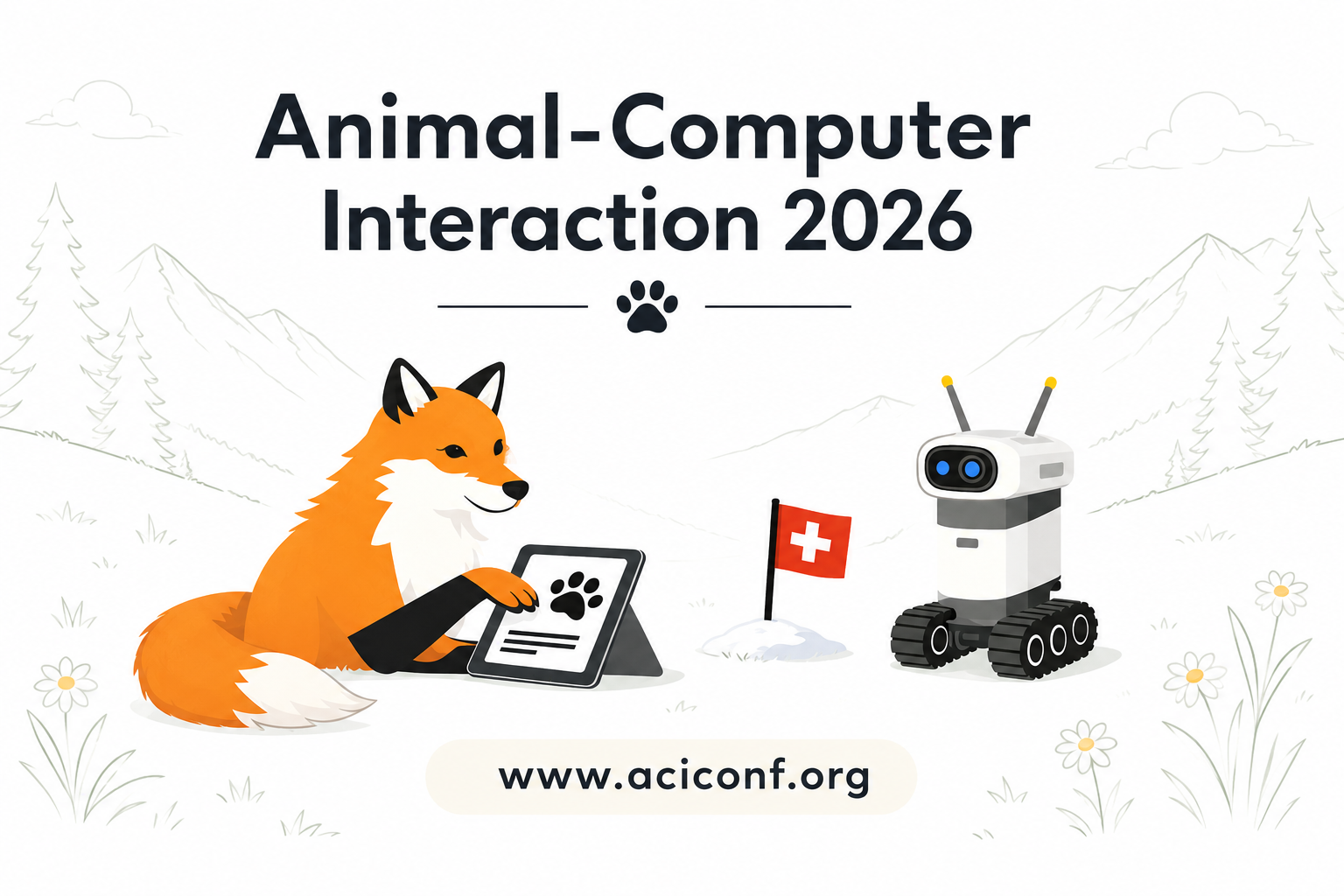
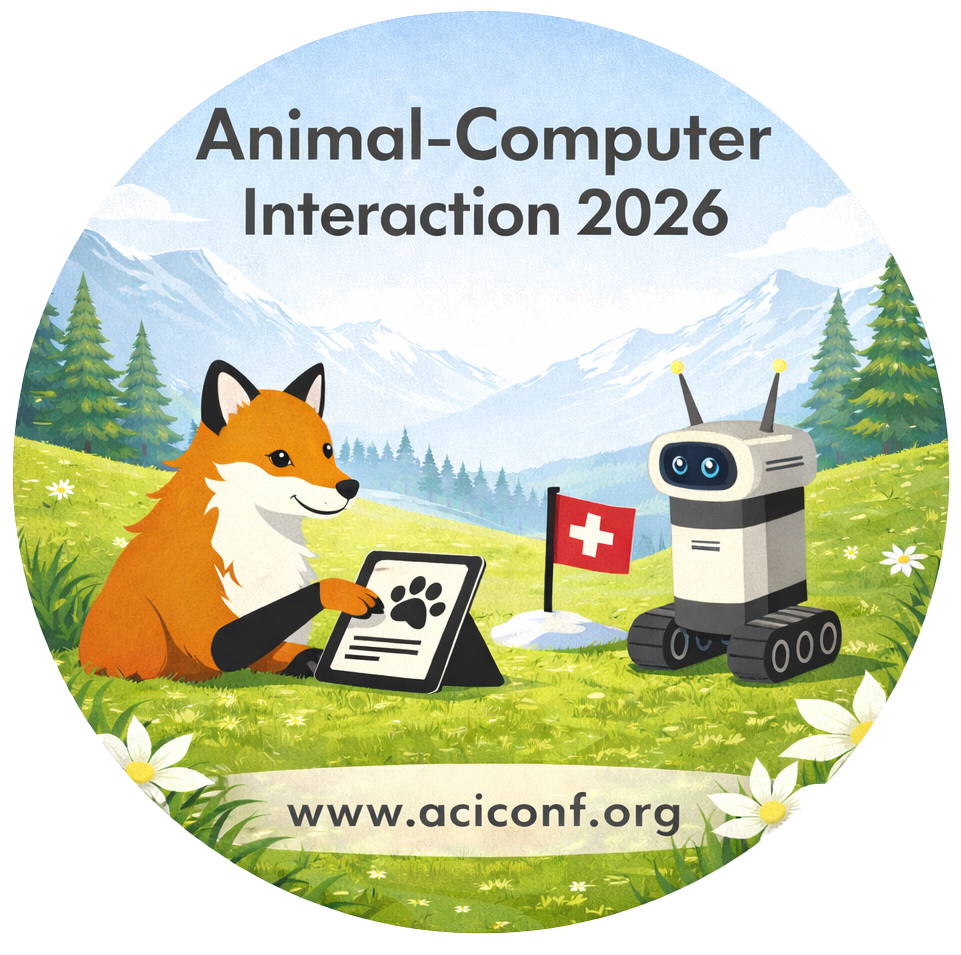
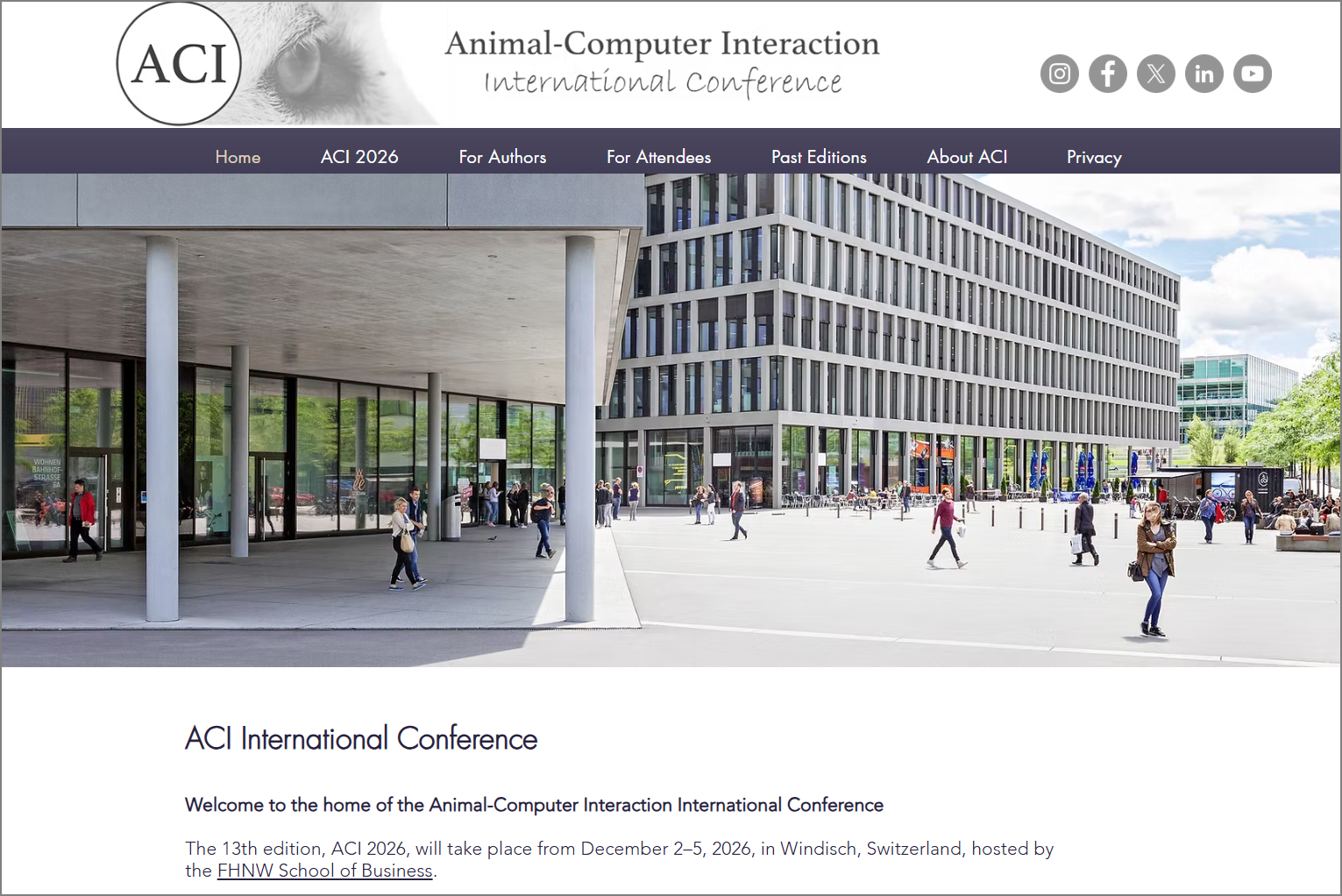
Prof. Dr. Oliver Bendel will host the next ACI Conference, bringing the event to continental Europe for the first time as it convenes on the FHNW campus in Brugg-Windisch, Switzerland, from December 2-5, 2026. The conference website is already online at www.aciconf.org, where the most important information is available; individual deadlines may still change. In the meantime, the website has been updated and expanded. It now includes visual elements that reference both the animal world of Switzerland and the thematic focus of the conference, strengthening its visual identity and contextual framing. Building on a tradition that has taken the community from Glasgow to North Carolina, Newcastle, Bloomington, Milton Keynes, Haifa, and Atlanta, this edition continues the conference’s role as a leading venue for advancing Animal-Computer Interaction. As the field grows, researchers and practitioners explore how technology shapes animals‘ lives, welfare, cognition, and social dynamics while developing animal-centered systems and methods that embrace multispecies perspectives. The conference maintains its commitment to interdisciplinary collaboration across biology, technology, and cultural studies, supporting work that seeks to design ethically grounded, welfare-enhancing, and inclusive technological futures for all animals, humans included. ACI 2026 will also feature a Special Issue on Animal-Machine Interaction, a research field shaped in important ways by Oliver Bendel. The conference proceedings will be published in a volume of a renowned organization, ensuring wide visibility and long-term accessibility for the contributions presented.
Prof. Dr. Oliver Bendel will host the next ACI Conference, bringing the event to continental Europe for the first time as it convenes on the FHNW campus in Brugg-Windisch, Switzerland, from December 2–5, 2026. The conference website is already online, and the most important information is available at www.aciconf.org; individual deadlines may still change. Building on a tradition that has taken the community from Glasgow to North Carolina, Newcastle, Bloomington, Milton Keynes, Haifa, and Atlanta, this edition continues the conference’s role as a leading venue for advancing Animal-Computer Interaction. As the field grows, researchers and practitioners explore how technology shapes animals’ lives, welfare, cognition, and social dynamics while developing animal-centered systems and methods that embrace multispecies perspectives. The conference maintains its commitment to interdisciplinary collaboration across biology, technology, and cultural studies, supporting work that seeks to design ethically grounded, welfare-enhancing, and inclusive technological futures for all animals, humans included. ACI 2026 will also feature a Special Issue on Animal-Machine Interaction, a research field shaped in important ways by Oliver Bendel. The proceedings will be published in a volume of a renowned organization.
Prof. Dr. Oliver Bendel will host the next ACI Conference, marking the first time the event comes to continental Europe as it convenes on the FHNW campus in Brugg-Windisch, Switzerland, from 2-5 December 2026. Building on a tradition that has taken the community from Glasgow to North Carolina, Newcastle, Bloomington, Milton Keynes, Haifa and Atlanta, this edition continues the conference’s role as the premier venue for advancing Animal-Computer Interaction. As the field grows, researchers and practitioners explore how technology shapes animals‘ lives, wellbeing, cognition and social dynamics while developing animal-centered systems and methods that embrace multispecies perspectives. The conference maintains its commitment to interdisciplinary collaboration across biology, technology and cultural studies, supporting work that seeks to design ethically grounded, welfare-enhancing and inclusive technological futures for all animals, humans included. The official conference website will go live in January 2026. Information on previous ACI conferences is available at www.aciconf.org.
Am 18. November 2025 hat Prof. Dr. Oliver Bendel bei Springer Gabler sein neues Manuskript abgegeben, am 26. November wurde es von der Lektorin abgenommen. Im Frühjahr 2026 erscheint das schmale Buch mit dem Titel „Tier-Maschine-Interaktion“. Am Anfang wird der Inhalt skizziert: „Dieses Essential gibt eine kompakte Einführung in die Disziplin bzw. das Forschungs- und Anwendungsfeld der Tier-Maschine-Interaktion (TMI). Es zeigt, wie Tiere und Maschinen in unterschiedlichen Kontexten zusammentreffen und miteinander bestehen, welche Chancen und Risiken sich daraus ergeben und welche Perspektiven sich für Wissenschaft, Wirtschaft und Politik eröffnen. Ziel ist es, die Leser für die Potenziale und Herausforderungen der Tier-Maschine-Interaktion zu sensibilisieren, Orientierung im interdisziplinären Diskurs zu geben und Anregungen für Forschung, Entwicklung und Entscheidungsprozesse zu liefern.“ Es ist das erste Buch zu diesem Thema. Es enthält zwei Abbildungen, drei Tabellen und mehrere Boxen mit Definitionen und Hintergrundinformationen.