Robotik und Künstliche Intelligenz sind im Mainstream angekommen. Jeder spricht über diese Disziplinen oder über ihren Gegenstand, also Roboter und künstliche Intelligenz. Dadurch ergeben sich Bedeutungsverschiebungen und Begriffsverwirrungen. So ist in den sozialen und klassischen Medien oft von KI die Rede, wenn eigentlich generative KI gemeint ist. Damit verbunden sind grundsätzliche Einschätzungen, die aber lediglich auf bestimmte KI-Systeme zutreffen. Weiterhin trifft man ständig auf „KI-Chatbots“. Allerdings basieren alle Chatbots auf Formen künstlicher Intelligenz. Früher gab es regelbasierte Systeme, heute setzt man vor allem auf ML- bzw. LLM-basierte (wobei „ML“ für „Machine Learning“ steht, „LLM“ für „Large Language Model“). Damit ist die alte Welt der symbolischen KI keineswegs untergegangen, denn man wendet Retrieval-Augmented Generation (RAG) an und greift manchmal auf regelbasierte Ansätze zurück. Fast ebenso beliebt ist der Begriff des humanoiden Roboters. Es handelt sich dabei eigentlich um menschenähnlich gestaltete sensomotorische Maschinen. Zu ihnen gehören soziale Roboter wie NAO, Pepper und Alpha Mini ebenso wie Modelle, die als Allzweckroboter vermarktet werden, etwa Digit, Apollo und Figure 03. Allzweckroboter sind in aller Regel humanoide Roboter, aber nicht alle humanoiden Roboter sind Allzweckroboter – und dennoch wird allenthalben so getan. Auch der Begriff der Humanoiden verbreitet sich. Dieser ist allerdings bereits belegt, er ist breiter angelegt, denn er bezeichnet sowohl menschenähnliche Artefakte als auch Lebewesen (Menschen, Vormenschen, fiktive Aliens wie die Vulkanier). Man darf immer neue Begriffe einführen, man darf alte umdeuten. Vorsicht ist jedoch geboten, wenn jahrzehntelange Bemühungen der Bestimmung und Klärung vorhanden sind und in den Fachgemeinschaften ein Konsens besteht. Man sorgt durch den unreflektierten Gebrauch nicht nur für Begriffsverwirrungen in der Gegenwart, sondern auch mit Blick in die Vergangenheit – ältere Texte werden mehr und mehr unverständlich, selbst wenn sie die Grundlagen von Robotik und Künstlicher Intelligenz darstellen.
„Physical AI ist die Verbindung von künstlicher Intelligenz (abgekürzt ‚KI‘, im Englischen ‚AI‘ von ‚Artificial Intelligence‘) mit physischen Systemen wie Kameras, Geräten, Anlagen, Drohnen, Robotern und selbstfahrenden Autos und Bussen. Sie ermöglicht diesen, komplexe Vorgänge in der physischen Welt wahrzunehmen, zu analysieren, zu evaluieren und auszuführen. Es geht nicht nur darum, teilautonome oder autonome Maschinen mit Hilfe von KI aufzuwerten und zu erweitern, wie im Falle von Gesichtserkennung, Gestikerkennung und Emotionserkennung oder von Chatbots für soziale Roboter, sondern darum, für die KI gleichsam einen Körper zu suchen, in dem sie sich entfalten und beweisen kann.“ Mit diesen Worten beginnt ein Artikel von Oliver Bendel, der am 16. Januar 2026 im Gabler Wirtschaftslexikon erschienen ist. Es werden technische Grundlagen erläutert, Beispiele für Lösungen gegeben und Anwendungsbereiche genannt: „Wearables, Wearable Robots und Wearable Social Robots können zu Inclusive AI und Inclusive Robotics beitragen, indem sie behinderte und beeinträchtigte Personen physisch und psychisch unterstützen.“ Am Ende erfolgt eine Einordnung aus Sicht von Informationsethik und KI-Ethik sowie Wirtschaftsethik. Der Artikel kann über wirtschaftslexikon.gabler.de/definition/physical-ai-177399 aufgerufen werden.
The article „Small Talk with a Robot Reduces Stress and Improves Mood“ by Katharina Kühne, Antonia L. Z. Klöffel, Oliver Bendel, and Martin H. Fischer was published on December 23, 2025. It is part of the volume „Social Robotics + AI: 17th International Conference, ICSR+AI 2025, Naples, Italy, September 10–12, 2025, Proceedings, Part III.“ From the abstract: „Research has demonstrated that social support is crucial in mitigating stress and enhancing mood. Not only do long-term, meaningful relationships contribute to well-being, but everyday social interactions, such as small talk, also offer psychological benefits. As social robots increasingly become more integrated into daily life, they present a potential avenue for stress interventions. In our online study, 98 participants underwent a stress induction using the Stroop task and were then assigned to one of three conditions: engaging in scripted small talk with a simulated NAO robot online, listening to a neutral story told by the same NAO robot, or no intervention (control condition). Results indicate that both interventions effectively reduced stress, with a tendency towards a stronger effect in the Small talk condition. Small talk not only helped maintain positive affect but also reduced negative affect. Notably, the benefits were more pronounced among individuals experiencing higher acute stress following the stress induction, but were less evident in those with chronically elevated stress levels. Furthermore, the effect of the intervention on stress reduction was mediated by changes in positive affect. These findings suggest that small talk with a social robot may serve as a promising tool for stress reduction and affect regulation.“ The first author, a researcher from the University of Potsdam, presented the paper on September 12, 2025, in Naples. It can be downloaded from link.springer.com/chapter/10.1007/978-981-95-2398-6_1.
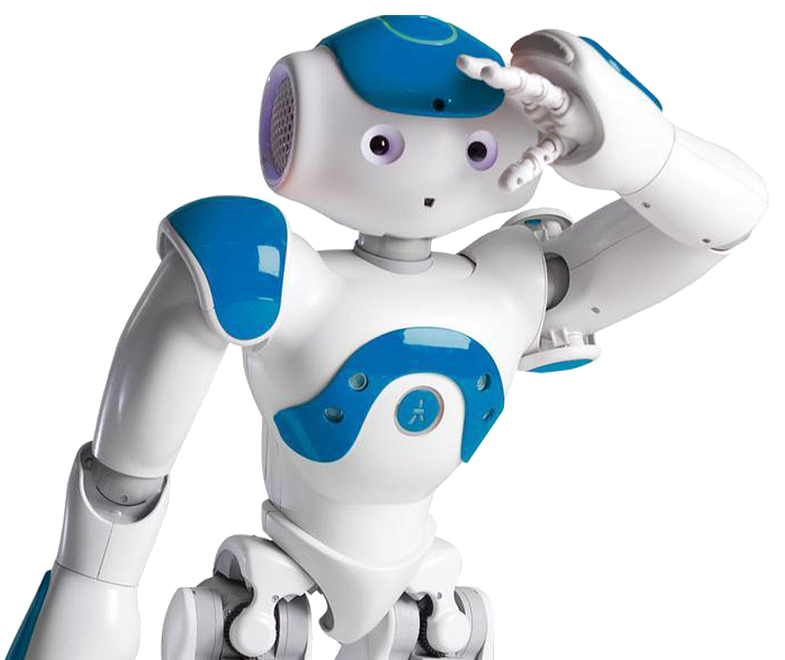
Fig.: A social robot (Photo: SoftyLomaco, Wikimedia, CC BY-SA 4.0)
The article „Wearable Social Robots in Space“ by Tamara Siegmann and Oliver Bendel was published on December 23, 2025. It is part of the volume „Social Robotics + AI: 17th International Conference, ICSR+AI 2025, Naples, Italy, September 10–12, 2025, Proceedings, Part I.“ From the abstract: „Social robots have been developed on Earth since the 1990s. This article shows that they can also provide added value in space – particularly on a manned flight to Mars. The focus in this paper is on wearable social robots, which seem to be an obvious type due to their small size and low weight. First, the environment and situation of the astronauts are described. Then, using AIBI as an example, it is shown how it fits into these conditions and requirements and what tasks it can perform. Possible further developments and improvements of a wearable social robot are also mentioned in this context. It becomes clear that a model like AIBI is well suited to accompany astronauts on a Mars flight. However, further developments and improvements in interaction and communication are desirable before application.“ The Swiss student presented the paper together with her professor on September 10, 2025, in Naples. It can be downloaded from link.springer.com/chapter/10.1007/978-981-95-2379-5_33.
The article „Wearable Social Robots for the Disabled and Impaired“ by Oliver Bendel was published on December 23, 2025. It is part of the volume “Social Robotics + AI: 17th International Conference, ICSR+AI 2025, Naples, Italy, September 10–12, 2025, Proceedings, Part III.“ From the abstract: „Wearable social robots can be found on a chain around the neck, on clothing, or in a shirt or jacket pocket. Due to their constant availability and responsiveness, they can support the disabled and impaired in a variety of ways and improve their lives. This article first identifies and summarizes robotic and artificial intelligence functions of wearable social robots. It then derives and categorizes areas of application. Following this, the opportunities and risks, such as those relating to privacy and intimacy, are highlighted. Overall, it emerges that wearable social robots can be useful for this group, for example, by providing care and information anywhere and at any time. However, significant improvements are still needed to overcome existing shortcomings.“ The technology philosopher presented the paper on September 12, 2025, in Naples. It can be downloaded from link.springer.com/chapter/10.1007/978-981-95-2398-6_8.
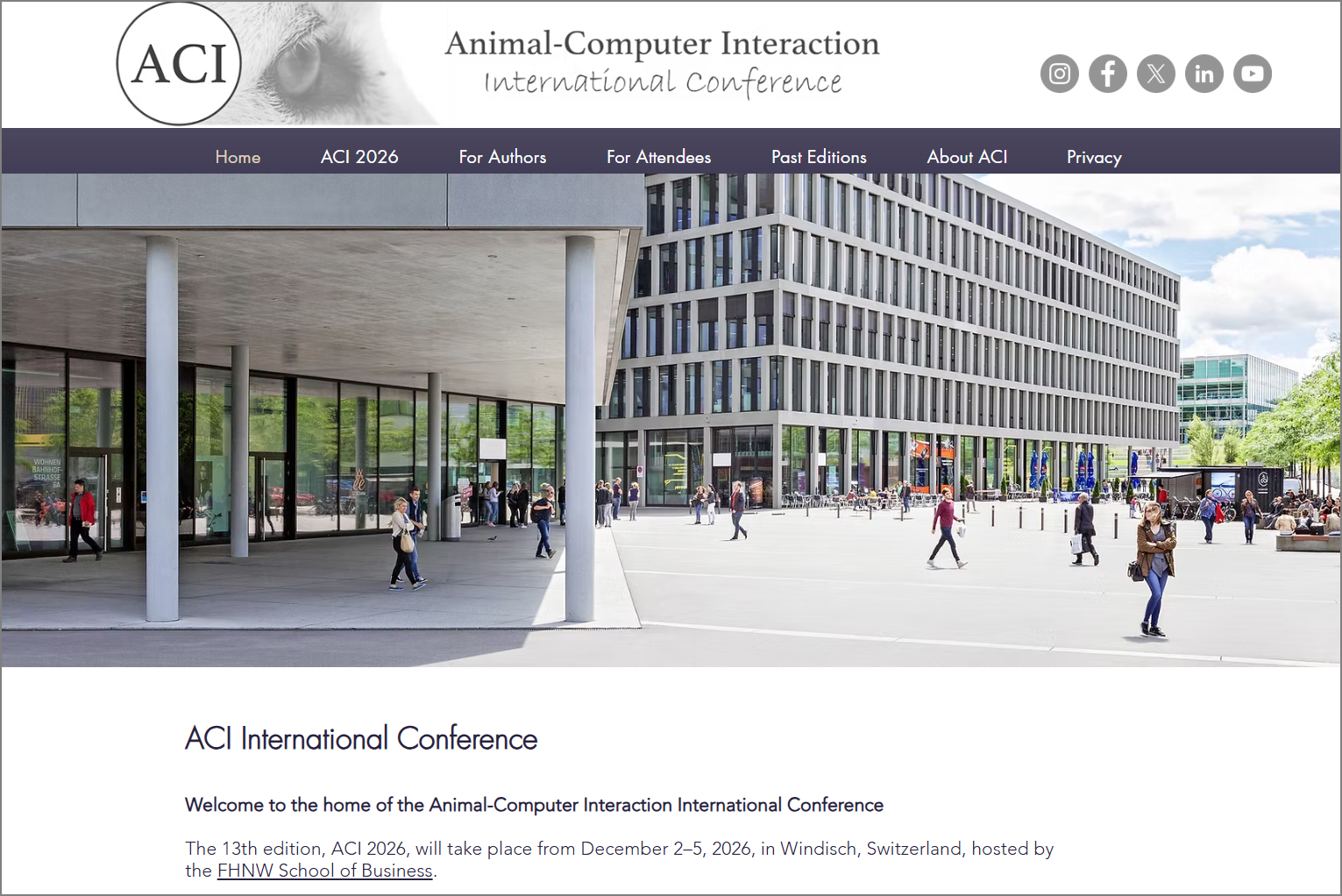
Prof. Dr. Oliver Bendel will host the next ACI Conference, bringing the event to continental Europe for the first time as it convenes on the FHNW campus in Brugg-Windisch, Switzerland, from December 2–5, 2026. The conference website is already online, and the most important information is available at www.aciconf.org; individual deadlines may still change. Building on a tradition that has taken the community from Glasgow to North Carolina, Newcastle, Bloomington, Milton Keynes, Haifa, and Atlanta, this edition continues the conference’s role as a leading venue for advancing Animal-Computer Interaction. As the field grows, researchers and practitioners explore how technology shapes animals’ lives, welfare, cognition, and social dynamics while developing animal-centered systems and methods that embrace multispecies perspectives. The conference maintains its commitment to interdisciplinary collaboration across biology, technology, and cultural studies, supporting work that seeks to design ethically grounded, welfare-enhancing, and inclusive technological futures for all animals, humans included. ACI 2026 will also feature a Special Issue on Animal-Machine Interaction, a research field shaped in important ways by Oliver Bendel. The proceedings will be published in a volume of a renowned organization.
From November 2025 to February 2026, Sahan Hatemo of the FHNW School of Computer Science, Dr. Katharina Kühne of the University of Potsdam, and Prof. Dr. Oliver Bendel of the FHNW School of Business are conducting a research study. As part of this project, they are launching a sub-study that includes a short computer-based task and a brief questionnaire. Participants are asked to listen to a series of laughter samples and evaluate whether each one sounds authentic or not. The task involves 50 samples in total and typically takes about ten minutes to complete. Participation is possible via PC, laptop, or smartphone. Before starting, participants should ensure that their device’s sound is turned on and that they are in a quiet, distraction-free environment. The computer-based task and the brief questionnaire can be accessed at research.sc/participant/login/dynamic/3BE7321C-B5FD-4C4B-AF29-9A435EC39944.
„In einer Zeit, in der technologische Innovationen rasant voranschreiten, ist es von zentraler Bedeutung, die gesellschaftlichen und politischen Implikationen von Künstlicher Intelligenz (KI) und Robotik im Kontext des Älterwerdens zu verstehen.“ Dies schreibt das Netzwerk für Senior-Internet-Initiativen (sii) Baden-Württemberg auf seiner Website und lädt im Rahmen eines offenen Seminars alle Interessierten ein, „die vielfältigen Chancen und Herausforderungen zu erkunden, die moderne Technologien für unsere Gesellschaft mit sich bringen“, und sich mit anderen Interessierten auszutauschen. Mitveranstalter sind Landeszentrale für politische Bildung Baden-Württemberg und ZAWiW der Universität Ulm. Zu den Referenten gehören Dr. Judith Schoch, Evangelische Heimstiftung („Innovation durch KI & Robotik in der Pflege“), und Prof. Dr. Oliver Bendel, Hochschule für Wirtschaft FHNW („Soziale Roboter, Assistenzroboter und Allzweckroboter in der Pflege“). Das Seminar „KI & Robotik im Alter“ findet vom 27. bis 29. Oktober 2025 im Haus auf der Alb in Bad Urach statt. Weitere Informationen über netzwerk-sii-bw.de/termin/ki-robotik-im-alter/.
Prof. Dr. Oliver Bendel war am 15. Oktober 2025 im Gespräch mit SRF. Es ging um die geplante Erotikfunktion von ChatGPT und überhaupt um die einseitigen Beziehungen, die Benutzer mit Chatbots haben. Er führte aus, dass es für OpenAI – abgesehen vom Finanzierungsbedarf – ein idealer Moment ist. Zum einen sind die Technologien weit entwickelt. Text- und Stimmqualität sind herausragend. Zum anderen ist der Bedarf da. Millionen von Benutzern führen schon einseitige Beziehungen mit Artefakten, viele davon glauben, dass sie ihre Freunde sind. Das 21. Jahrhundert, so der Technikphilosoph, ist das einsamste Jahrhundert aller Zeiten. Insofern könnte das Projekt ein Erfolg werden. Zugleich stellen sich Fragen. OpenAI gilt als hypermoralische Instanz, wo zahlreiche Prompts sanktioniert werden. In der Standardeinstellung im Deutschen gendert es. Wie sind angesichts solcher Umstände wirklich erotische Gespräche möglich? Sicher wird OpenAI seine Gängeleien ein Stück weit herunterfahren. Erwachsene sollen wie Erwachsene behandelt werden, sagte Sam Altman sinngemäß. Es ist interessant, dass dies erst im Adult-Modus umgesetzt wird. Das Interview wurde bei News Plus ausgestrahlt und kann über www.srf.ch nachgehört werden.
„Der Tag. Ein Thema, viele Perspektiven“ – das ist der Titel einer Serie bei hr2-kultur, einem Angebot des Hessischen Rundfunks. „Jeden Tag ein wichtiges Thema – von Montag bis Donnerstag. Eines, das Fragen aufwirft.“ (Website HR) „Der Tag“, so die Website, „sucht Antworten, beleuchtet Hintergründe und ordnet ein“ (Website HR). Am 30. September 2025 wurde der Beitrag „Immer menschlicher – Wie nah ist uns die KI?“ ausgestrahlt. Enthalten ist ein Gespräch mit Oliver Bendel. Es geht um Chatbots, Sprachassistenten und soziale Roboter. Mit Chatbots beschäftigt er sich seit den 1990er-Jahren. Schon damals testete er sie. Um die Jahrtausendwende promovierte er über pädagogische Agenten, also Chatbots und Sprachassistenten in Lernumgebungen. Auch Hardwareelemente waren damals teilweise vorhanden, etwa Systeme zur Gesichtserkennung. Ab 2012 wandte sich der Technikphilosoph, der nicht nur reflektiert, sondern auch implementiert, neuartigen Chatbots wie GOODBOT zu, die Probleme des Benutzers erkennen und auf mehreren Stufen eskalieren können – bis zur Herausgabe einer Notfallnummer. Der Prototyp war 2013 fertig. Der Nachfolger BESTBOT aus dem Jahre 2018 verwendete zusätzlich Gesichts- und Texterkennung mit Emotionserkennung. OpenAI hat damit begonnen, ähnliche Sicherheitsmerkmale in ChatGPT einzubauen. Der Beitrag kann über www.hr-inforadio.de/podcast/der-tag/index.html aufgerufen werden.
Abb.: Oliver Bendel am Campus Brugg-Windisch (Foto: Jork Weismann)
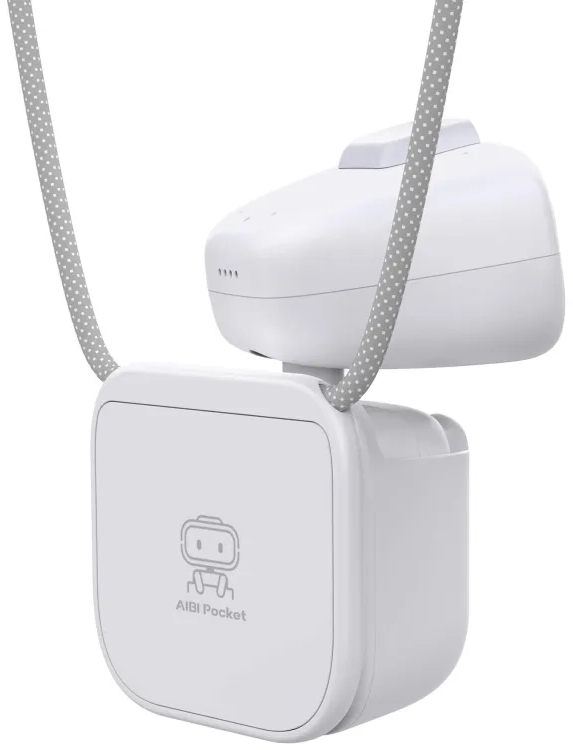
Wearable Social Robots sind sehr kleine und zugleich äußerst leistungsfähige Systeme, die um den Hals, am Körper oder in einer Schulter- oder Handtasche getragen werden. Sie sind nicht nur Begleiter des Menschen, sondern werden ein Teil von ihm, indem sie seine Sinne und Ausdrucksmöglichkeiten erweitern. Der Artikel mit dem Titel „Dieser Roboter steht Ihnen aber gut!“ (Untertitel „Über das Phänomen der Wearable Social Robots“) von Oliver Bendel definiert den Begriff der Wearable Social Robots, stellt Anwendungsbereiche vor und erörtert soziale sowie ethische Herausforderungen. Zudem werden Empfehlungen für Entwickler und Benutzer gegeben. Es wird deutlich, dass Wearable Social Robots neuartige Werkzeuge sowie Erweiterungen oder Verbesserungen des Menschen darstellen, deren Möglichkeiten über jene von Apps auf Smartphones hinausgehen. Der Artikel ist am 25. September 2025 in Wiley Industry News erschienen, nicht nur in deutscher, sondern auch in englischer Sprache.
Abb.: AIBI mit Halskette von hinten (Foto: LivingAI)
Am 11. September 2025 ist eine Playboy Special Edition erschienen. Sie liegt bei der Ausstellung „SEX NOW“ aus, die vom 5. September 2025 bis zum 3. Mai 2026 im NRW-Forum Düsseldorf stattfindet, und kann am Kiosk und im Onlineshop bezogen werden. In „Große Kunst im Playboy“ findet sich eine „kleine Schau bedeutender bildnerischer Künstlerinnen und Künstler und ihrer Werke im Zeichen des Hasen“. Gezeigt werden Aktaufnahmen von Dalí bis Warhol. „Die Tabulose“ ist Beate Uhse, die laut Playboy „die sexuelle Revolution zur deutschen Normalität“ machte. Das Magazin bringt eine „Ode an eine Aufklärerin und Geschäftsfrau“. „Unser zweitbester Freund“ ist der Vibrator, dessen Kulturgeschichte „mehr über das Verhältnis zwischen den Geschlechtern“ erzähle „als jedes soziologische Lehrbuch“. In einem vierseitigen Beitrag ist ein dreiseitiges Interview mit Oliver Bendel abgedruckt, Technikphilosoph aus Zürich. Im Inhaltsverzeichnis werden in diesem Zusammenhang „Sexgeräte“ erwähnt. Es geht um manchmal aufregende, stets einseitige Beziehungen mit Chatbots, Liebespuppen und Sexrobotern. Weitere Informationen zum Heft sind über www.playboy.de erhältlich, weitere Informationen zur Ausstellung über www.nrw-forum.de/ausstellungen/sex-now.
Am 10. September 2025 präsentierten Tamara Siegmann und Oliver Bendel ihr Paper „Wearable Social Robots in Space“ während der Postersession der ICSR, einer der führenden Konferenzen für Soziale Robotik weltweit. Die 17. Ausgabe fand vom 10. bis 12. September 2025 in Neapel statt. Der Begriff der Wearable Social Robots wurde von Oliver Bendel in seinem Artikel „Wearable Robots“ und in seinem Paper „Wearable Social Robots for the Disabled and Impaired“ (beide aus dem Jahre 2025) eingeführt. Dabei handelt es sich um soziale Roboter mit Merkmalen von Wearables und Wearable Robots. Ein Beispiel ist AIBI von LivingAI. Tamara Siegmann und Oliver Bendel, beide von der Hochschule für Wirtschaft FHNW, untersuchten die Möglichkeiten des Einsatzes tragbarer sozialer Roboter bei einer Marsmission. Sie zeigten, dass diese Roboter nützlich für die Unterstützung im Alltag, betriebliche Assistenz, Unterstützung im Bereich der Intimität, Verbesserung der Kommunikation und soziale Förderung sind. Dies ist vermutlich die erste Studie dieser Art. Es kann jedoch auf mehrere Projekte verwiesen werden, die humanoide und soziale Roboter für Raumfahrtmissionen beinhalten. Das Poster kann hier heruntergeladen werden.
Abb.: Wearable Social Robots können Astronauten helfen
Verschiedene Vorfälle haben OpenAI sensibilisiert. ChatGPT reagiert auf Inhalte, in denen Selbstmord- oder Selbstverletzungsabsichten oder andere Probleme auftreten. Es wird folgende Meldung eingeblendet: „Es klingt, als hättest du gerade viel zu tragen, aber du musst da nicht alleine durch. Unterstützung findest du hier.“ Bereits der GOODBOT von 2013, ein No-Budget-Projekt an der Hochschule für Wirtschaft FHNW, initiiert von Oliver Bendel, verfügte über ein solches Hilfesystem. Er eskalierte auf mehreren Stufen. Auf der höchsten analysierte er die IP-Adresse und gab eine passende Notfallnummer heraus. Damals hatte vermutlich nur ein einziges anderes System diese Option: SGT STAR von der US Army, ein millionenschweres Projekt. Allerdings konnte er lediglich mit einer nationalen Notfallnummer aufwarten, mit der man in anderen Ländern kaum etwas anfangen konnte. Inzwischen gibt es Dienste, die eine passende Helpline vermitteln, wo immer man sich gerade befinden mag. Genau darauf verweist ChatGPT. Was die Analyse der Inhalte angeht, ist ChatGPT erstaunlich schwach. In einem Test wurde ein Artikel von 2013 zum GOODBOT hochgeladen, mit der Bitte, einen Abstract zu erstellen. Dies geschah zunächst, dann wurde der Abstract wieder entfernt und die oben genannte Meldung eingeblendet. Auch sprachlich gibt es Luft nach oben. Der Satz „Es klingt, als hättest du gerade viel zu tragen …“ klingt in keiner Weise natürlich.
On September 4, 2025, the Association for the Advancement of Artificial Intelligence (AAAI) announced the continuation of the AAAI Spring Symposium Series. The symposium will be held from April 7–9, 2026, at the Hyatt Regency San Francisco Airport in Burlingame, California. The call for proposals for the symposium series is available on its website. According to the organizers, proposals are due October 24, 2025, and early submissions are encouraged. „The Spring Symposium Series is an annual set of meetings run in parallel at a common site. It is designed to bring colleagues together in an intimate forum while at the same time providing a significant gathering point for the AI community. The two and one-half day format of the series allows participants to devote considerably more time to feedback and discussion than typical one-day workshops. It is an ideal venue for bringing together new communities in emerging fields.“ (AAAI website). As was the case this year, the Spring Symposium Series will once again not be held on the Stanford University campus. For many years, the History Corner served as the traditional venue for the event. Efforts to secure an alternative university location in the Bay Area have been unsuccessful. AAAI should seriously consider returning to Stanford in 2027. Only then can the Spring Symposium Series regain the atmosphere and significance it once enjoyed.
Zum Projekt VISUAL liegt seit 29. August 2025 ein Video vor, das das System im Betrieb zeigt. „VISUAL“ steht für „Virtual Inclusive Safaris for Unique Adventures and Learning“. Überall auf der Welt gibt es Webcams, die wilde Tiere zeigen. Sehende können sie nutzen, um bequem vom Sofa aus auf Foto- bzw. Videosafari zu gehen. Blinde und sehbehinderte Menschen sind dabei im Nachteil. Im Projekt wurde im Rahmen von Inclusive AI ein Prototyp speziell für sie entwickelt. Es werden weltweit öffentliche Webcams angezapft, die auf Wildtiere gerichtet sind. Man kann sich zwischen mehreren Lebensräumen auf dem Boden oder im Wasser entscheiden. Zudem kann man „Adult“ oder „Child“ als Profil und eine Rolle („Safari Adventurer“, „Field Scientist“, „Calm Observer“) auswählen. Wenn man das Livevideo aufruft, werden drei Screenshots angefertigt und zu einem Bündel zusammengefügt. Dieses wird von GPT-4o, einem MLLM, analysiert und evaluiert. Der Benutzer bekommt dann die Beschreibung der Szene und der Aktivitäten vorgesprochen. Das Projekt dürfte eines der ersten sein, das Inclusive AI mit neuen Ansätzen der Animal-Computer Interaction (ACI) verbindet. Das Video kann über www.informationsethik.net/videos/ abgerufen werden.