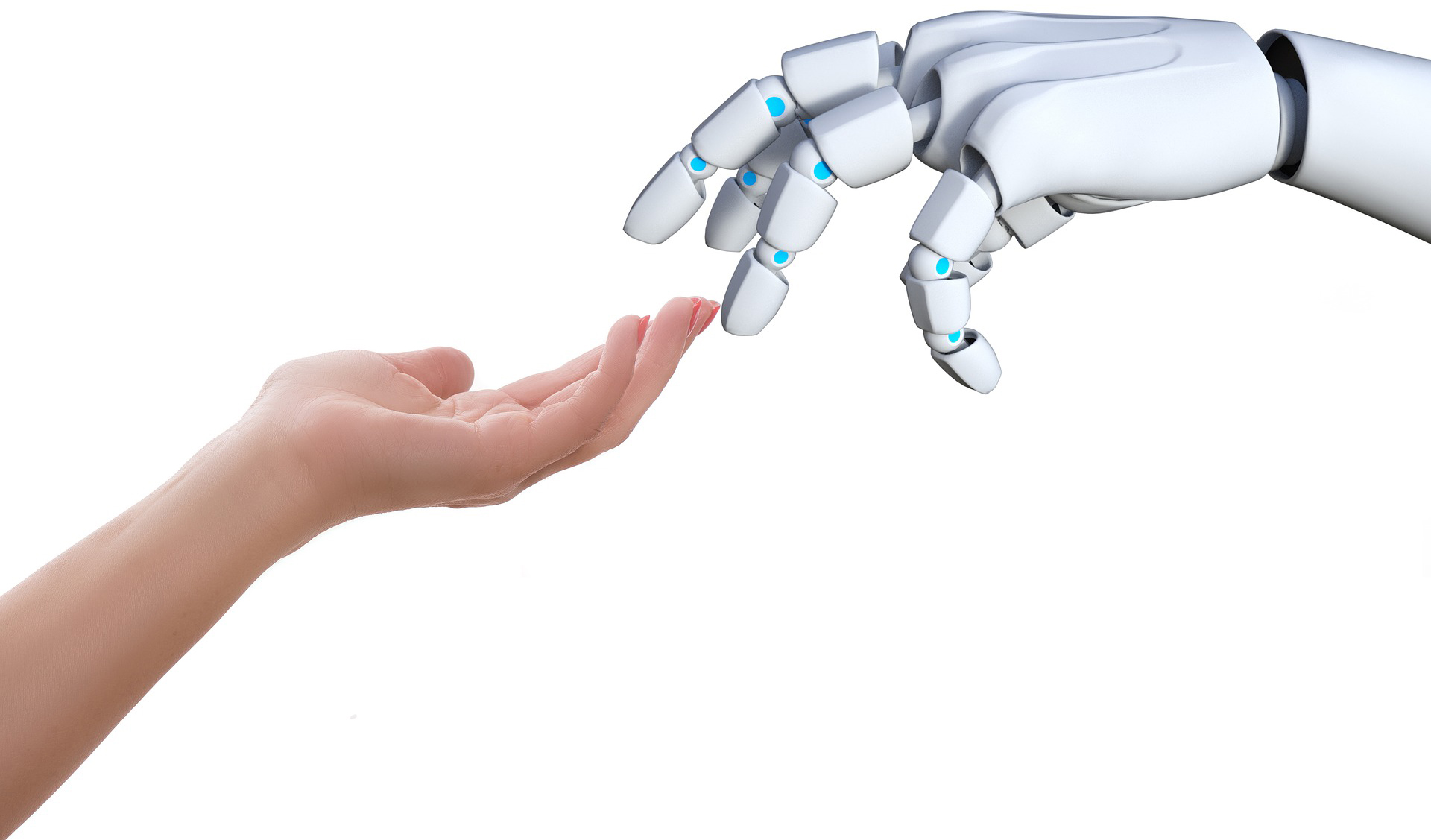
Am Buch „Soziale Roboter“ (Hrsg. Oliver Bendel) haben zahlreiche führende Experten und hochbegabte Nachwuchswissenschaftler mitgewirkt. Von Katharina Weitz stammt die Abhandlung „Vertrauen und Vertrauenswürdigkeit bei sozialen Robotern: Stärkung von Mensch-Roboter-Vertrauensbeziehungen mithilfe Erklärbarer Künstlicher Intelligenz“. Aus dem Abstract: „Dieses Kapitel befasst sich mit der Vertrauensbeziehung zwischen Menschen und sozialen Robotern, stellt doch Vertrauen einen wichtigen Bestandteil für die Akzeptanz sozialer Roboter dar. Ausgehend von den Merkmalen sozialer Interaktionen zwischen Mensch und Roboter wird ein Überblick über verschiedene Definitionen von Vertrauen in diesem Kontext gegeben. Zudem werden theoretische Vertrauensmodelle und praktische Möglichkeiten der Erfassung von Vertrauen skizziert sowie der Vertrauensverlust als Folge von Roboterfehlern betrachtet. Es wird beleuchtet, wie Erklärbare Künstliche Intelligenz helfen kann, eine transparente Interaktion zwischen Roboter und Mensch zu ermöglichen und dadurch das Vertrauen in soziale Roboter (wieder-)herzustellen. Insbesondere wird auf die Gestaltungsmöglichkeiten und Herausforderungen beim Einsatz von Erklärungen im Bereich der Robotik eingegangen.“ Ausführungen zur Wirkung, die Erklärungen von Robotern auf die mentalen Modelle von Nutzern und Nutzerinnen haben, bilden den Abschluss des Kapitels. Das Werk ist Anfang November 2021 erschienen und kann über link.springer.com/book/10.1007/978-3-658-31114-8 bezogen werden.
Abb.: Stärkung von Mensch-Roboter-Vertrauensbeziehungen
Gesichtserkennung ist eine problematische Technologie, vor allem wenn sie für die Überwachung von Menschen eingesetzt wird. Sie hat allerdings auch Potenzial, etwa mit Blick auf die Erkennung von (Individuen von) Tieren. Prof. Dr. Oliver Bendel hatte 2021 an der Hochschule für Wirtschaft FHNW das Thema „ANIFACE: Animal Face Recognition“ ausgeschrieben und die Wahl gelassen, ob es um Wölfe oder Bären gehen sollte. Ali Yürekkirmaz nahm den Auftrag an und konzipierte in seiner Abschlussarbeit ein System, mit dem man in den Alpen – ohne elektronische Halsbänder oder implantierte Microchips – einzelne Bären identifizieren und entsprechende Maßnahmen einleiten könnte. Es stehen, so die Idee, in bestimmten Gebieten entsprechende Kamera- und Kommunikationssysteme bereit. Wenn ein Bär identifiziert ist, wird eruiert, ob er als harmlos oder gefährlich gilt. Dann werden die zuständigen Stellen oder direkt die Betroffenen informiert. Spaziergänger können vor den Aufnahmen gewarnt werden – es ist aber auch technisch möglich, ihre Privatsphäre zu schützen. In einem Expertengespräch mit einem Vertreter von KORA konnten wichtige Erkenntnisse zur Wildtierbeobachtung und speziell zur Beobachtung von Bären gewonnen werden, und eine Umfrage hat die Haltung von Teilen der Bevölkerung in Erfahrung gebracht. Aufbauend auf der Arbeit von Ali Yürekkirmaz, die im Januar 2022 abgegeben wurde, könnte ein Algorithmus für Bären entwickelt und ein ANIFACE-System in den Alpen implementiert und evaluiert werden.
Ein österreichisches Produktions- und Fernsehteam hat Ende 2021 und Anfang 2022 für ORF 2 einen Film über Roboter und insbesondere soziale Roboter gedreht. Die Sendung mit dem Namen „Der neue Gott“ wird im Januar oder Februar 2022 ausgestrahlt. Ein Teil der Dreharbeiten fand am 8. November 2021 an der Hochschule für Wirtschaft FHNW in Olten statt. Der Informations- und Maschinenethiker Prof. Dr. Oliver Bendel und seine ehemalige Masterstudentin Liliana Margarida Dos Santos Alves standen Rede und Antwort zur Sozialen Robotik, zur Roboterethik und zur Maschinenethik. Sie demonstrierten Roboter und Artefakte wie Cozmo, Hugvie, QTrobot, Pepper und NAO. Ebenfalls gefilmt wurden Studentinnen und Studenten des Wahlmoduls „Soziale Roboter“. Oliver Bendel glaubt weder an alte noch an neue Götter. Für ihn sind soziale Roboter in technischer und gestalterischer Hinsicht reizvoll. Es gilt, sie zu entwickeln, einzusetzen und zu testen. Manche von ihnen wird man brauchen, andere nicht. Der Trailer kann über vimeo.com/665951498 aufgerufen werden.
Zahlreiche führende Experten und hochbegabte Nachwuchswissenschaftler haben am Buch „Soziale Roboter“ mitgewirkt. Von Kerstin Fischer stammt die Abhandlung „Geräusche, Stimmen und natürliche Sprache: Kommunikation mit sozialen Robotern“. Aus dem Abstract: „Dieser Beitrag gibt einen Überblick über Forschungsarbeiten zu unwillkürlichen Geräuschen von sozialen Robotern, zu nichtsprachlichen, aber kommunikativen Äußerungen, Roboterstimmen, Sprechstilen und schließlich zur natürlichsprachlichen Interaktion mit sozialen Robotern. Während die durch Motoren, Servos und andere technische Elemente verursachten Geräusche meist nicht als eher störend eingeschätzt werden, werden andere Geräusche von Robotern als kommunikativ angesehen und grundsätzlich auf der Basis von Prinzipien, die die menschliche Interaktion bestimmen, interpretiert. Dies betrifft auch den natürlichsprachlichen Dialog mit Robotern, abhängig davon, ob sich die Nutzer überhaupt auf die soziale Interaktion mit Robotern einlassen.“ Das von Oliver Bendel herausgegebene Werk ist Anfang November 2021 erschienen und kann über link.springer.com/book/10.1007/978-3-658-31114-8 bezogen werden.
Abb.: Geräusche und Töne sind wichtig in der Kommunikation
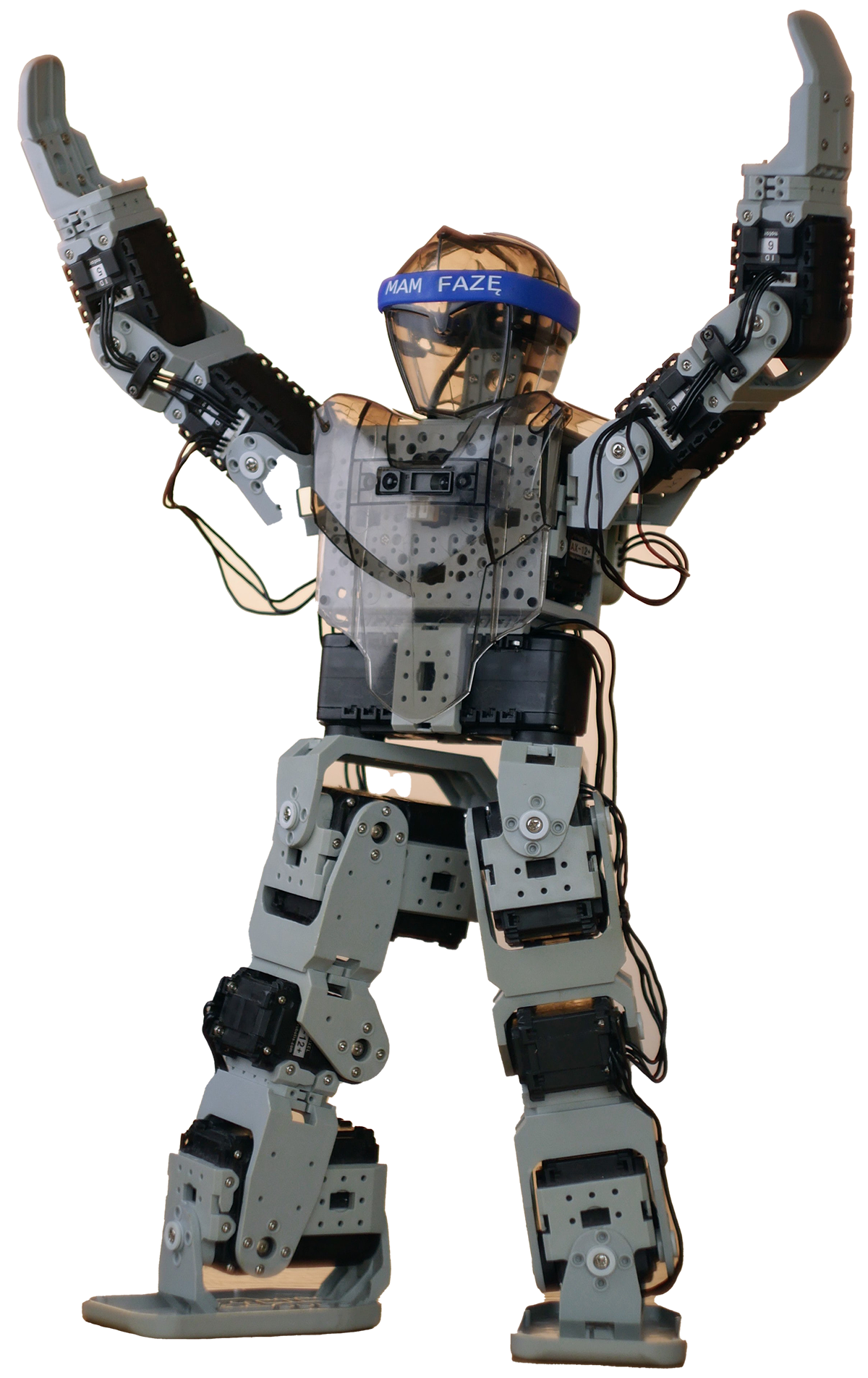
Insgesamt 30 Beiträge enthält der von Oliver Bendel herausgegebene Springer-Band „Soziale Roboter“, wenn man das Vorwort mitzählt. Von Felix Lindner stammt die Abhandlung „Soziale Robotik und KI: Wie sich Roboter autonom nach Werten und Normen verhalten können“. Aus dem Abstract: „Während im öffentlichen Diskurs Künstliche Intelligenz und Robotik häufig ganz selbstverständlich zusammengedacht werden, haben sich historisch zwei separate Disziplinen entwickelt: die Künstliche Intelligenz beschäftigt sich mit der Formalisierung und Algorithmisierung von Schlussfolgern und Problemlösen, und die Robotik befasst sich mit der maschinellen Wahrnehmung der Umwelt sowie der autonomen Ausführung von Handlungen. In diesem Kapitel wird die Soziale Robotik als ein Bindeglied zwischen den beiden Disziplinen aufgefasst. Soziale Roboter sind Roboter, die sich nach den Werten und Normen des sozialen Miteinanders richten. Damit dies möglich wird, müssen Verfahren aus der Robotik um eine soziale Dimension erweitert werden. Eine Möglichkeit besteht darin, Techniken aus der Künstlichen Intelligenz zu verwenden, um soziale Werte und Normen explizit zu modellieren. Der Beitrag thematisiert das sogenannte Value-Alignment-Problem in der Künstlichen Intelligenz im Allgemeinen und demonstriert anhand von sozialer Roboter-Navigation im Speziellen, wie Techniken aus der Künstlichen Intelligenz für die Soziale Robotik genutzt werden können, damit Roboter ihre Handlungen nach menschlichen Werten und Normen ausrichten.“ Das Buch ist Anfang November 2021 erschienen und kann über link.springer.com/book/10.1007/978-3-658-31114-8 bezogen werden.
Abb.: Verhält sich dieser Roboter nach Werten und Normen?
The paper „The SPACE THEA Project“ by Martin Spathelf and Oliver Bendel was accepted at the AAAI 2022 Spring Symposia (Stanford University). The two authors will present it at the end of March 2022 at the symposium „How Fair is Fair? Achieving Wellbeing AI“. From the abstract: „In some situations, no professional human contact can be available. Accordingly, one remains alone with one’s problems and fears. A manned Mars flight is certainly such a situation. A voice assistant that shows empathy and assists the astronauts could be a solution. In the SPACE THEA project, a prototype with such capabilities was developed using Google Assistant and Dialogflow Essentials. The voice assistant has a personality based on characteristics such as functional intelligence, sincerity, creativity, and emotional intelligence. It proves itself in seven different scenarios designed to represent the daily lives of astronauts, addressing operational crises and human problems. The paper describes the seven scenarios in detail, and lists technical and conceptual foundations of the voice assistant. Finally, the most important results are stated and the chapters are summarized.“ More information about the AAAI 2022 Spring Symposia is available here.
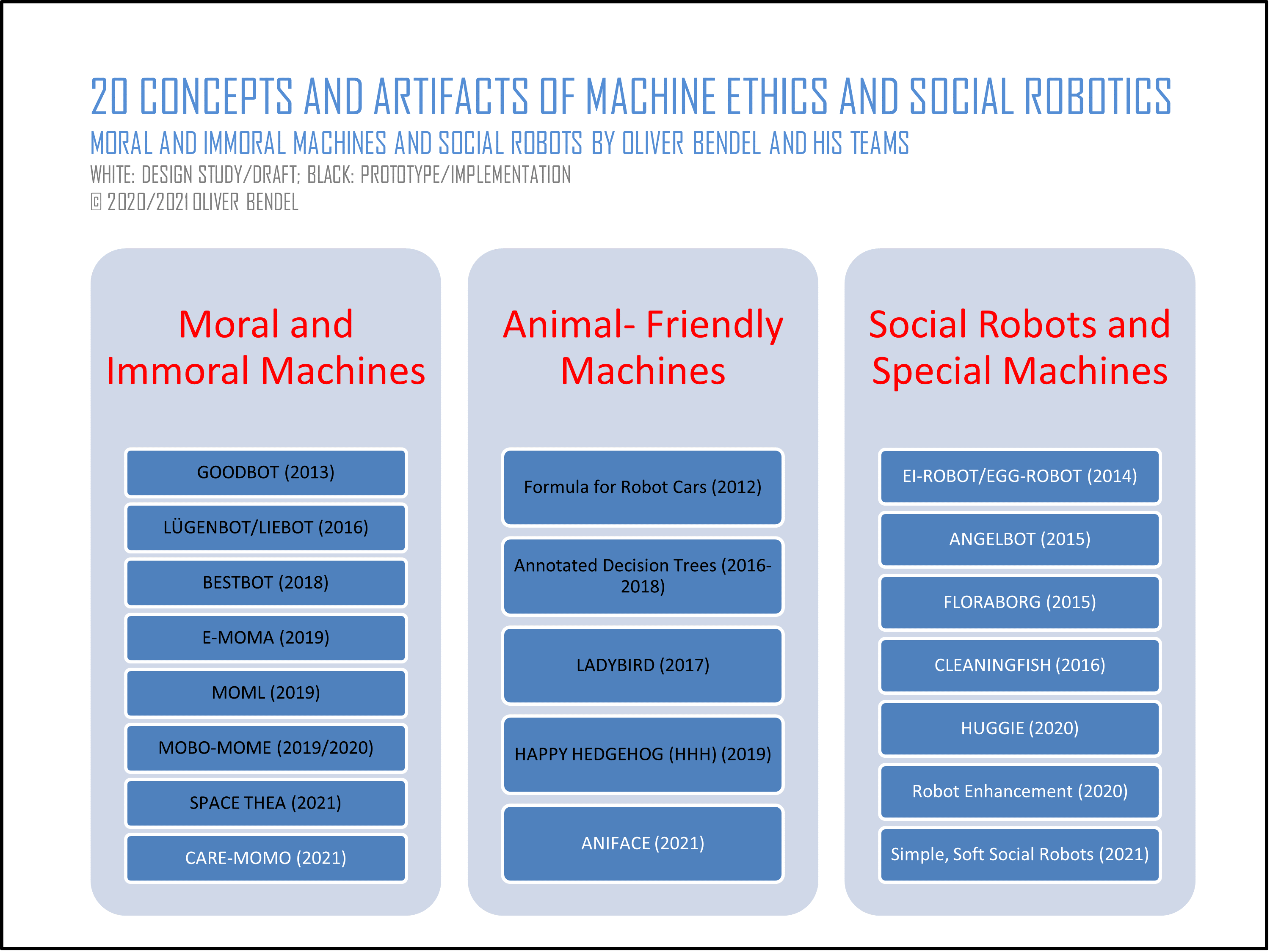
Seit 2012 wurden von Prof. Dr. Oliver Bendel 20 Konzepte und Artefakte der Maschinenethik und der Sozialen Robotik skizziert. Elf Artefakte wurden umgesetzt, darunter LADYBIRD, der tierfreundliche Saugroboter, HAPPY HEDGEHOG, der tierfreundliche Rasenmähroboter, GOODBOT und BESTBOT mit ihrer Fähigkeit, Probleme des Benutzers zu erkennen und adäquat darauf zu reagieren, und LIEBOT, der Chatbot, der systematisch lügen kann. Einige von ihnen haben es zu einer gewissen Bekanntheit gebracht und wurden auf internationalen Konferenzen und in internationalen Medien vorgestellt. Ethik muss nicht unbedingt das Gute hervorbringen, ist der Informations- und Maschinenethiker überzeugt. Sie sollte das Gute und das Böse erforschen und wie jede Wissenschaft dem Erkenntnisgewinn dienen. Entsprechend baut er sowohl moralische als auch unmoralische Maschinen. Die unmoralischen behält er aber in seinem Lab. Das zwölfte Artefakt – ein Prototyp aus dem Bereich der „simple, soft social robots“ – wird noch nicht im laufenden Projekt des Jahres 2021, aber vermutlich in einem darauffolgenden Projekt im Jahre 2022 umgesetzt. Mit den 20 Konzepten und Artefakten ist die Hochschule weltweit eine der aktivsten in der Maschinenethik.
Die Zeitschrift für Berufs- und Wirtschaftspädagogik widmet sich im Sommer 2021 dem Thema „Künstliche Intelligenz in der beruflichen Bildung: Zukunft der Arbeit und Bildung mit intelligenten Maschinen?!“. Herausgegeben wird das Sonderheft von Prof. Dr. Sabine Seufert und ihren Kollegen. In der Verlagsinformation heißt es: „Die Autorinnen und Autoren reflektieren kritisch die Auswirkungen der KI auf die berufliche Bildung. In einem ersten Teil untersuchen sie die Implikationen von KI auf gewerblich-technische Berufe, Industrieberufe, IT-Berufe und Pflegeberufe. In einem zweiten Teil widmen sie sich Forschungsrichtungen zur KI in der Berufsbildung – von der Individualisierung durch Hybrid Intelligence über Learning Analytics, Augmented Reality und Virtual Reality bis zur beruflichen Rehabilitation und Lernortkooperation.“ (Information Franz Steiner Verlag) Der Beitrag von Prof. Dr. Oliver Bendel trägt den Titel „Strukturelle und organisationale Rahmenbedingungen für den Einsatz von Pflegerobotern“. Das Heft kann über elibrary.steiner-verlag.de/book/99.105010/9783515130752 bestellt werden. Eine Leseprobe ist hier erhältlich.
Abb.: Auch Virtual Reality spielt im Heft eine Rolle
On July 22, 2021, Prof. Dr. Oliver Bendel, as client, submitted a project to the School of Business FHNW, entitled „CARE-MOMO: A Morality Module for a Care Robot“. There are more and more robots being used in nursing and care. Most of them are prototypes, some – like Lio and P-Care from F&P Robotics – are products that are manufactured in small series. Machine ethics researches and creates moral machines. These are often guided by certain values or meta-rules, they follow predetermined rules, or they learn from situations and adapt their behavior. Michael Anderson and Susan L. Anderson presented their value-driven eldercare robot at the 2019 Berlin Colloquium by invitation of Oliver Bendel. He and his teams have created 16 concepts and implementations of moral machines and social robots over the past decade. He has been researching systems and robots in the healthcare sector for just as long. The CARE-MOMO is a morality module for a robot in the manner of Lio. The idea is that the robot acquires clearly delimited moral abilities in addition to its usual abilities. The focus is to have it perform an act or speech act with high reliability based on a moral assumption or reasoning, with a clearly identifiable benefit to the caregiver or the care recipient. The result is a morality module that can in principle be used by a robot like Lio. In August 2021, it will be decided whether the project can be implemented in this form.
Face recognition for humans is very controversial, especially when it comes to surveillance or physiognomy. However, there are also other possible applications, for example in relation to animals. At the moment, individuals are mainly tracked with the help of chips and transmitters. However, these are disturbing for some of the animals. Further, the question is whether one should interfere with living beings in this way. In addition, animals are constantly being born that escape monitoring. The project „ANIFACE: Animal Face Recognition“ will develop a concept of a facial recognition system that can identify individuals of bears and wolves. These are advancing more and more in Switzerland and need to be monitored to protect them and affected people (and their agriculture). Facial recognition can be used to identify the individual animals and also to track them if there are enough stations, which of course must be connected with each other. An interesting sidebar would be emotion recognition for animals. The system (which could include camera installations and robots) could find out how bears and wolves are feeling and then trigger certain actions. The project was applied for in July 2021 by Prof. Dr. Oliver Bendel, who has already designed and implemented several animal-friendly machines with his teams. In August, it will be decided whether he can start the work.
We use our natural language, facial expressions and gestures when communicating with our fellow humans. Some of our social robots also have these abilities, and so we can converse with them in the usual way. Many highly evolved animals have a language in which there are sounds and signals that have specific meanings. Some of them – like chimpanzees or gorillas – have mimic and gestural abilities comparable to ours. Britt Selvitelle and Aza Raskin, founders of the Earth Species Project, want to use machine learning to enable communication between humans and animals. Languages, they believe, can be represented not only as geometric structures, but also translated by matching their structures to each other. They say they have started working on whale and dolphin communication. Over time, the focus will broaden to include primates, corvids, and others. It would be important for the two scientists to study not only natural language but also facial expressions, gestures and other movements associated with meaning (they are well aware of this challenge). In addition, there are aspects of animal communication that are inaudible and invisible to humans that would need to be considered. Britt Selvitelle and Aza Raskin believe that translation would open up the world of animals – but it could be the other way around that they would first have to open up the world of animals in order to decode their language. However, should there be breakthroughs in this area, it would be an opportunity for animal welfare. For example, social robots, autonomous cars, wind turbines, and other machines could use animal languages alongside mechanical signals and human commands to instruct, warn and scare away dogs, elks, pigs, and birds. Machine ethics has been developing animal-friendly machines for years. Among other things, the scientists use sensors together with decision trees. Depending on the situation, braking and evasive maneuvers are initiated. Maybe one day the autonomous car will be able to avoid an accident by calling out in deer dialect: Hello deer, go back to the forest!
Das Magazin What’s N3xt wartet in seiner Ausgabe 1/2021 mit Beiträgen zu Robotik und KI auf. In „Uns fehlen Helden!“ erklärt ein bekannter Investor, „was ihn antreibt und warum er auf technologische Innovationen steht“. „Mit 10‑xDNA beschreibt Frank Thelen die Denkweise, die erforderlich ist, um die vor uns liegenden technologischen Fortschritte und Innovationen zu erfassen und zu nutzen.“ (What’s N3xt, 1/2021) In „Nächste Ausfahrt Zukunft“ steht Ranga Yogeshwar Rede und Antwort. „Wir vertrauen Algorithmen, die wir nicht mal nachvollziehen können. Und diese Systeme lernen schneller, als wir Menschen es tun. Neuronale Netze und Machine Learning sind Teil unseres täglichen Lebens geworden.“ (What’s N3xt, 1/2021) „KI trifft Ethik“ wird mit den folgenden Worten angeteasert: „Wie kriegt man menschliche Moral in künstliche Intelligenzen?“ (What’s N3xt, 1/2021) Die Antwort kennt der Informations- und Maschinenethiker Oliver Bendel, der moralische Maschinen baut, Chatbots und Serviceroboter, die moralischen Regeln folgen. Das gesamte Magazin kann hier heruntergeladen werden.
„Mit dem Begriff der Responsible AI werden Bestrebungen zusammengefasst, Systeme künstlicher Intelligenz in verantwortungsvoller Weise zu entwickeln respektive einzusetzen und Systeme zu schaffen, die über bestimmte Merkmale und Fähigkeiten – etwa sozialer oder moralischer Art – verfügen. Angesprochen werden damit u.a. Erklärbarkeit (Explainable AI), Vertrauenswürdigkeit (Trustworthy AI), Datenschutz, Verlässlichkeit und Sicherheit. Der Ausdruck hat sich allmählich seit der Jahrtausendwende und dann verstärkt ab ca. 2010 verbreitet. Er wird – wie ‚Explainable AI‘ und ‚Trustworthy AI‘ – vielfach im Marketing von Staaten und Verbünden wie der EU, technologieorientierten Unternehmen bzw. Unternehmensberatungen sowie wissenschaftsfördernden Stiftungen verwendet, die sich, ihre Produkte, ihr Consulting und ihr Funding ins rechte Licht rücken wollen. Er kann aber ebenso den Namen einer Forschungsgruppe mit entsprechender Ausrichtung schmücken.“ Mit diesen Worten beginnt ein Beitrag von Oliver Bendel, der am 20. Februar 2021 im Gabler Wirtschaftslexikon erschienen ist. Am Ende heißt es: „Letztlich ist ‚Responsible AI‘ ein diffuser Begriff, der hohe Erwartungen weckt, jedoch kaum erfüllt.“ Der Beitrag kann über wirtschaftslexikon.gabler.de/definition/responsible-ai-123232 abgerufen werden.
In the fall of 2021, a five-day workshop on trustworthy conversational agents will be held at Schloss Dagstuhl. Prof. Dr. Oliver Bendel is among the invited participants. According to the website, Schloss Dagstuhl – Leibniz Center for Informatics pursues its mission of furthering world class research in computer science by facilitating communication and interaction between researchers. Oliver Bendel and his teams have developed several chatbots in the context of machine ethics since 2013, which were presented at conferences at Stanford University and Jagiellonian University and received international attention. Since the beginning of 2020, he has been preparing to develop several voice assistants that can show empathy and emotion. „Schloss Dagstuhl was founded in 1990 and quickly became established as one of the world’s premier meeting centers for informatics research. Since the very first days of Schloss Dagstuhl, the seminar and workshop meeting program has always been the focus of its programmatic work. In recent years, Schloss Dagstuhl has expanded its operation and also has significant efforts underway in bibliographic services … and in open access publishing.“ (Website Schloss Dagstuhl)
Die Künstliche Intelligenz (KI) hat nach Dekaden des sich abwechselnden Auf- und Abschwungs im 21. Jahrhundert eine enorme Bedeutung in Forschung und Praxis erlangt. Maschinenethik und Maschinelles Bewusstsein (Künstliches Bewusstsein) konnten zur gleichen Zeit ihre Begriffe und Methoden in die Öffentlichkeit tragen, wo sie mehr oder weniger gut verstanden wurden. Eine Grafik versucht seit 2018 die Begriffe und Zusammenhänge von Künstlicher Intelligenz, Maschinenethik und Maschinellem Bewusstsein zu klären. Sie wird ständig weiterentwickelt und dadurch präziser, aber auch komplexer. Seit Anfang 2021 liegt eine neue Version vor. In ihr wird noch deutlicher gemacht, dass die drei Disziplinen bestimmte Fähigkeiten (meist von Menschen) nicht nur abbilden, sondern auch erweitern können.
„HASLER RESPONSIBLE AI“ is a research program of the Hasler Foundation open to research institutions within the higher education sector or non-commercial research institutions outside the higher education sector. The foundation explains the goals of the program in a call for project proposals: „The HASLER RESPONSIBLE AI program will support research projects that investigate machine-learning algorithms and artificial intelligence systems whose results meet requirements on responsibility and trustworthiness. Projects are expected to seriously engage in the application of the new models and methods in scenarios that are relevant to society. In addition, projects should respect the interdisciplinary character of research in the area of RESPONSIBLE AI by involving the necessary expertise.“ (CfPP by Hasler Foundation) Deadline for submission of short proposals is 24 January 2021. More information at haslerstiftung.ch.