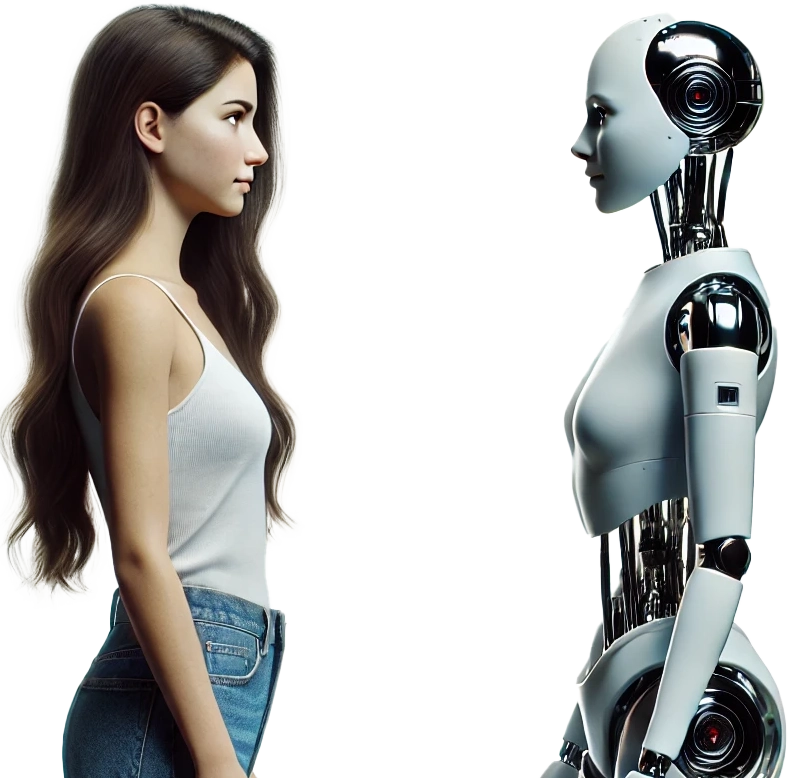
The Robophilosophy 2026 conference took place from August 11–14, 2026, at University College Dublin (UCD) in Dublin, Ireland. Held under the theme „Connected Futures – Nature, Robots, and Society“, the seventh installment of the international conference series brought together researchers from a wide range of disciplines to explore how robotics and artificial intelligence are transforming human societies and the natural world. On the first day of the conference, Katharina Kühne presented the paper „No Red Romance for Robots? Investigating the Red Attraction Effect in Humanlike Robots“, authored by Emma Luisa M. Waller, Diana P. Ebenburger, Oliver Bendel, Martin Fischer, and herself. The study investigates whether the red-attraction effect known from research on human perception also occurs when people evaluate humanlike robots. From the abstract: „The color red has been shown to positively influence ratings of attractiveness and willingness to spend money (e.g., on a date), while having no effect on other perceptions, such as likeability. In an online study, we aimed to conceptually replicate the red-attraction effect using humanoid robots as stimuli. Forty-four heterosexual female participants evaluated 16 images of medium and highly humanlike robots on attractiveness, likeability, trustworthiness, and willingness to spend money to rent the robot. We found no evidence of a red-attraction effect. Female-looking robots received higher ratings overall. These findings have implications for robot design and suggest that basic cues, such as color, may not operate in the same way for robots. Instead, humanoid robots may constitute a distinct category but still be perceived as social agents.“ The proceedings, containing all conference papers, are expected to become available in late 2026.
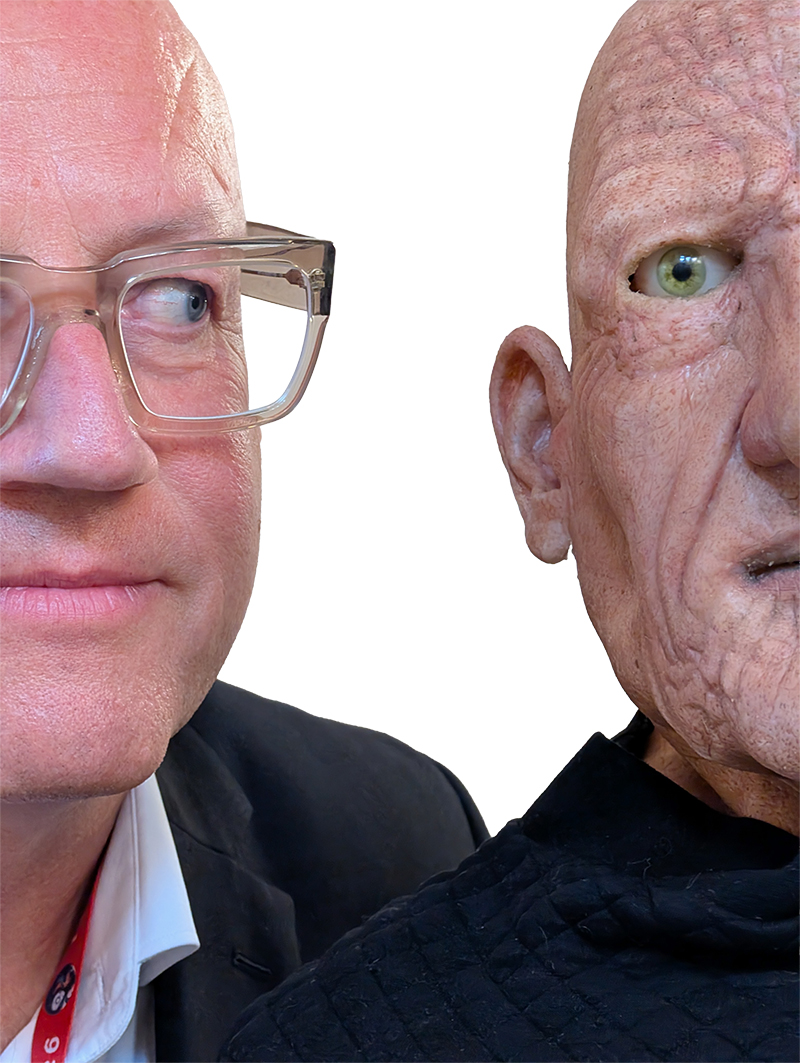
The 18th International Conference on Social Robotics (ICSR + Art 2026) is currently taking place in London from July 1–4, bringing together researchers, academics, and industry professionals from around the world to explore the latest developments in social robotics. Among the highlights of the second conference day was a live demonstration of Euclid, an advanced humanoid robot developed by Dr. Carl Strathearn, Assistant Professor of Computer Science, and Emilia Sobolewska. Strathearn’s work focuses on developing autonomous humanoid robots powered by artificial intelligence that look, behave, and interact in ways that closely resemble humans. Creating lifelike humanoid robots is particularly valuable because the human face remains the most natural interface for communication, emotional expression, and learning. By replicating these familiar conditions, researchers can make AI technologies more intuitive and accessible for people from a wide range of backgrounds, ages, and abilities. Euclid embodies this vision as a fully autonomous social robot equipped with automatic speech recognition, computer vision, generative AI, skin sensors, and a unique robotic mouth that uses machine learning to generate realistic visemes for speech. The robot has been specifically designed for social and assistive interactions with older adults, where natural communication and trust are essential. What makes Euclid especially remarkable, however, is its appearance. While many well-known female humanoid robots, such as Sophia, Erika, and Harmony, feature smooth, almost flawless faces that reflect conventional beauty stereotypes, Euclid deliberately takes a different approach. The robot realistically portrays the deeply lined facial features and weathered skin of an older man. This design choice is both technically demanding and artistically sophisticated, demonstrating that age, character, and authenticity can be just as aesthetically compelling as youthful perfection. In doing so, Euclid challenges established conventions in humanoid robot design while presenting a more diverse and human-centered vision of social robotics. At the ICSR, scientists had the opportunity to talk with Euclid and ask him about his identity and charisma. Further information is available at icsr2026.uk.
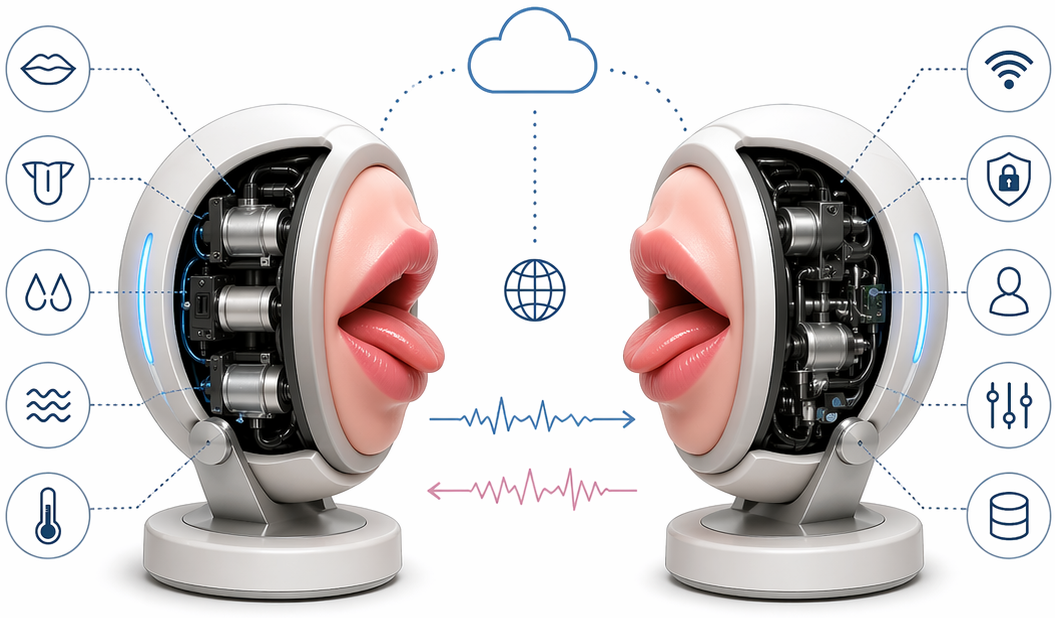
The 18th International Conference on Social Robotics (ICSR + Art 2026) is currently taking place in London from July 1–4, bringing together researchers, academics, and industry professionals from around the world to discuss the latest advances in social robotics. On the second day of the conference, researchers presented their latest work during the poster session, including Oliver Bendel’s paper „Kiss Me More: Artificial Lips for Intimate Encounters“. The title is a tribute to Doja Cat’s hit „Kiss Me More“, reflecting the paper’s focus on technology-mediated intimacy. The paper introduces the concept of the KissMachine, a next-generation telekissing device with artificial lips designed to enable more intimate remote interactions while addressing the technical, social, and ethical challenges of such technology. It also pays tribute to the Kissenger, invented by Hooman Samani in 2012, one of the pioneering telekissing systems that inspired subsequent research in this field. The exchange between Bendel and Samani highlighted both the evolution of telekissing technology over the past decade and the continuing interest in human-centered approaches to social robotics. Further information is available at icsr2026.uk.
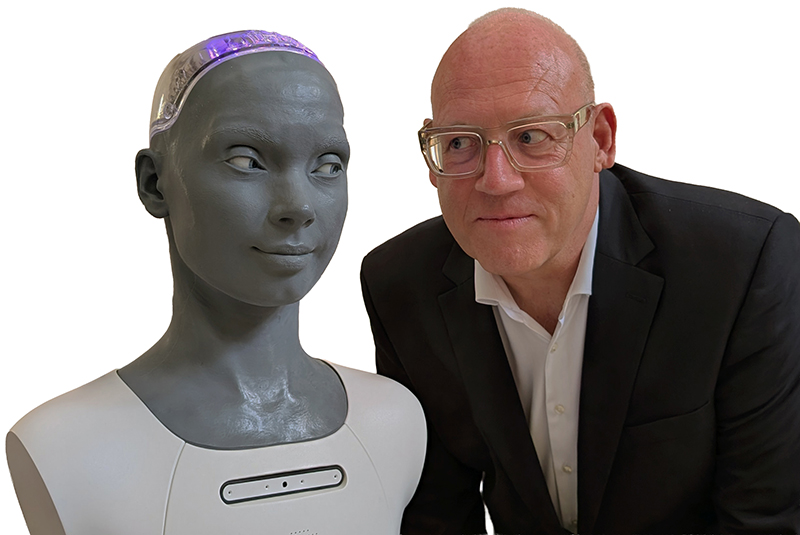
On July 1, 2026, the 18th International Conference on Social Robotics (ICSR + Art 2026) officially opened in London. Participants were welcomed by the General Chairs, Hooman Samani and Saina Akhond of the University of the Arts London, as well as by several robots, including the humanoid robot Ameca and the companion robot Lovot. Following registration and breakfast, the conference immediately moved into its scientific program with several parallel sessions. The Main Track Papers were presented in Conference Hall 1 (Beveridge Hall), while Special Sessions took place in Conference Hall 2 (Chancellor’s Hall). At the same time, authors of Short Papers introduced their work during the Teaser Talks in the Debate Hall (Senate Room). Held from July 1–4, 2026, ICSR is the leading international forum for researchers, academics, and industry professionals working in the field of social robotics. This year’s edition places a special emphasis on the intersection of social robotics and the arts, highlighting artistic and creative applications of robotic technologies. In addition to the technical program, the conference features the Robot Fringe Festival, the Grand Challenge, artistic performances, industry events, and numerous opportunities for networking and collaboration with leading researchers and practitioners from around the world. Further information is available at icsr2026.uk.
From August 11 to 14, 2026, the Robophilosophy Conference 2026 will take place at University College Dublin in Dublin, Ireland, under the theme „Connected Futures – Nature, Robots, and Society“. The conference will bring together researchers from philosophy, robotics, artificial intelligence, ethics, law, and the environmental and social sciences to discuss the evolving relationship between intelligent technologies, the natural world, and society. One of the conference highlights is Session 2, „Environmental Robotics and Society“, scheduled on the first day from 2:10 p.m. to 4:25 p.m. The session will open with Janko Munjić’s presentation, „Posthuman Victims in the Anthropocene: Environmental Social Robots, Layered Harm, and the Edges of Criminal Law“, which examines legal and ethical questions surrounding environmental social robots. Oliver Bendel will then present „Towards a Discipline of Animal-Machine Interaction: Ethical and Design Challenges of Machines in Animal Habitats“, exploring the emerging field of interactions between machines and animals. Catherine F. Botha’s talk, „Ecobots and Ecological Capabilities: Ethical Reflections on Robots as Functional Ecological Agents“, will consider the ethical implications of robots acting as ecological agents. The session will conclude with „Aerial Robotics in Society: Energy, Ethics, and Accountability for Sustainable Monitoring“, presented by Ghulam E. Mustafa Abro and Johanna Seibt, addressing the societal, ethical, and sustainability aspects of aerial robotic systems. For more information about the conference and the full program, please visit www.rp2026.org/.
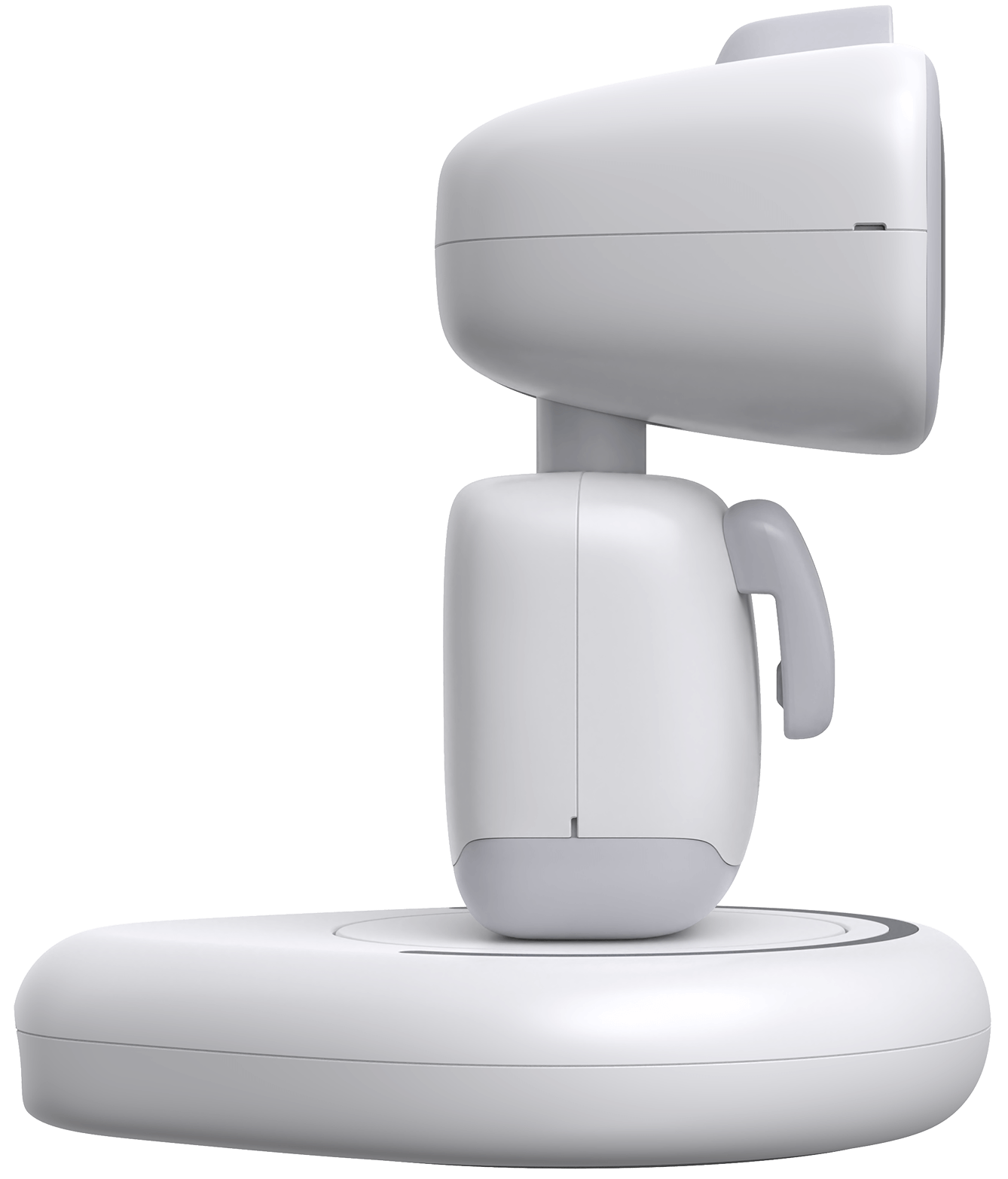
„Wearable Social Robots sind sehr kleine und sehr leichte soziale Roboter, die um den Hals, auf dem Kopf, am Körper oder an der Kleidung bzw. an oder in einer Tasche getragen werden können. Sie sind oftmals mit entsprechenden Befestigungselementen ausgestattet, etwa Halsketten, Seilschlaufen und Metallplatten.“ Mit diesen Worten beginnt ein Beitrag von Oliver Bendel, der am 24. Juni 2026 im Gabler Wirtschaftslexikon erschienen ist. Auf weitere einführende Aussagen folgen die Abschnitte „Hintergrund und Beispiele“, „Einsatzmöglichkeiten“ und „Kritik und Ausblick“. Zu den Einsatzmöglichkeiten wird gesagt: „Wearable Social Robots dienen als Spielzeug und Lernwerkzeug oder als Companion Robot bzw. Pet Robot, wobei Kinder, Jugendliche oder Erwachsene angesprochen werden. Man kann sich von ihnen bespaßen lassen und von oder mit ihnen lernen. Sie mögen verlässliche Bezugspunkte darstellen und Stress und Einsamkeit reduzieren.“ Davor heißt es: „Beispiele für Wearable Social Robots mit festem Gehäuse sind AIBI (LivingAI) und Eiliko (Energize Lab). Ein Fell haben Moflin (Casio), Cupboo AI Robotic Pet (Genmoor Group) und Mirumi (Yukai Engineering).“ Es deutet alles darauf hin, dass in den nächsten Monaten und Jahren noch zahlreiche weitere Wearable Social Robots auf den Markt kommen. Der vollständige Beitrag kann über wirtschaftslexikon.gabler.de/definition/wearable-social-robots-177953 aufgerufen werden.
Abb.: Der Wearable Social Robot AIBI (Foto: LivingAI)
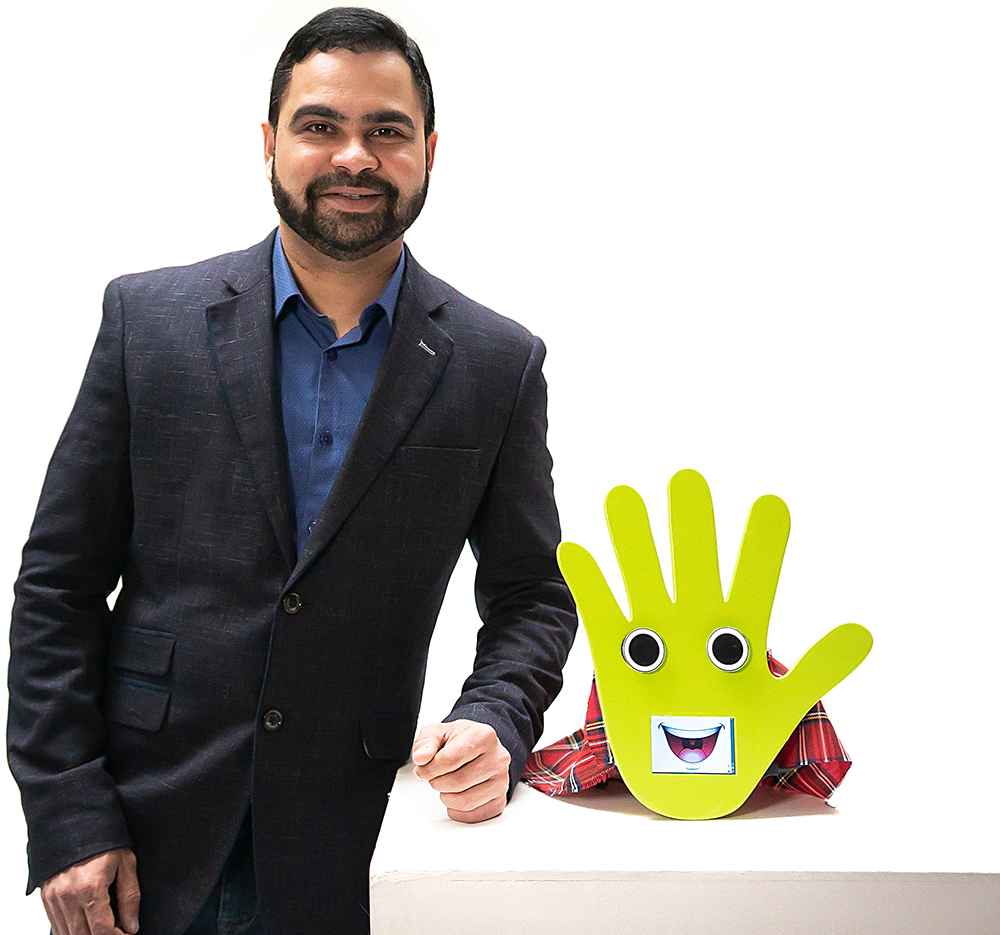
The elective module „Soziale Roboter aus technischer, wirtschaftlicher und ethischer Sicht“ („Social robots from a technical, economic, and ethical perspective“) by Prof. Dr. Oliver Bendel will be held again from February 12 to 14, 2026 at the FHNW in Brugg-Windisch. It is primarily aimed at aspiring business economists, but prospective information systems specialists can also take part. Dr. Amol Deshmukh has been invited again as a guest speaker. He will give a talk entitled „Improving Hand Hygiene in Schools with Socially Assistive Robots“. From his bio: „Dr Amol Deshmukh is a Marie Curie Postdoctoral Research Fellow at ETH Zurich, where his work sits at the intersection of social robotics, AI, and human behaviour. A pioneer in adapting human-robot interaction for global and low-resource contexts, his research has received international media coverage for its focus on real-world societal impact.“ In this talk, he will discuss his work leveraging social robots to promote hand hygiene in schools, examining the cultural and socio-economic implications of deploying such technology. Unitree Go2, Alpha Mini, Cozmo, Vector, AIBI, Furby, Booboo, and Hugvie from Oliver Bendel’s private Social Robots Lab will also be on site. At the end of the elective module, students design social robots – also with the help of generative AI – that they find useful, meaningful, or simply attractive. The elective modules have been offered since 2021 and are very popular.
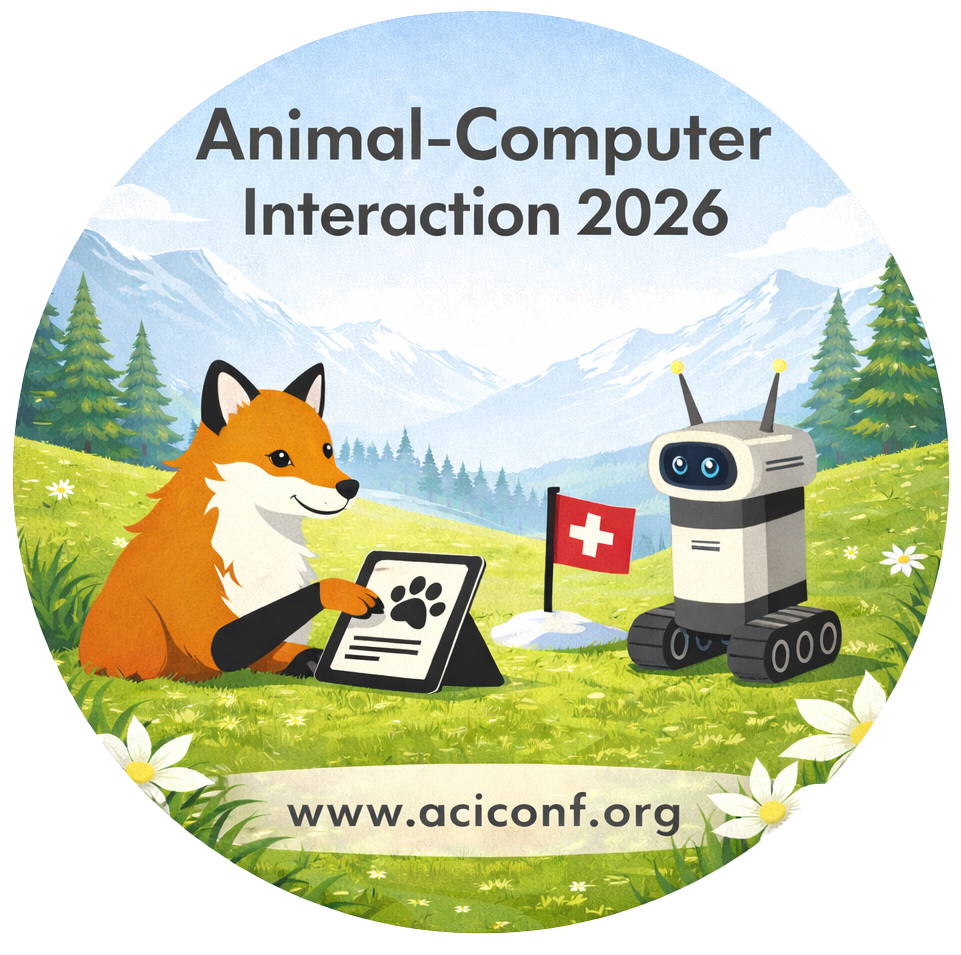
Prof. Dr. Oliver Bendel will host the next ACI Conference, bringing the event to continental Europe for the first time as it convenes on the FHNW campus in Brugg-Windisch, Switzerland, from December 2-5, 2026. The conference website is already online at www.aciconf.org, where the most important information is available; individual deadlines may still change. In the meantime, the website has been updated and expanded. It now includes visual elements that reference both the animal world of Switzerland and the thematic focus of the conference, strengthening its visual identity and contextual framing. Building on a tradition that has taken the community from Glasgow to North Carolina, Newcastle, Bloomington, Milton Keynes, Haifa, and Atlanta, this edition continues the conference’s role as a leading venue for advancing Animal-Computer Interaction. As the field grows, researchers and practitioners explore how technology shapes animals‘ lives, welfare, cognition, and social dynamics while developing animal-centered systems and methods that embrace multispecies perspectives. The conference maintains its commitment to interdisciplinary collaboration across biology, technology, and cultural studies, supporting work that seeks to design ethically grounded, welfare-enhancing, and inclusive technological futures for all animals, humans included. ACI 2026 will also feature a Special Issue on Animal-Machine Interaction, a research field shaped in important ways by Oliver Bendel. The conference proceedings will be published in a volume of a renowned organization, ensuring wide visibility and long-term accessibility for the contributions presented.
The article „Small Talk with a Robot Reduces Stress and Improves Mood“ by Katharina Kühne, Antonia L. Z. Klöffel, Oliver Bendel, and Martin H. Fischer was published on December 23, 2025. It is part of the volume „Social Robotics + AI: 17th International Conference, ICSR+AI 2025, Naples, Italy, September 10–12, 2025, Proceedings, Part III.“ From the abstract: „Research has demonstrated that social support is crucial in mitigating stress and enhancing mood. Not only do long-term, meaningful relationships contribute to well-being, but everyday social interactions, such as small talk, also offer psychological benefits. As social robots increasingly become more integrated into daily life, they present a potential avenue for stress interventions. In our online study, 98 participants underwent a stress induction using the Stroop task and were then assigned to one of three conditions: engaging in scripted small talk with a simulated NAO robot online, listening to a neutral story told by the same NAO robot, or no intervention (control condition). Results indicate that both interventions effectively reduced stress, with a tendency towards a stronger effect in the Small talk condition. Small talk not only helped maintain positive affect but also reduced negative affect. Notably, the benefits were more pronounced among individuals experiencing higher acute stress following the stress induction, but were less evident in those with chronically elevated stress levels. Furthermore, the effect of the intervention on stress reduction was mediated by changes in positive affect. These findings suggest that small talk with a social robot may serve as a promising tool for stress reduction and affect regulation.“ The first author, a researcher from the University of Potsdam, presented the paper on September 12, 2025, in Naples. It can be downloaded from link.springer.com/chapter/10.1007/978-981-95-2398-6_1.
Fig.: A social robot (Photo: SoftyLomaco, Wikimedia, CC BY-SA 4.0)
The paper „The Universal Robot of the 21st Century“ by Oliver Bendel was published in February 2025 in the proceedings volume „Social Robots with AI: Prospects, Risks, and Responsible Methods“ … From the abstract: „Developments in several areas of computer science, robotics, and social robotics make it seem likely that a universal robot will be available in the foreseeable future. Large language models for communication, perception, and control play a central role in this. This article briefly outlines the developments in the various areas and uses them to create the overall image of the universal robot. It then discusses the associated challenges from an ethical and social science perspective. It can be said that the universal robot will bring with it new possibilities and will perhaps be one of the most powerful human tools in physical space. At the same time, numerous problems are foreseeable, individual, social, and ecological.“ The proceedings volume comprises the papers presented at Robophilosophy 2024 in Aarhus. Leading philosophers, computer scientists and roboticists met there in August. Like the ICSR, the conference is one of the world’s leading conferences on social robotics. General-purpose robots, the predecessors of universal robots, have now become widespread, as exemplified by Digit, Apollo, and Figure 03. The author accepted manuscript of this article is therefore being made freely available on this site for non-commercial use only and with no derivatives, in line with the publisher’s self-archiving policy.
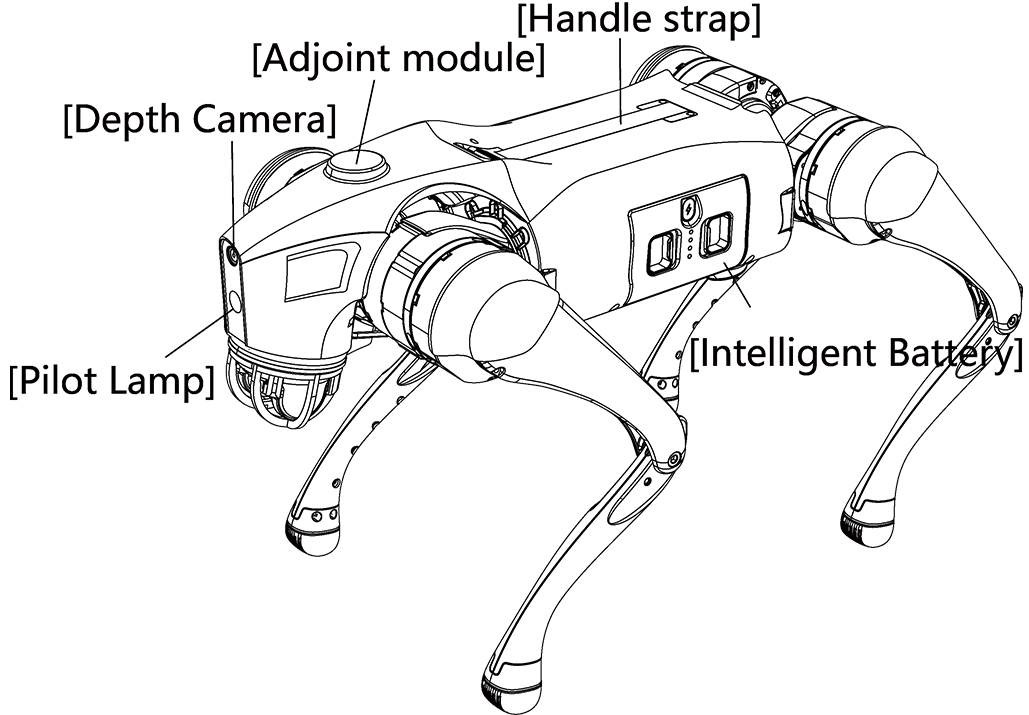
Animal-machine interaction (AMI) is a discipline or field of work that deals with the interaction between animals and machines. This is how Prof. Dr. Oliver Bendel explains it in the Gabler Wirtschaftslexikon. It is primarily concerned with the design, evaluation, and implementation of complex machines and computer systems with which animals interact and which in turn interact and communicate with animals. There are close links to animal-computer interaction (ACI). Increasingly, the machine is a robot that is either remote-controlled or (partially) autonomous. In „The Robodog Project“ (also known as „Bao Meets Pluto„), the encounters between robotic quadrupeds and small to medium-sized dogs are explored. The project collaborator is Selinar Rohr, who is writing her bachelor’s thesis in this context. The walking, running, and jumping Unitree Go2 from Oliver Bendel’s private Social Robots Lab is in its original state or is wearing a head made with a 3D printer provided by Norman Eskera. The project is being carried out at the FHNW School of Business and will end on August 12, 2025, after which the results will be presented to the community and, if possible, to the general public.
The paper „Small Talk with a Robot Reduces Stress and Improves Mood“ by Katharina Kühne, Antonia L. Z. Klöffel, Oliver Bendel, and Martin H. Fischer has been accepted for presentation at the ICSR 2025, which will take place in Naples from September 10 to 12, 2025. Previous research has shown that social support reduces stress and improves mood. This study tested whether small talk with a social robot could be helpful. After performing a stressful task, 98 participants either chatted with a NAO robot, listened to the robot tell a neutral story, or did not interact with the robot. Both robot interactions reduced stress, particularly small talk, which also boosted positive mood. The effects were stronger in those with high acute stress. Positive affect played a key role in stress reduction, suggesting that robot-mediated small talk may be a useful tool for providing emotional support. Dr. Katharina Kühne and Prof. Dr. Martin H. Fischer are researchers at the University of Potsdam. Antonia L. Z. Klöffel assists Katharina Kühne as a junior scientist. Martin Fischer is the head of the Potsdam Embodied Cognition Group (PECoG). Prof. Dr. Oliver Bendel is a PECoG associated researcher. Further information about the conference is available at icsr2025.eu.
The ICSR is one of the leading conferences for social robotics worldwide. The 17th edition will take place from 10 to 12 September 2025 in Naples, Italy. As part of the program, the conference welcomes proposals for workshops that provide a platform for in-depth discussion, exchange of knowledge, and community engagement around current topics in social robotics. The organizers are especially interested in workshops that promote dialogue between established researchers and early-career scientists, supporting a dynamic and inclusive research environment. The deadline for submitting workshop proposals is June 4, 2025. Notifications of acceptance will be sent by July 1, 2025. All details and the submission portal can be found at the following link: icsr2025.eu/ss-ws-proposal … ICSR 2025 offers an opportunity to help shape the future of social robotics through collaborative and forward-looking workshop initiatives.
The paper „Robots at arm’s length: Unveiling the dynamics of interpersonal distance preferences in human-robot interactions“ by Katharina Kühne, Laura M. Zimmer, Melina Jeglinski-Mende, Oliver Bendel, Yuefang Zhou, and Martin H. Fischer was published in February 2025 in the proceedings volume „Social Robots with AI: Prospects, Risks, and Responsible Methods“ … From the abstract: „In social interactions, interpersonal distance is a vital factor influencing relationships, providing protection, and regulating arousal. Despite the intuitive nature of adopting specific distances, little is known about comfortable interpersonal distances with social robots. In our online study with 66 participants using a Go/No-Go task, we investigated perceptions of individuals standing face-to-face with a robot at different distances. In line with the negativity bias hypothesis, participants exhibited a preference for greater distances, as reflected in longer reaction times. Furthermore, the human-likeness of the robots moderated the link between distance and arousal. Finally, the most human-like robot was less liked and evoked higher arousal. These findings have implications for designing social robots and optimizing interactions, particularly in educational or medical contexts.“ The proceedings volume comprises the papers presented at Robophilosophy 2024 in Aarhus. Leading philosophers, computer scientists, and roboticists met there in August. Like the ICSR, the conference is one of the world’s leading conferences on social robotics.
Fig.: What is the right distance to a robot? (Bild: DALL-E 3)
The ICSR is one of the leading conferences for social robotics worldwide. The 17th edition will take place from 10 to 12 September 2025 in Naples, Italy. The conference website is now online: icsr2025.eu. „The conference theme, ‘Emotivation at the Core: Empowering Social Robots to Inspire and Connect,’ highlights the essential role of ‘Emotivation’ in social robotics. Emotivation captures the synergy between emotion and motivation, where emotions trigger and sustain motivation during interactions. In social robotics, this concept is key to building trust, fostering empathy, and supporting decision-making by enabling robots to respond sensitively to human emotions, inspiring engagement and action.“ (Website ICSR) The most important conferences dates are: Full Paper Submission: March 28th, 2025; Full Paper Notification: May 9th, 2025; Camera-ready: June 30th, 2025; Paper Presentation Days at ICSR’25: September 11th and 12th, 2025. All dates are also listed on the website. Participants will meet for two days at the Parthenope University of Naples and for the third day at the Città della Scienza conference center. All buildings and rooms are also listed on the website. Be part of this excellent conference (Photo: ICSR)!
The uncanny valley effect is a famous hypothesis. Whether it can be influenced by context is still unclear. In an online experiment, Katharina Kühne and her co-authors Oliver Bendel, Yuefang Zue and Martin Fischer found a negative linear relationship between a robot’s human likeness and its likeability and trustworthiness, and a positive linear relationship between a robot’s human likeness and its uncaniness. „Social context priming improved overall likability and trust of robots but did not modulate the Uncanny Valley effect.“ (Abstract) Katharina Kühne outlined these conclusions in her presentation „Social, but Still Uncanny“ – the title of the paper – at the International Conference on Social Robotics 2024 in Odense, Denmark. Like Yuefang Zue and Martin Fischer, she is a researcher at the University of Potsdam. Oliver Bendel teaches and researches at the FHNW School of Business. Together with Tamara Siegmann, he presented a second paper at the ICSR.