Deadline for Short Papers Submissions

VON OLIVER BENDEL
The deadline for the International Conference on Social Robotics is approaching. Experts in social robotics and related fields have until July 5 to submit their papers. The prestigious event was last held in Florence (2022) and Qatar (2023). Now it enters its next round. The 16th edition will bring together researchers and practitioners working on human-robot interaction and the integration of social robots into our society. The title of the conference includes the addition „AI“. This is a clarification and demarcation that has to do with the fact that there will be two further formats with the name ICSR in 2024. ICSR’24 (ICSR + AI) will take place as a face-to-face conference in Odense, Denmark, from 23 to 26 October 2024. The theme of this year’s conference is „Empowering Humanity: The role of social and collaborative robotics in shaping our future“. The topics of the Call for Papers include „collaborative robots in service applications (in construction, agriculture, etc.)“, „Human-robot interaction and collaboration“, „Affective and cognitive sciences for socially interactive robots“, and „Context awareness, expectation, and intention understanding“. The general chairs are Oskar Palinko, University of Southern Denmark, and Leon Bodenhagen, University of Southern Denmark. More information is available at icsr2024.dk.

Fig.: A ship in Denmark
In addition to the ICSR in Odense, which focuses on social robotics and artificial intelligence, there is also the ICSR in Naples this year, which organizes a robot competition. In addition, an ICSR conference focusing on biomedicine and the healthcare sector will take place in Singapore from August 16-18, 2024. The website states: „The 16th International Conference on Social Robotics + BioMed (ICSR + BioMed 2024) focuses on interdisciplinary innovation on Bio-inspired, Biomedical, and Surgical Robotics. By fostering the much-needed merging of these disciplines, together with fast emerging Biotech, the conference aims to ensure the lesson learned from these communities blend to unleash the real potential of robots. … The conference will serve as the scientific, technical, and business platform for fostering collaboration, exploration, and advancement in these cutting-edge fields. It will showcase the latest breakthroughs and methodologies, shaping the future of robotics design and applications across several sectors including Biomedical and healthcare.“ (Website ICSR) Papers must be submitted by June 5, 2024. Further information on the conference is available at robicon2024.org.

Fig.: Ready for the competition
The prestigious International Conference on Social Robotics was last held in Florence (2022) and Qatar (2023). Now it enters its next round. The 16th edition will bring together researchers and practitioners working on human-robot interaction and the integration of social robots into our society. The title of the conference includes the addition „AI“. This is a clarification and demarcation that has to do with the fact that there will be two further formats with the name ICSR in 2024. ICSR’24 (ICSR + AI) will take place as a face-to-face conference in Odense, Denmark, from 23 to 26 October 2024. ICSR’24 will take place as a face-to-face conference in Odense, Denmark, from 23 to 26 October 2024. The theme of this year’s conference is „Empowering Humanity: The role of social and collaborative robotics in shaping our future“. The topics of the Call for Papers include „collaborative robots in service applications (in construction, agriculture, etc.)“, „Human-robot interaction and collaboration“, „Affective and cognitive sciences for socially interactive robots“, and „Context awareness, expectation, and intention understanding“. The general chairs are Oskar Palinko, University of Southern Denmark, and Leon Bodenhagen, University of Southern Denmark. More information is available at icsr2024.dk.

Fig.: A humanoid robot (Image: DALL-E 3)
On January 29, 2024, the article „‚Ick bin een Berlina‘: dialect proficiency impacts a robot’s trustworthiness and competence evaluation“ was published in Frontiers in Robotics and AI. Authors are Katharina Kühne, Erika Herbold, Oliver Bendel, Yuefang Zhou, and Martin H. Fischer. With the exception of Oliver Bendel – who is a professor at the School of FHNW and an associated researcher in the PECoG group – all of them are members of the University of Potsdam. The paper says about the background: „Robots are increasingly used as interaction partners with humans. Social robots are designed to follow expected behavioral norms when engaging with humans and are available with different voices and even accents. Some studies suggest that people prefer robots to speak in the user’s dialect, while others indicate a preference for different dialects.“ The following results are mentioned: „We found a positive relationship between participants’ self-reported Berlin dialect proficiency and trustworthiness in the dialect-speaking robot. Only when controlled for demographic factors, there was a positive association between participants’ dialect proficiency, dialect performance and their assessment of robot’s competence for the standard German-speaking robot. Participants‘ age, gender, length of residency in Berlin, and device used to respond also influenced assessments. Finally, the robot’s competence positively predicted its trustworthiness.“ The article can be accessed at www.frontiersin.org/articles/10.3389/frobt.2023.1241519/full.

Fig.: A Berlin robot (Image: Ideogram)
Im privat finanzierten Social Robots Lab von Prof. Dr. Oliver Bendel ist seit Dezember 2023 der Unitree Go2 zu finden. Er hört auf den Namen Bao (chin. für „Juwel“ oder „Schatz“). Heise schreibt in einem Artikel: „Das Basismodell des Go2 ist am Kopf mit einem Lidar ausgestattet, das ein halbkugelförmiges Sichtfeld mit 90 vertikal und 360 Grad horizontal besitzt. Die Mindestreichweite des Lidar beträgt etwa 5 cm. Damit kann der Roboter im Gelände selbstständig navigieren, Hindernisse erkennen und sie auch umgehen. Der Roboter läuft mit einer Geschwindigkeit von bis zu 2,5 m/s und zeigt sich dabei äußerst agil. … Mit an Bord ist auch eine 2-Megapixel-Kamera, mit der Schnappschüsse und Videos aufgenommen werden können.“ (Heise News, 27. Juli 2023) Ein Anliegen des Wirtschaftsinformatikers und Technikphilosophen ist, bei der Tier-Maschine-Interaktion (Animal-Machine Interaction) voranzuschreiten. Dieses Arbeitsgebiet wurde von ihm im Jahre 2013 in seinem Beitrag „Considerations about the Relationship between Animal and Machine Ethics“ definiert, in Anlehnung an den Begriff der Animal-Computer Interaction, deren Pionierin Clara Mancini ist. Seit dieser Zeit entwickelte er mehrere Artefakte und Konzepte in diesem Bereich, darunter Robocar (Modellierung für tierfreundliche Autos), LADYBIRD (Prototyp eines insektenfreundlichen Staubsaugerroboters), HAPPY HEDGEHOG (Prototyp eines igelfreundlichen Staubsaugerroboters) und ANIFACE (Konzept für ein System mit Gesichtserkennung zur Identifizierung von Braunbären). Mit Bao sollen Reaktionen von Haus-, Nutz- und Wildtieren getestet werden. Ziel ist es, Roboter nicht nur menschen-, sondern auch tierfreundlich zu gestalten.
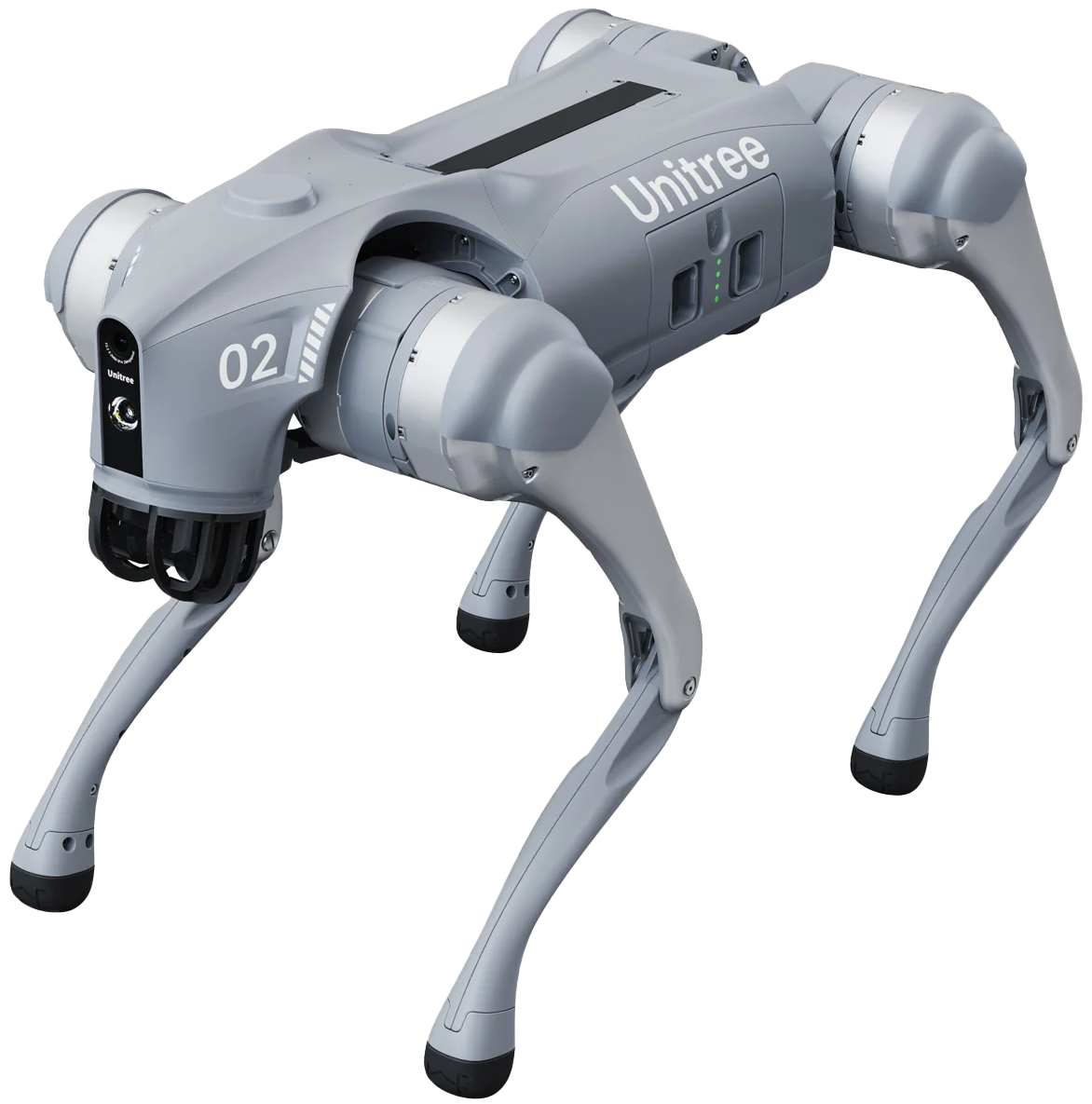
Abb.: Bao (Foto: Unitree)
On November 6, 2023, OpenAI made so-called GPTs available to ChatGPT Plus users. According to the US company, anyone can easily create his or her own GPT without any programming knowledge. Initial tests have shown the performance of the new function. ChatGPT suggests a name for the chatbot, creates the profile picture and accepts documents with text and reference lists to expand its knowledge of the topic. The function is ideal for creating your own learning companions, modern educational agents so to speak. But you can also benefit from chatbots from other users and providers. A GPT called Social Robotics Girl, which provides information about social robotics, has been available since November 12, 2023. It was created by Prof. Dr. Oliver Bendel and is based on a collection of his articles on this topic. It can therefore give his definition of social robots and make classifications based on his five-dimension model. ChatGPT Plus users can access Social Robotics Girl via chat.openai.com/g/g-TbhZSZaer-social-robotics-girl.

Fig.: A young man with a chatbot (Image: DALL-E 3)
Next to Robophilosophy, ICSR may be the most important conference on social robotics. The fourteenth edition took place in Florence at the end of 2022 and was dedicated to the health sector. „The 15th International Conference on Social Robotics (ICSR 2023) will bring together researchers and practitioners working on the interaction between humans and intelligent robots and on the integration of social robots into our society. ICSR 2023 will take place in Doha as a face-to-face conference on December 4-7, 2023. This will be the first time that the conference will be hosted in Qatar and in the Middle East and North Africa region.“ (Website ICSR) The theme of this year’s ICSR is „Human-Robot Collaboration: Sea, Air, Land, Space and Cyberspace“. According to the organizers, the theme emphasizes on all physical and cyber-physical domains where humans and robots collaborate. Whether Doha is suitable as a venue for the conference needs to be discussed. Qatar is ruled as an absolute monarchy. Sharia law is considered a main source of legislation. The human rights situation in the country has been critical for decades. More information and CfP via icrs.iovision.tn.
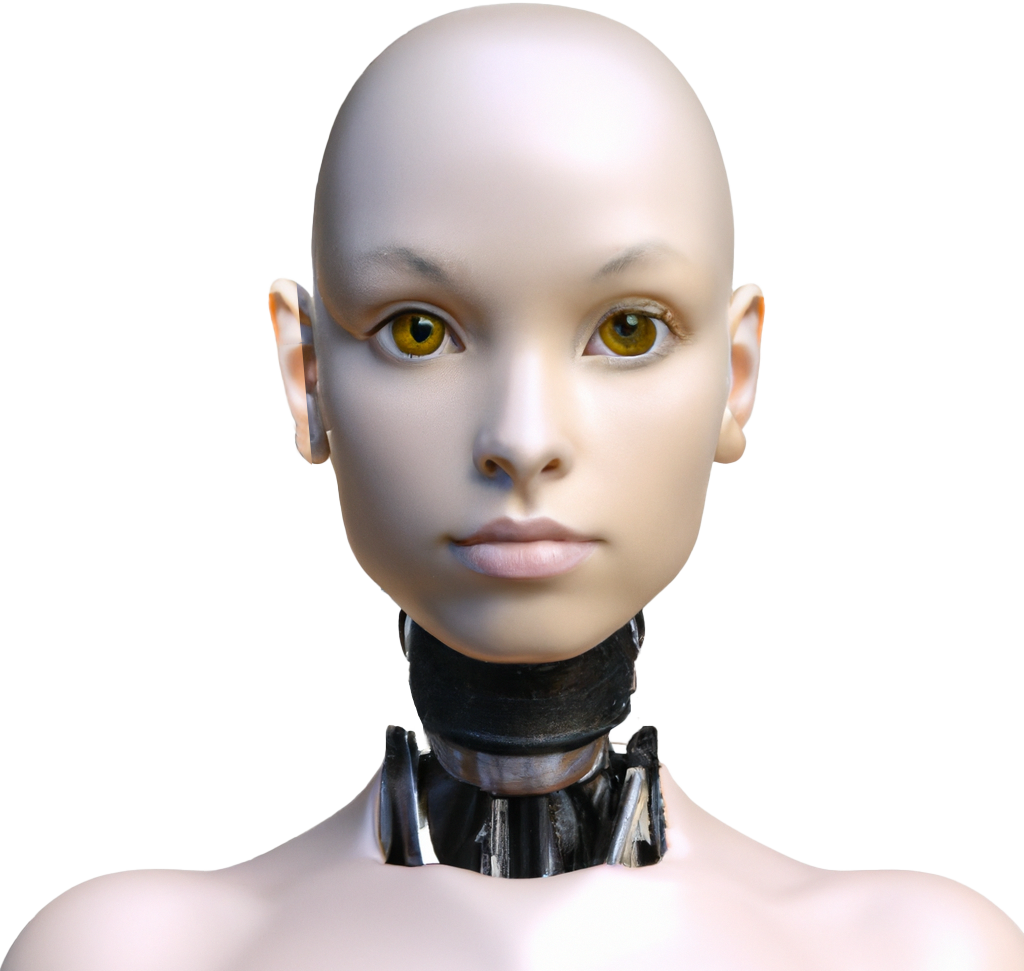
Fig.: A humanoid robot generated by DALL-E (with user corrections)
In January 2023, the proceedings of Robophilosophy 2022 were published, under the title „Social Robots in Social Institutions“. „This book presents the Proceedings of Robophilosophy 2022, the 5th event in the biennial Robophilosophy conference series, held in Helsinki, Finland, from 16 to 19 August 2022. The theme of this edition of the conference was Social Robots in Social Institutions, and it featured international multidisciplinary research from the humanities, social sciences, Human-Robot Interaction, and social robotics. The 63 papers, 41 workshop papers and 5 posters included in this book are divided into 4 sections: plenaries, sessions, workshops and posters, with the 41 papers in the ‚Sessions‘ section grouped into 13 subdivisions including elderly care, healthcare, law, education and art, as well as ethics and religion. These papers explore the anticipated conceptual and practical changes which will come about in the course of introducing social robotics into public and private institutions, such as public services, legal systems, social and healthcare services, or educational institutions.“ (Website IOS Press) The proceedings contain the paper „Robots in Policing“ by Oliver Bendel and the poster „Tamagotchi on our couch: Are social robots perceived as pets?“ by Katharina Kühne, Melinda A. Jeglinski-Mende, and Oliver Bendel. More information via www.iospress.com/catalog/books/social-robots-in-social-institutions.
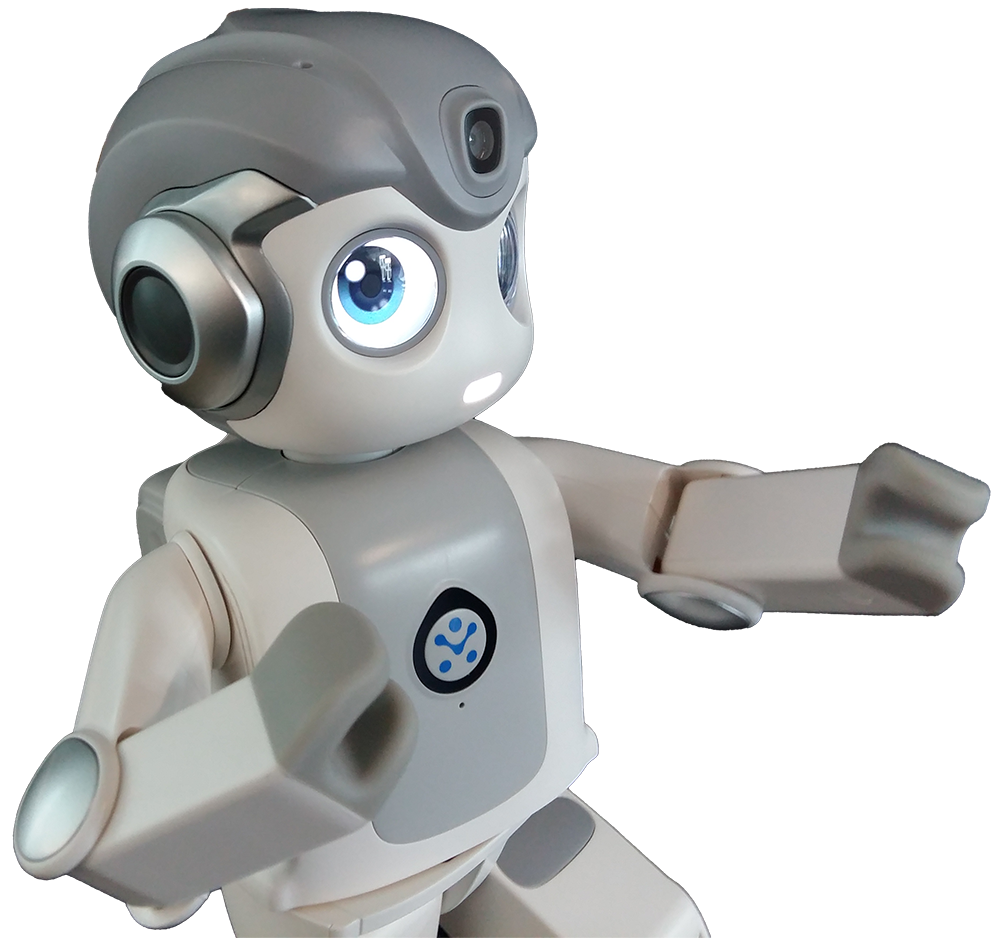
Fig.: Alpha Mini in action
Two of the most important conferences for social robotics are Robophilosophy and ICSR. After Robophilosophy, a biennial, was last held in Helsinki in August 2022, ICSR is now coming up in Florence (13 – 16 December 2022). „The 14th International Conference on Social Robotics (ICSR 2022) brings together researchers and practitioners working on the interaction between humans and intelligent robots and on the integration of social robots into our society. … The theme of this year’s conference is Social Robots for Assisted Living and Healthcare, emphasising on the increasing importance of social robotics in human daily living and society.“ (Website ICSR) The committee sent out notifications by October 15, 2022. The paper „The CARE-MOMO Project“ by Oliver Bendel and Marc Heimann was accepted. This is a project that combines machine ethics and social robotics. The invention of the morality menu was transferred to a care robot for the first time. The care recipient can use sliders on the display to determine how he or she wants to be treated. This allows them to transfer their moral and social beliefs and ideas to the machine. The morality module (MOMO) is intended for the Lio assistance robot from F&P Robotics. The result will be presented at the end of October 2022 at the company headquarters in Glattbrugg near Zurich. More information on the conference via www.icsr2022.it.

Fig.: A cathedral in Florence
Der zweite Tag der Konferenz wurde von einem Vortrag von Virginia Dignum über „Responsible AI: From Principles to Action“ eröffnet. Bis zum Lunch gab es vier parallele Sessions. Session 6 („Robots in Elderly Care“) umfasste die Talks von Migle Laukyte („Right to Robot or a Duty to Older Generations“) und Peter Remmers („Social Robots in Care Facilities“, zusammen mit Nele Fischer). Workshop 3 („ELSI of the Avatar Symbiotic Society“) wurde von Hiroshi Ishiguro mit „Realisation of the Avatar Symbiotic Society: The Concept and Technologies“ eröffnet. Anders als 2018 war er nicht vor Ort, sondern über Zoom zugeschaltet. Seine Vision ist, dass im Jahre 2050 viele Menschen einen oder mehrere Avatare besitzen, wobei er damit nicht virtuelle, sondern physische Repräsentanten meint. Der eine oder andere Teilnehmer fragte sich, warum er nicht seinen eigenen Avatar, den Geminoid, nach Helsinki geschickt hatte. Parallel fanden drei Sessions statt. In Session 7 („Relational Accounts“) stellte Miriam Gorr in „How We Respond to Robots and Whether It Matters Morally“ die Ansätze von John Danaher, Robert Sparrow and Mark Coeckelbergh zum moralischen Status von Maschinen auf den Prüfstand. Nach der Kaffeepause folgten zwei Workshops und zwei Sessions. In Session 10 („Robots in Healthcare II“) ging Iva Apostolova auf „The Significance of the Sense of Touch for the Use of Social Robots in Care Settings“ ein. Oliver Bendel wies in der Diskussionsrunde auf Umarmungsroboter, Liebespuppen und Sexroboter hin. Den Schlusspunkt bildete die Keynote „Socially Assistive Robotics – Methods and Implications for the Future of Work and Care“ von Maja Matarić. Sie kombiniert die Präsenz der Roboter und deren Funktionen mit Mixed Reality. Danach ging es in die nahegelegene City Hall, wo die Stadt Helsinki die Wissenschaftler empfing und umsorgte.
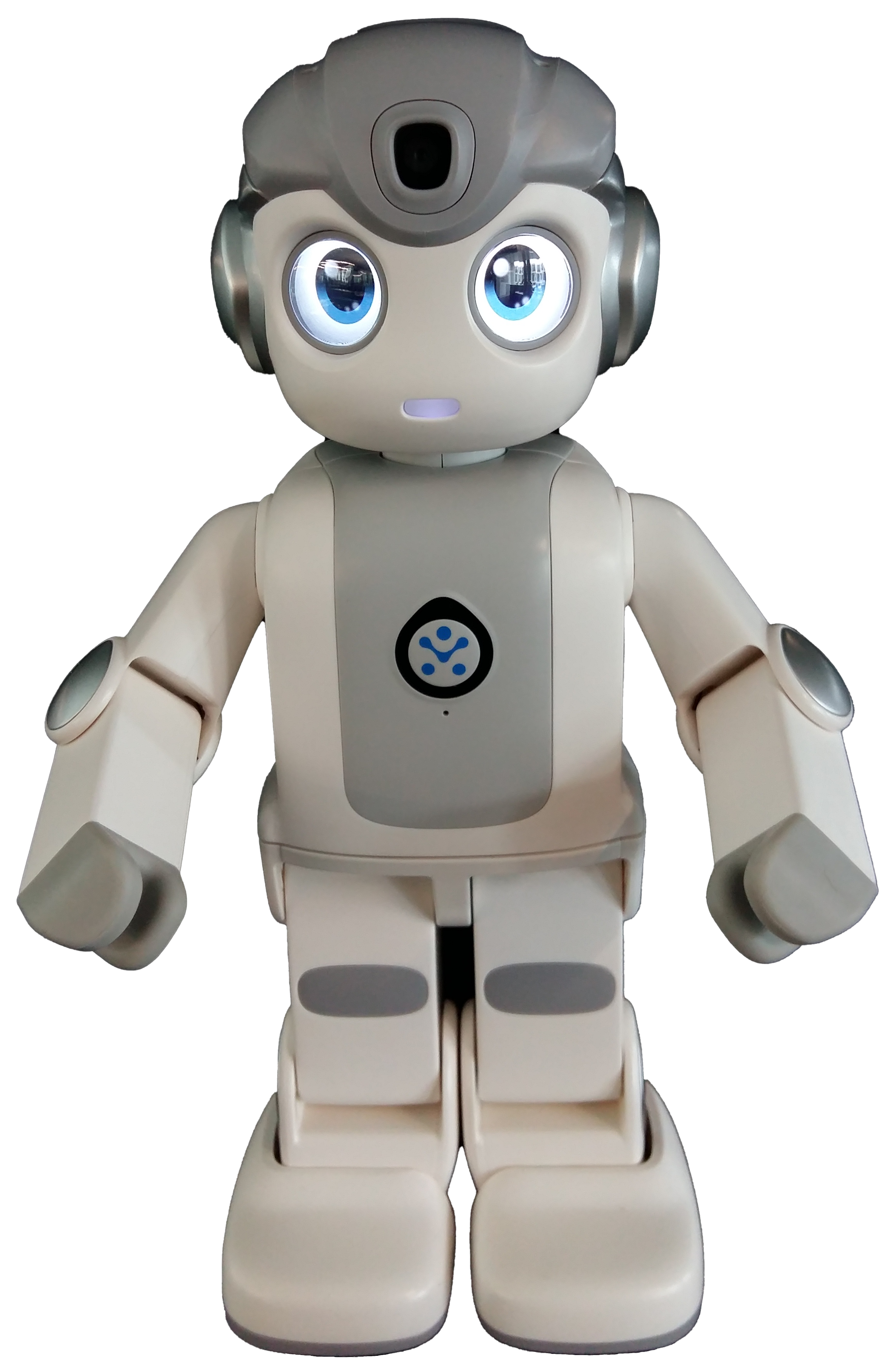
Abb.: Der soziale Roboter Alpha Mini
British Filmmaker John Downer has created artificial monkeys, wolves, hippos, turtles, alligators, etc., to observe appropriate wildlife and obtain spectacular images. His well-known robots are very intricately designed and resemble the animals they mimic in almost every detail. It is not necessary to resort to such technically elaborate and artistically demanding means for all species. USA Today reports in a recent article about a robot called ECHO. „ECHO is a remote-controlled ground robot that silently spies on the emperor penguin colony in Atka Bay. The robot is being monitored by the Single Penguin Observation and Tracking observatory. Both the SPOT observatory, which is also remote-operated through a satellite link, and the ECHO robot capture photographs and videos of animal population in the Arctic.“ (USA Today, May 6, 2022) ECHO does not resemble a penguin in any way. It is a yellow vehicle with four thick wheels. But as a video shows, the animals seem to have gotten used to it. It comes very close to them without scaring them. Wildlife monitoring using robots is becoming increasingly important, and obviously very different types are being considered.

Fig.: Penguins in Antarctica
The AAAI 2022 Spring Symposium „How Fair is Fair? Achieving Wellbeing AI“ was held March 21-23, 2022 at Stanford University. In the Best Presentation Awards, Oliver Bendel and Liliana Alves took 3rd place („Should Social Robots in Retail Manipulate“), and Martin Spathelf and Oliver Bendel took 2nd place („The SPACE THEA Project“). In 1st place was Hiroaki Hamada („AI agents for facilitating social interactions and wellbeing“). Oliver Bendel had won first place at the AAAI 2019 Spring Symposium „Interpretable AI for Well-Being: Understanding Cognitive Bias and Social Embeddedness“ with his paper „Are Robot Tax, Basic Income or Basic Property Solutions to the Social Problems of Automation?“, along with two other researchers and their teams. Both symposia – from 2019 and from 2022 – were hosted by Takashi Kido and Keiki Takadama from Japan. They are among the pioneers in the field of Responsible AI.

Fig.: Place 2 and 3 for Oliver Bendel and his teams
Robophilosophy 2022 is the fifth event in the biennial Robophilosophy Conference Series. The first call for papers (CfP) was published in November 2021, and the second at the end of 2021. The extended deadline for submissions of extended abstracts and full papers is February 28, 2022. The event „will explore the societal significance of social robots for the future of social institutions with its usual broad scope, embracing both theoretical and practical angles“ (CfP Robophilosophy). It „is an invitation to philosophers and other SSH researchers, as well as researchers in social robotics and HRI, to investigate from interdisciplinarily informed perspectives whether and how social robotics as an interdisciplinary endeavour can contribute to the ability of our institutions to perform their functions in society“ (CfP Robophilosophy). Topics of interest are robots and social institutions in general, robots in law and policing, robots in healthcare, and robots and social justice, amongst others. The conference will be held at the University of Helsinki in Finland from August 16-19, 2022. More information via www.rp2022.org.

Fig.: A man on the road in Helsinki
The paper „The SPACE THEA Project“ by Martin Spathelf and Oliver Bendel was accepted at the AAAI 2022 Spring Symposia (Stanford University). The two authors will present it at the end of March 2022 at the symposium „How Fair is Fair? Achieving Wellbeing AI“. From the abstract: „In some situations, no professional human contact can be available. Accordingly, one remains alone with one’s problems and fears. A manned Mars flight is certainly such a situation. A voice assistant that shows empathy and assists the astronauts could be a solution. In the SPACE THEA project, a prototype with such capabilities was developed using Google Assistant and Dialogflow Essentials. The voice assistant has a personality based on characteristics such as functional intelligence, sincerity, creativity, and emotional intelligence. It proves itself in seven different scenarios designed to represent the daily lives of astronauts, addressing operational crises and human problems. The paper describes the seven scenarios in detail, and lists technical and conceptual foundations of the voice assistant. Finally, the most important results are stated and the chapters are summarized.“ More information about the AAAI 2022 Spring Symposia is available here.

Fig.: A voice assistant for a Mars flight
SPACE THEA was developd by Martin Spathelf at the School of Business FHNW from April to August 2021. The client and supervisor was Prof. Dr. Oliver Bendel. The voice assistant is supposed to show empathy and emotions towards astronauts on a Mars flight. Technically, it is based on Google Assistant and Dialogflow. The programmer chose a female voice with Canadian English. SPACE THEA’s personality includes functional and emotional intelligence, honesty, and creativity. She follows a moral principle: to maximize the benefit of the passengers of the spacecraft. The prototype was implemented for the following scenarios: conduct general conversations; help the user find a light switch; assist the astronaut when a thruster fails; greet and cheer up in the morning; fend off an insult for no reason; stand by a lonely astronaut; learn about the voice assistant. A video on the latter scenario is available here. Oliver Bendel has been researching conversational agents for 20 years. With his teams, he has developed 20 concepts and artifacts of machine ethics and social robotics since 2012.

Fig.: The red planet