Robophilosophy 2026 kicked off on August 11, 2026, at University College Dublin (UCD) in Dublin, Ireland. Held under the theme „Connected Futures – Nature, Robots, and Society“, the conference runs from August 11–14 and brings together researchers from a wide range of disciplines to explore how robotics and artificial intelligence are transforming human societies and the natural world. On the first day, Prof. Dr. Oliver Bendel from the FHNW School of Business presented his paper „Towards a Discipline of Animal-Machine Interaction: Ethical and Design Challenges of Machines in Animal Habitats“ in the session „Environmental Robotics and Society“. From the abstract: „As autonomous and semi-autonomous machines such as robots and drones increasingly enter animal habitats, new ethical and conceptual challenges emerge. This article proposes animal-machine interaction (AMI) as a distinct discipline concerned with the design and governance of technologies operating in relation to animals. After clarifying core concepts and delineating AMI from related fields, the article highlights the role of machine ethics in developing animal-friendly systems. Selected application examples illustrate how machines can reduce negative impacts on animals and, in some cases, support animal survival through animal-friendly design. The ethical discussion addresses both opportunities and risks of technological intervention in animal habitats. It is becoming clear that AMI is an increasingly important field of research, but one that must remain open to critical reflection and reorientation.“ The proceedings, containing all conference papers, will be available in late 2026. For those who don’t want to wait: Oliver Bendel recently published a short book on animal-machine interaction with Springer.
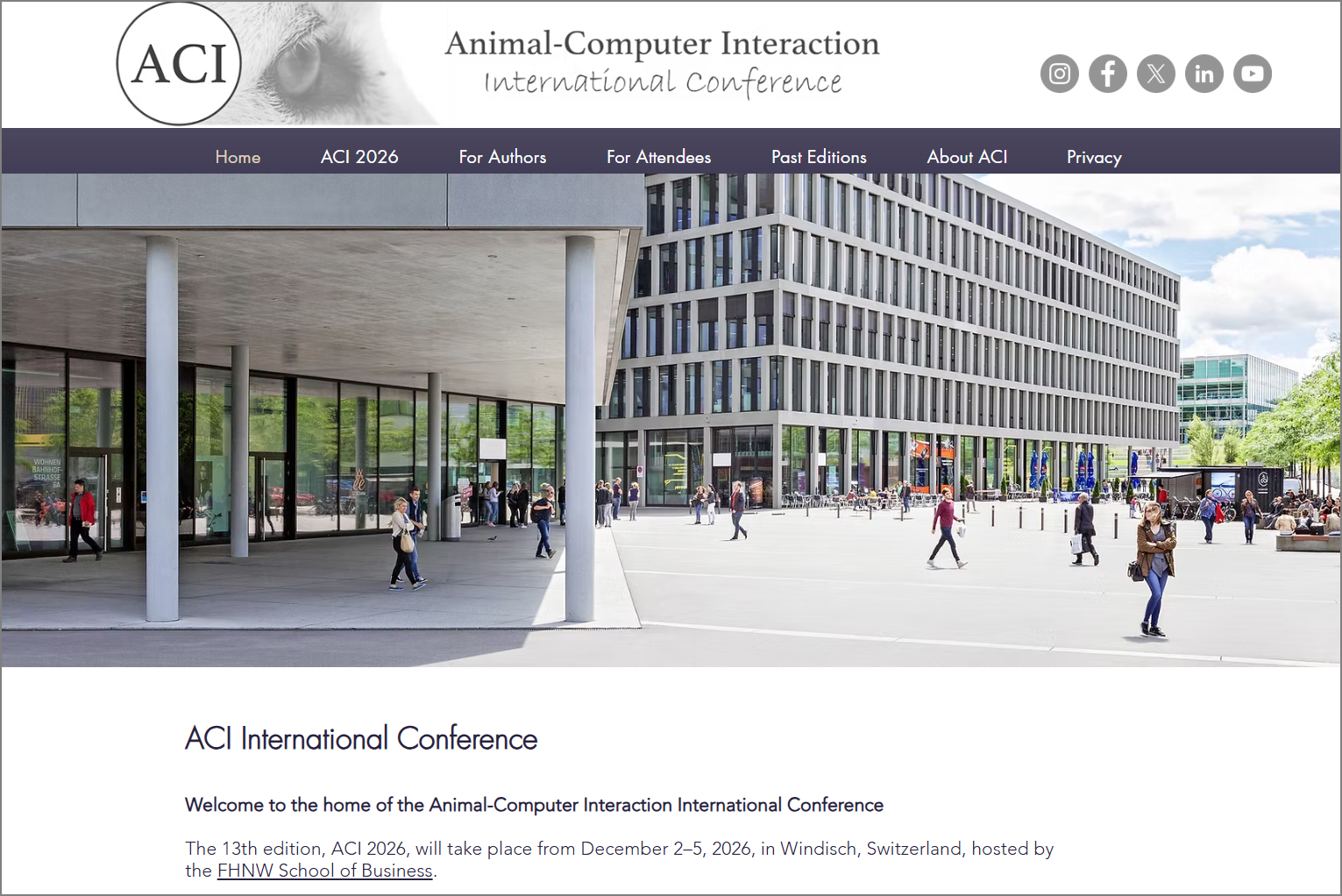
The ACI 2026 International Conference will take place from December 2–5, 2026, on the FHNW campus in Brugg-Windisch, Switzerland, marking the first time the event is held in continental Europe. Registration is now open, with Early Bird rates available until September 30, 2026. The conference continues a tradition that has brought the Animal-Computer Interaction community to Glasgow, North Carolina, Newcastle, Bloomington, Milton Keynes, Haifa, and Atlanta, reinforcing its position as a leading venue for research at the intersection of animals and technology. As the field continues to grow, researchers and practitioners explore how technology shapes animals’ lives, welfare, cognition, and social dynamics while developing animal-centered systems and methods that embrace multispecies perspectives. The conference maintains its commitment to interdisciplinary collaboration across biology, technology, and cultural studies, supporting work that seeks to design ethically grounded, welfare-enhancing, and inclusive technological futures for all animals, humans included. ACI 2026 also features a Special Issue on Animal-Machine Interaction. The proceedings will be published in the ACM library. The conference will be hosted by Prof. Dr. Oliver Bendel, FHNW School of Business.
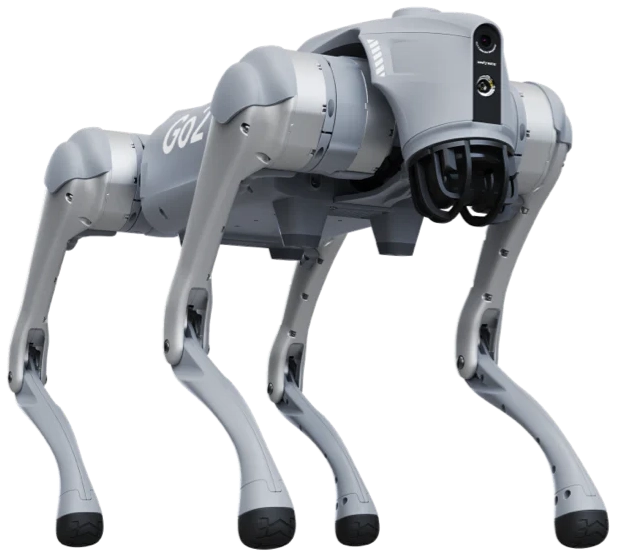
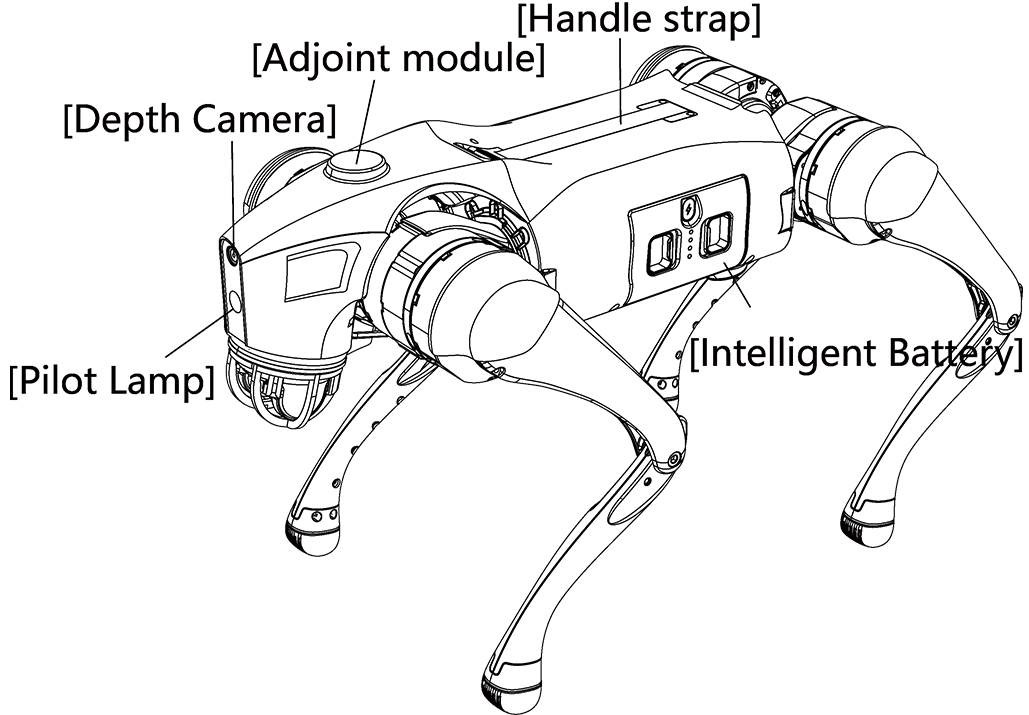
Im neuen Buch „Tier-Maschine-Interaktion“ von Oliver Bendel (Springer Gabler, 2026) werden zahlreiche Projekte vorgestellt, die Begegnungen zwischen Tieren und Robotern bzw. Drohnen zum Gegenstand haben. Dazu gehört die „Robodog“-Studie, die 2025 an der Hochschule für Wirtschaft FHNW durchgeführt wurde. Selina Rohr untersuchte, wie Haushunde auf den vierbeinigen Roboter Unitree Go2 – von Projektinitiator Oliver Bendel Bao genannt – reagieren und wie ihre Besitzer solche Roboter in gemeinsam genutzten öffentlichen Räumen wahrnehmen. Es zeigte sich, dass die meisten Hunde vorsichtig, aber nicht aggressiv waren. Das Interesse nahm zu, sobald sich der Roboter bewegte, während visuelle Modifikationen kaum Wirkung zeigten. Solche Projekte sind wichtig, weil Begegnungen zwischen Tieren und Robotern ständig zunehmen, in der Landwirtschaft, aber auch in Ballungsgebieten und Haushalten. Gerade erleben robotische Vierbeiner wie Spot und Unitree Go2 sowie robotische Zweibeiner wie Digit, Apollo, Figure 03 und NEO einen Boom, wobei letztere als Allzweckroboter vermarktet werden. Sie alle müssen nicht nur menschenfreundlich, sondern auch tierfreundlich gestaltet werden. Das Buch „Tier-Maschine-Interaktion“ kann über link.springer.com/book/10.1007/978-3-658-50921-7 heruntergeladen bzw. erstanden werden.
Oliver Bendel’s paper „Towards a Discipline of Animal-Machine Interaction“ has been accepted for presentation at Robophilosophy 2026. The renowned conference on the philosophical aspects of social robotics has been held since 2014 and will take place in Dublin this year. Autonomous and semi-autonomous machines such as robots and drones are increasingly moving into natural and urban environments, leading to a growing number of interactions between animals and machines and raising corresponding new ethical and conceptual challenges. This article proposes animal-machine interaction (AMI) as a distinct discipline concerned with the design and governance of machines that encounter animals. After clarifying core concepts and delineating AMI from related fields, the article highlights the role of machine ethics in developing animal-friendly systems. Selected application examples illustrate how machines can support animal survival and well-being, while the ethical discussion addresses both opportunities and risks of technological intervention in animal habitats. It is becoming clear that AMI is an increasingly important field of research, but one that must be constantly reoriented and questioned. Oliver Bendel has participated in the biennial conference series since 2018. That year, he delivered a keynote speech in Vienna alongside Hiroshi Ishiguro, Guy Standing, and Joanna Bryson. His book „Tier-Maschine-Interaktion“ („Animal-Machine Interaction“) was recently published by Springer Gabler.
Ticro Goto ist Historiker und Ethnologe. Er studierte an der Kunsthochschule Kassel, der Freien Universität Berlin und der Humboldt-Universität zu Berlin. Zu seinen Veröffentlichungen zählen „Cyberfakte“ (2016), „Der Ewige Palast“ (2024) und „Kreativer Suizid: Rauchen, Hunger und die Lüge vom inneren Kind“. Er schreibt und forscht auch zu Schweinen und hat ihnen in seinem Buch „Seuchen“ ein ganzes Kapitel gewidmet. Mit Prof. Dr. Oliver Bendel war er im Gespräch über Tierethik, Maschinenethik und Tier-Maschine-Interaktion. Der Podcast erschien am 28. März 2026 auf kokos-und-zitrone.de. Zuletzt kamen dort Pero Mićić, Falco Aust und Gunter Dueck zu Wort. Auf seiner Website schreibt Ticro Goto: „Oliver Bendel und ich sprechen darüber, warum wir Maschinen bauen mussten, um zu beweisen, dass Tiere keine Maschinen sind. Über Mähroboter mit Gewissen und Schweine, die klüger sind als Hunde. Über KI, die Walgesang entschlüsselt und Fledertieren beim Streiten zuhört.“ Der Podcast mit dem Titel „Die Sprache der Tiere“ kann über kokos-und-zitrone.de/p/die-sprache-der-tiere angehört werden.
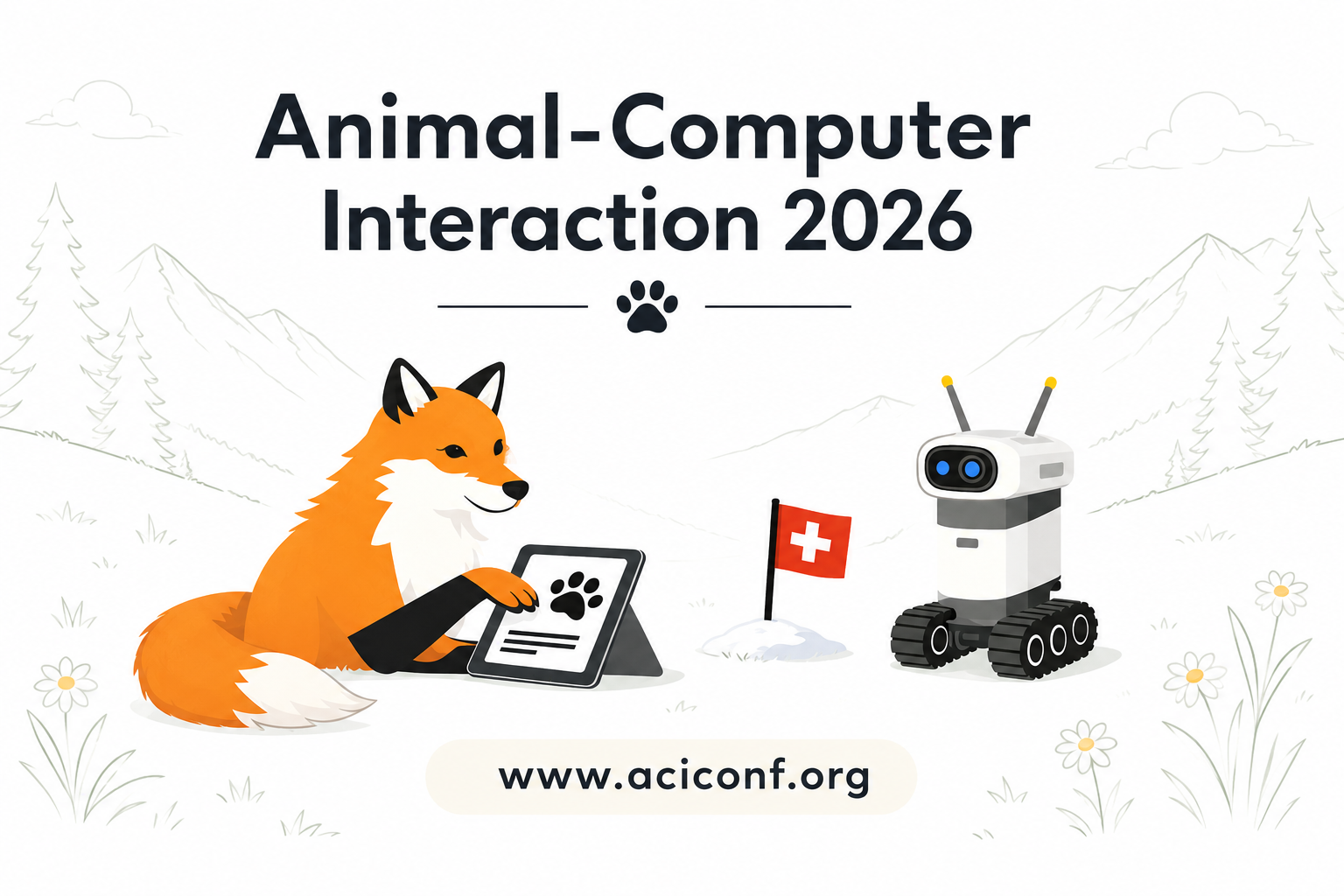
Prof. Dr. Oliver Bendel will host the next ACI Conference, bringing the event to continental Europe for the first time as it convenes on the FHNW campus in Brugg-Windisch, Switzerland, from December 2-5, 2026. The conference website is already online at www.aciconf.org, where the most important information is available; individual deadlines may still change. In the meantime, the website has been updated and expanded. It now includes visual elements that reference both the animal world of Switzerland and the thematic focus of the conference, strengthening its visual identity and contextual framing. Building on a tradition that has taken the community from Glasgow to North Carolina, Newcastle, Bloomington, Milton Keynes, Haifa, and Atlanta, this edition continues the conference’s role as a leading venue for advancing Animal-Computer Interaction. As the field grows, researchers and practitioners explore how technology shapes animals‘ lives, welfare, cognition, and social dynamics while developing animal-centered systems and methods that embrace multispecies perspectives. The conference maintains its commitment to interdisciplinary collaboration across biology, technology, and cultural studies, supporting work that seeks to design ethically grounded, welfare-enhancing, and inclusive technological futures for all animals, humans included. ACI 2026 will also feature a Special Issue on Animal-Machine Interaction, a research field shaped in important ways by Oliver Bendel. The conference proceedings will be published in a volume of a renowned organization, ensuring wide visibility and long-term accessibility for the contributions presented.
Prof. Dr. Oliver Bendel will host the next ACI Conference, bringing the event to continental Europe for the first time as it convenes on the FHNW campus in Brugg-Windisch, Switzerland, from December 2–5, 2026. The conference website is already online, and the most important information is available at www.aciconf.org; individual deadlines may still change. Building on a tradition that has taken the community from Glasgow to North Carolina, Newcastle, Bloomington, Milton Keynes, Haifa, and Atlanta, this edition continues the conference’s role as a leading venue for advancing Animal-Computer Interaction. As the field grows, researchers and practitioners explore how technology shapes animals’ lives, welfare, cognition, and social dynamics while developing animal-centered systems and methods that embrace multispecies perspectives. The conference maintains its commitment to interdisciplinary collaboration across biology, technology, and cultural studies, supporting work that seeks to design ethically grounded, welfare-enhancing, and inclusive technological futures for all animals, humans included. ACI 2026 will also feature a Special Issue on Animal-Machine Interaction, a research field shaped in important ways by Oliver Bendel. The proceedings will be published in a volume of a renowned organization.
Prof. Dr. Oliver Bendel will host the next ACI Conference, marking the first time the event comes to continental Europe as it convenes on the FHNW campus in Brugg-Windisch, Switzerland, from 2-5 December 2026. Building on a tradition that has taken the community from Glasgow to North Carolina, Newcastle, Bloomington, Milton Keynes, Haifa and Atlanta, this edition continues the conference’s role as the premier venue for advancing Animal-Computer Interaction. As the field grows, researchers and practitioners explore how technology shapes animals‘ lives, wellbeing, cognition and social dynamics while developing animal-centered systems and methods that embrace multispecies perspectives. The conference maintains its commitment to interdisciplinary collaboration across biology, technology and cultural studies, supporting work that seeks to design ethically grounded, welfare-enhancing and inclusive technological futures for all animals, humans included. The official conference website will go live in January 2026. Information on previous ACI conferences is available at www.aciconf.org.
The volume „Animals, Ethics, and Engineering: Intersections and Implications“, edited by Rosalyn W. Berne, was published on 7 August 2025. The authors include Clara Mancini, Fiona French, Abraham Gibson, Nic Carey, Kurt Reymers, and Oliver Bendel. The title of Oliver Bendel’s contribution is „An Investigation into the Encounter Between Social Robots and Animals“. The abstract reads: „Increasingly, social robots and certain service robots encounter, whether this is planned or not, domestic, farm, or wild animals. They react differently, some interested, some disinterested, some lethargic, some panicked. Research needs to turn more to animal-robot relationships, and to work with engineers to design these relationships in ways that promote animal welfare and reduce animal suffering. This chapter is about social robots that are designed for animals, but also those that – for different, rather unpredictable reasons – meet, interact, and communicate with animals. It also considers animal-friendly machines that have emerged in the context of machine ethics. In the discussion section, the author explores the question of which of the presented robots are to be understood as social robots and what their differences are in their purpose and in their relationship to animals. In addition, social and ethical aspects are addressed.“ The book was produced by Jenny Publishing and can be ordered via online stores.
Animal-machine interaction (AMI) is a discipline or field of work that deals with the interaction between animals and machines. This is how Prof. Dr. Oliver Bendel explains it in the Gabler Wirtschaftslexikon. It is primarily concerned with the design, evaluation, and implementation of complex machines and computer systems with which animals interact and which in turn interact and communicate with animals. There are close links to animal-computer interaction (ACI). Increasingly, the machine is a robot that is either remote-controlled or (partially) autonomous. In „The Robodog Project“ (also known as „Bao Meets Pluto„), the encounters between robotic quadrupeds and small to medium-sized dogs are explored. The project collaborator is Selinar Rohr, who is writing her bachelor’s thesis in this context. The walking, running, and jumping Unitree Go2 from Oliver Bendel’s private Social Robots Lab is in its original state or is wearing a head made with a 3D printer provided by Norman Eskera. The project is being carried out at the FHNW School of Business and will end on August 12, 2025, after which the results will be presented to the community and, if possible, to the general public.
Robotische Vierbeiner – oft als Roboterhunde bezeichnet – verbreiten sich immer mehr. In der Folge werden sie zunehmend echten Hunden begegnen. Die Frage ist, wie man den Roboter so konzipiert und konstruiert, dass die Tiere nicht überreagieren und weder Robotern noch Tieren oder Umstehenden irgendein Schaden zugefügt wird. Im Rahmen des „Robodog Project“ sollen kleinere Hunde mit dem gehenden, laufenden und springenden Unitree Go2 aus dem privaten Social Robots Lab von Prof. Dr. Oliver Bendel konfrontiert werden. Es ist geplant, kontrollierbare Umgebungen wie Hundetrainingsplätze zu besuchen und Treffen und Gespräche mit Hundebesitzern zu arrangieren. Die Ergebnisse werden zu Vorschlägen für Gestaltung und Steuerung führen. Auch Robot Enhancement kann eine Rolle spielen. So haben Roboterliebhaber mit einem 3D-Drucker karikaturenhafte Köpfe für den Unitree Go2 hergestellt, die ihm ein völlig anderes Aussehen verleihen. Das Projekt – nach dem Kosenamen des robotischen Vierbeiners und der Disneyfigur auch „Bao Meets Pluto“ genannt – startete Ende März 2025 an der Hochschule für Wirtschaft FHNW. Es ist Teil der Forschung von Oliver Bendel auf dem Gebiet der Tier-Maschine-Interaktion.
Since 2012, Oliver Bendel has developed 14 concepts and artifacts in the field of animal-computer interaction (ACI) or animal-machine interaction (AMI) together with his students. They can be divided into three categories. The first are animal- and nature-friendly concepts. The second are animal-friendly machines and systems (i.e., forms of moral machines). The third are animal-inspired machines and systems that replace the animals or bring them closer to you. Articles and book chapters have been published on many of the projects. The names of the developers can be found in these. A few prototypes made it into the media, such as LADYBIRD and HAPPY HEDGEHOG. Oliver Bendel repeatedly refers to Clara Mancini, the pioneer in the field of animal-computer interaction. Recently, ethicists such as Peter Singer have also turned their attention to the topic. Current projects include „Robodog“ (in which a robot dog meets real dogs) and „VISUAL“ (which is designed to enable photo safaris for the blind).
Since 2012, Oliver Bendel has developed 13 concepts and artifacts in the field of animal-computer interaction (ACI) or animal-machine interaction (AMI) together with his students. They can be divided into three categories. The first are animal- and nature-friendly concepts. The second are animal-friendly machines and systems (i.e., forms of moral machines). The third are animal-inspired machines and systems that replace the animals or bring them closer to you. Articles and book chapters have been published on many of the projects. The names of the developers can be found in these. A few prototypes made it into the media, such as LADYBIRD and HAPPY HEDGEHOG. Oliver Bendel repeatedly refers to Clara Mancini, the pioneer in the field of animal-computer interaction. Recently, ethicists such as Peter Singer have also turned their attention to the topic.
The manuscript of the book „Non-Human Animals, Ethics and Engineering“ (alternative title „Animals, Ethics and Engineering“) was sent to the publisher Jenny Stanford in May 2024. It contains 16 chapters on this topic, including by Clara Mancini („Animal-Centered Technology and Sustainable Development“), Fiona French („Designing and Crafting Systems for Non-Human Animals“), and Leonie Bossert together with Thilo Hagendorff („Animals and AI: The Role of Animals in AI Research and Application“). In “An Investigation into the Encounter Between Social Robots and Animals” (Chapter 12), Oliver Bendel “delves into the evolving landscape of social robots designed to interact with animals, dissecting the intricate dynamics of these interactions and their ethical ramifications” (Information from the editors). The philosopher of technology also presents his own projects, such as concepts and prototypes of animal-friendly machines, developed in the context of machine ethics, animal-machine interaction, and social robotics. The editor is Rosalyn W. Berne from the University of Virginia. The book is scheduled for publication in late summer or fall 2024.
Fig.: A robot turtle and a woman (Image: Ideogram)
The Tenth International Conference on Animal-Computer Interaction will be held December 4-8, 2023, in Raleigh, North Carolina, hosted by North Carolina State University. „ACI is the leading International Conference on Animal-Computer Interaction. It is a highly multidisciplinary event drawing researchers and practitioners from diverse backgrounds to share and discuss work and topics related to the research and design of computing-enabled and interactive technology for and with animals.“ (Website ACI) The Ninth International Conference on Animal-Computer Interaction was held in Newcastle upon Tyne at the end of 2022. Also this year the organizers are interested in a variety of topics in animal-computer interaction and animal-machine interaction, as the call for papers (CfP) reveals: „Submissions might address topics such as: the role of technology in shaping human-animal relationships; studies and/or analysis of large-scale technology for animal deployments; considerations on the wider context of technology for animal use; methods and reflections on studying the next generation of technology for animals; or how to conduct ACI research in a world where commercial design and deployment of technology for animals outpaces academic thought.“ (Website ACI) The CfP can be accessed at www.aciconf.org/aci2023.
Fig.: This is how DALL-E imagines a penguin with VR glasses
British Filmmaker John Downer has created artificial monkeys, wolves, hippos, turtles, alligators, etc., to observe appropriate wildlife and obtain spectacular images. His well-known robots are very intricately designed and resemble the animals they mimic in almost every detail. It is not necessary to resort to such technically elaborate and artistically demanding means for all species. USA Today reports in a recent article about a robot called ECHO. „ECHO is a remote-controlled ground robot that silently spies on the emperor penguin colony in Atka Bay. The robot is being monitored by the Single Penguin Observation and Tracking observatory. Both the SPOT observatory, which is also remote-operated through a satellite link, and the ECHO robot capture photographs and videos of animal population in the Arctic.“ (USA Today, May 6, 2022) ECHO does not resemble a penguin in any way. It is a yellow vehicle with four thick wheels. But as a video shows, the animals seem to have gotten used to it. It comes very close to them without scaring them. Wildlife monitoring using robots is becoming increasingly important, and obviously very different types are being considered.