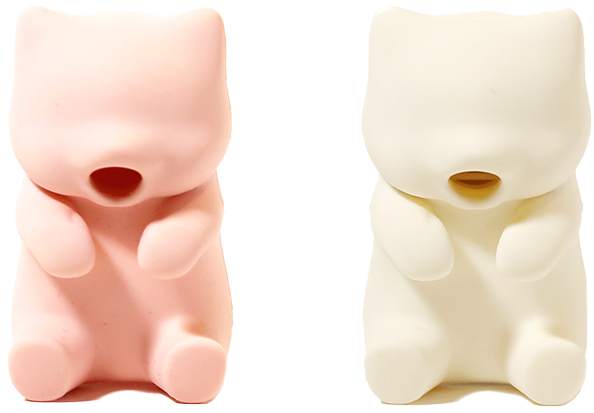
As Publicity Chair of ICSR + Art 2026, Oliver Bendel had the opportunity on the third evening to choose between two gifts, one larger and one smaller. Since he had traveled to London with only carry-on luggage, he opted for the smaller one. When he unpacked the cardboard box back home in Zurich, out popped a little bear. Pressing its stubby tail causes it to blow air through its mouth. In this way, it can cool down hot drinks and hot soups. The philosopher of technology tried it out on his terrace. The little bear blew what seemed like a hole right into his coffee. Its name is, by the way, Nekojita FuFu, and it is – like Qoobo and Mirumi – from Yukai Engineering. The Berlin Bear is the heraldic animal of Berlin and has adorned the city’s coat of arms for centuries. Just outside Germany’s capital lies Potsdam. The city is best known for its magnificent palaces, beautiful gardens, and its important role in German and European history. It is home to the University of Potsdam as well as several renowned research institutions, including the Max Planck Institute for Gravitational Physics. About 6 kilometers outhwest of Potsdam, in the village of Caputh (part of the municipality of Schwielowsee), stands the Einstein House. The famous physicist had this modest wooden house built in 1929 based on plans by the architect Konrad Wachsmann. Einstein and his family spent their summers there, and he worked there until the end of 1932. The University of Potsdam will host ICSR + Health 2027, where Dr. Katharina Kühne and the Potsdam Embodied Cognition Group (PECoG) will welcome the community with open arms. Incidentally, Potsdam’s coat of arms features a red eagle on a silver field.
Fig.: The bear in various colors (Photo: Yukai Engineering)
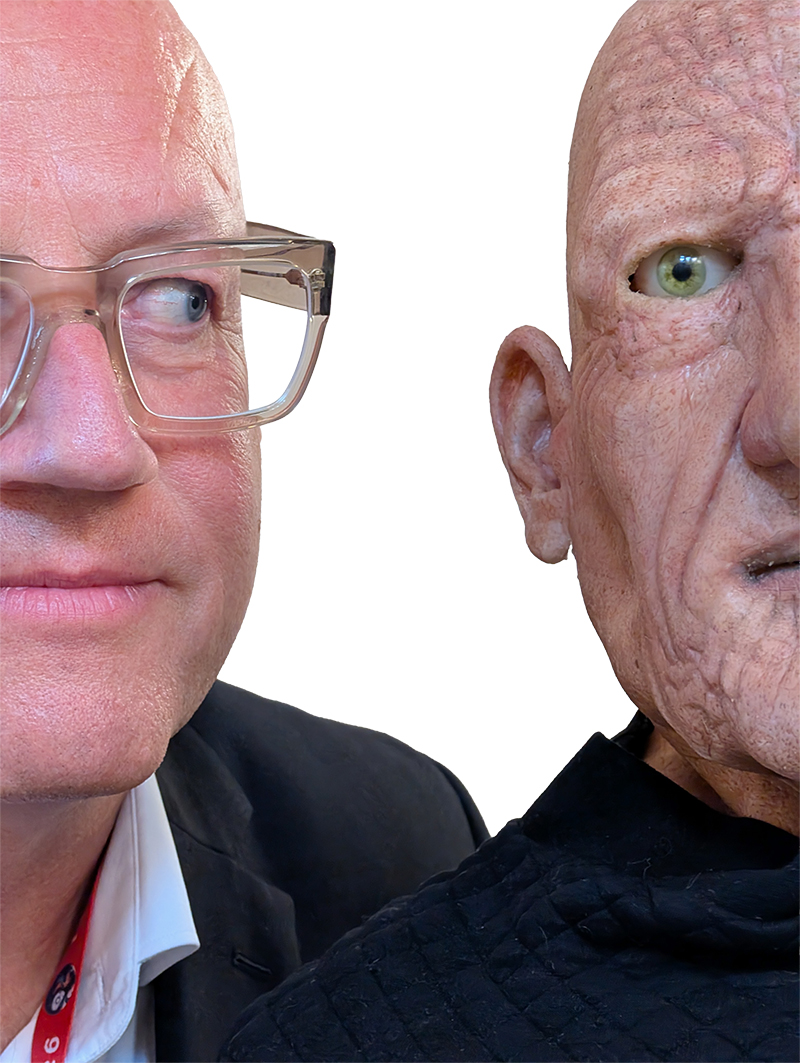
The 18th International Conference on Social Robotics (ICSR + Art 2026) is currently taking place in London from July 1–4, bringing together researchers, academics, and industry professionals from around the world to explore the latest developments in social robotics. Among the highlights of the second conference day was a live demonstration of Euclid, an advanced humanoid robot developed by Dr. Carl Strathearn, Assistant Professor of Computer Science, and Emilia Sobolewska. Strathearn’s work focuses on developing autonomous humanoid robots powered by artificial intelligence that look, behave, and interact in ways that closely resemble humans. Creating lifelike humanoid robots is particularly valuable because the human face remains the most natural interface for communication, emotional expression, and learning. By replicating these familiar conditions, researchers can make AI technologies more intuitive and accessible for people from a wide range of backgrounds, ages, and abilities. Euclid embodies this vision as a fully autonomous social robot equipped with automatic speech recognition, computer vision, generative AI, skin sensors, and a unique robotic mouth that uses machine learning to generate realistic visemes for speech. The robot has been specifically designed for social and assistive interactions with older adults, where natural communication and trust are essential. What makes Euclid especially remarkable, however, is its appearance. While many well-known female humanoid robots, such as Sophia, Erika, and Harmony, feature smooth, almost flawless faces that reflect conventional beauty stereotypes, Euclid deliberately takes a different approach. The robot realistically portrays the deeply lined facial features and weathered skin of an older man. This design choice is both technically demanding and artistically sophisticated, demonstrating that age, character, and authenticity can be just as aesthetically compelling as youthful perfection. In doing so, Euclid challenges established conventions in humanoid robot design while presenting a more diverse and human-centered vision of social robotics. At the ICSR, scientists had the opportunity to talk with Euclid and ask him about his identity and charisma. Further information is available at icsr2026.uk.
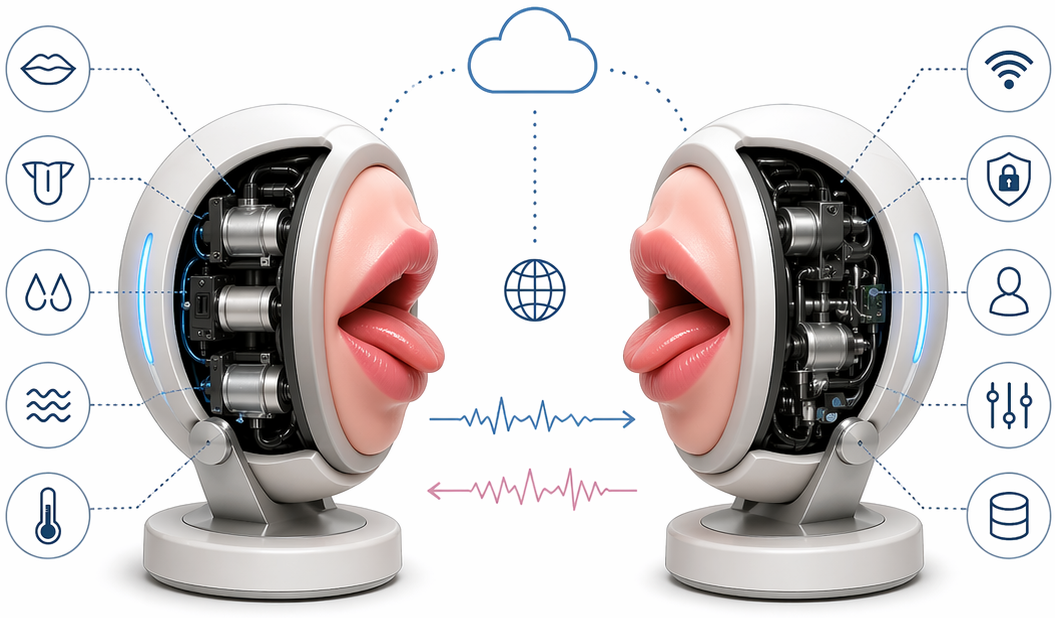
The 18th International Conference on Social Robotics (ICSR + Art 2026) is currently taking place in London from July 1–4, bringing together researchers, academics, and industry professionals from around the world to discuss the latest advances in social robotics. On the second day of the conference, researchers presented their latest work during the poster session, including Oliver Bendel’s paper „Kiss Me More: Artificial Lips for Intimate Encounters“. The title is a tribute to Doja Cat’s hit „Kiss Me More“, reflecting the paper’s focus on technology-mediated intimacy. The paper introduces the concept of the KissMachine, a next-generation telekissing device with artificial lips designed to enable more intimate remote interactions while addressing the technical, social, and ethical challenges of such technology. It also pays tribute to the Kissenger, invented by Hooman Samani in 2012, one of the pioneering telekissing systems that inspired subsequent research in this field. The exchange between Bendel and Samani highlighted both the evolution of telekissing technology over the past decade and the continuing interest in human-centered approaches to social robotics. Further information is available at icsr2026.uk.
Vom 1. bis 4. Juli 2026 trifft sich die Community der Sozialen Robotik zur 18th International Conference on Social Robotics (ICSR + ART 2026) in London. Getagt wird im Senate House der University of London, einem der bekanntesten akademischen Gebäude Großbritanniens. Forscher, Entwickler, Künstler und Vertreter der Industrie diskutieren dort aktuelle Entwicklungen und zukünftige Perspektiven sozialer Roboter sowie animaloider, humanoider und mythomorpher Gestaltung. Besonders ist in diesem Jahr die Verbindung von Robotik und Kunst. Neben dem wissenschaftlichen Programm bietet die Konferenz mit Formaten wie der Grand Challenge, dem Robot Fringe, den Debates (die mit dem Debate Room einen exklusiven Ort haben) und einem Industry Day zahlreiche Möglichkeiten für Austausch und Erkenntnisgewinn. Die General Chairs Hooman Samani und Saina Akhond, beide von der University of the Arts London, und ihre Mitstreiter von Hochschulen auf der ganzen Welt setzen damit gezielt auf Interdisziplinarität, Innovation und Diskurs. Weitere Informationen sind über icsr2026.uk verfügbar.
Bei Deutschlandfunk Kultur sprach am frühen Morgen des 27. Mai 2022 der Moderator Dieter Kassel mit Prof. Dr. Oliver Bendel über die ABBA-Show Voyage in London und die ABBAtare. Diese speziellen Avatare wurden mit hohem Aufwand generiert. Man hat Agnetha, Björn, Anni-Frid und Benny wochenlang ihre Songs vortragen lassen und dabei ihre Bewegungen beim Tanzen und ihre Emotionen beim Singen erfasst. Vor allem hat man Motion Capture verwendet. Die vier wurden in spezielle Ganzkörperanzüge gesteckt, auf denen Marker befestigt sind. Zudem wurde die Mimik aufgezeichnet, vor allem, um die Emotionen zeigen zu können. 160 Kameras haben von allen Seiten gefilmt. Die Gesichter wurden anschließend digital verjüngt. Und offensichtlich auch die Körper. Die Avatare werden direkt auf die Bühne projiziert. Man macht dies in diesem Fall mit Hilfe von Projektoren, Reflektoren und großen Flächen mit reflektierender Folie. Die Avatare sollten am Ende aussehen wie Hologramme, also eine Präsenz im Raum haben. Es ist in diesem Fall sozusagen keine physische Präsenz wie bei Robotern, sondern eine virtuelle. Wobei das nur die halbe Wahrheit ist, denn die Projektionsflächen sind physisch vorhanden. Man soll sie nur nicht sehen. In London tritt eine Band auf, die ABBA ist und doch nicht ABBA ist. Man könnte sogar sagen, dass die ABBAtare die Songs der Originale covern. Es handelt sich um Playback, aber die Avatare entwickeln ein Eigenleben. Björn hat dazu gesagt: „Ich sehe diesen jungen Typen auf dem Bildschirm und habe das Gefühl, der hat eine eigene Persönlichkeit. Das bin ich. Aber da ist auch noch etwas anderes.“ (Südkurier, 26. Mai 2022) Oliver Bendel veröffentlichte 2001 im „Lexikon der Wirtschaftsinformatik“ den Beitrag „Avatar“ und 2019 im Springer-Buch „AI Love You“ (2019) den Beitrag „Hologram Girl“ …
Am 19. und 20. Dezember 2017 findet der „Third International Congress on Love and Sex with Robots“ in London statt. Die akzeptierten Papers sind auf loveandsexwithrobots.org/program/ aufgelistet. Den Anfang macht Prof. Dr. Oliver Bendel (School of Business FHNW, Schweiz) mit „SSML for Sex Robots“. Er hatte im vergangenen Jahr am Goldsmiths über Sexroboter aus Sicht der Maschinenethik vorgetragen. Dieses Mal widmet er sich synthetischen Stimmen. Prof. Dr. Sophie Wennerscheid (Ghent University, Belgien) ist mit ihrem Thema „Posthuman desire in robotics and science fiction“ vertreten, Dr. Rebekah Rousi (University of Jyväskylä, Finnland) mit „Lying cheating robots – robots and infidelity“, Prof. Dr. Deborah Blizzard (Rochester Institute of Technology, UK) mit „The Next Evolution: The Constitutive Human-Doll Relationship as Companion Species“. Aus der Schweiz kommt ein weiterer Beitrag, nämlich „Dolores and Robot Sex: Fragments of Non-Anthropocentric Ethics“ von Prof. Dr. Thomas Beschorner (University of St. Gallen, Schweiz) und Florian Krause (ebd.). Das Buch mit den Beiträgen der letzten Konferenz ist Ende April 2017 bei Springer erschienen. Weitere Informationen über loveandsexwithrobots.org.