
Die Künstliche Intelligenz hat zunächst die menschliche oder tierische Intelligenz als Referenz und versucht, sie in bestimmten Aspekten abzubilden. Sie kann zudem anstreben, von der menschlichen oder tierischen Intelligenz abzuweichen, etwa indem sie mit ihren Systemen die Probleme anders löst. Die Maschinenethik widmet sich der maschinellen Moral, bringt sie hervor und untersucht sie. Ob man die Begriffe und Methoden der Maschinenethik mag oder nicht – man muss anerkennen, dass neuartige autonome Maschinen entstehen, die in einem gewissen Sinne vollständiger als frühere erscheinen. Es verwundert fast, dass sich die künstliche Moral nicht viel früher zur künstlichen Intelligenz gesellt hat. Nun scheinen vor allem Maschinen, die menschliche Intelligenz und menschliche Moral für überschaubare Anwendungsbereiche simulieren, eine gute Idee zu sein. Aber was ist, wenn eine Superintelligenz mit einer Supermoral eine neue Art bildet, die der unseren überlegen ist? Das ist natürlich Science-Fiction. Aber auch etwas, das manche Wissenschaftler erreichen wollen. Prof. Dr. Oliver Bendel aus Zürich stellt in seinem Vortrag am 18. Juli 2019 ab 18:30 Uhr am KIT gegenwärtige Entwicklungen und künftige Möglichkeiten vor und nimmt eine kritische Einordnung vor. Er schließt damit das Colloquium Fundamentale des Sommersemesters ab. Weitere Informationen über www.zak.kit.edu/colloquium_fundamentale.
Chatbots as Moral and Immoral Machines
The papers of the CHI 2019 workshop „Conversational Agents: Acting on the Wave of Research and Development“ (Glasgow, 5 May 2019) are now listed on convagents.org. The extended abstract by Oliver Bendel (School of Business FHNW) entitled „Chatbots as Moral and Immoral Machines“ can be downloaded here. The workshop brought together experts from all over the world who are working on the basics of chatbots and voicebots and are implementing them in different ways. Companies such as Microsoft, Mozilla and Salesforce were also present. Approximately 40 extended abstracts were submitted. On 6 May, a bagpipe player opened the four-day conference following the 35 workshops. Dr. Aleks Krotoski, Pillowfort Productions, gave the first keynote. One of the paper sessions in the morning was dedicated to the topic „Values and Design“. All in all, both classical specific fields of applied ethics and the young discipline of machine ethics were represented at the conference. More information via chi2019.acm.org.
Next Frontiers
„The ‚Next Frontiers‘ conference will bring scientists and science fiction authors into contact. Different sciences getting into interdisciplinary conversations plus authors of fiction offering new, even revolutionary perspectives will open up the territory for new visions of the future. The conference aims at surmounting old, dysfunctional patterns of thinking. Central to this is the reality transforming potential of literature, film and other arts, and the huge contribution of fictional world building to real scientific and technological breakthroughs.“ This is the introductory text for a conference to be held in Stuttgart from 27 to 29 June 2019. The opening lecture will be given by the information and machine ethicist Prof. Dr. Oliver Bendel. He is going to talk about approaches and artifacts of machine ethics. The writer Andreas Brandhorst will then give an introduction to artificial intelligence. On the panel they both will discuss with the journalist Constantin Schnell. Further information via www.next-frontiers.de/en/.

Fig.: A spaceship
Save the Hedgehogs!
Between June 2019 and January 2020, the sixth artifact of machine ethics will be created at the FHNW School of Business. Prof. Dr. Oliver Bendel is the initiator, the client and – together with a colleague – the supervisor of the project. Animal-machine interaction is about the design, evaluation and implementation of (usually more sophisticated or complex) machines and computer systems with which animals interact and communicate and which interact and communicate with animals. Machine ethics has so far mainly referred to humans, but can also be useful for animals. It attempts to conceive moral machines and to implement them with the help of further disciplines such as computer science and AI or robotics. The aim of the project is the detailed description and prototypical implementation of an animal-friendly service robot, more precisely a mowing robot called HAPPY HEDGEHOG (HHH). With the help of sensors and moral rules, the robot should be able to recognize hedgehogs (especially young animals) and initiate appropriate measures (interruption of work, expulsion of the hedgehog, information of the owner). The project has similarities with another project carried out earlier, namely LADYBIRD. This time, however, more emphasis will be placed on existing equipment, platforms and software. The first artifact at the university was the GOODBOT – in 2013.

Fig.: A happy hedgehog
A Great Moment in Machine Ethics
The 23rd Berlin Colloquium of the Daimler and Benz Foundation took place on May 22, 2019. It was dedicated to care robots, not only from the familiar positions, but also from new perspectives. The scientific director, Prof. Dr. Oliver Bendel, invited two of the world’s best-known machine ethicists, Prof. Dr. Michael Anderson and Prof. Dr. Susan L. Anderson. Together with Vincent Berenz, they had programmed a Nao robot with a series of values that determine its behavior and simultaneously help a person in a simulated elderly care facility. A contribution to this appeared some time ago in the Proceedings of the IEEE. For the first time, they presented the results of this project to a European audience, and their one-hour presentation, followed by a twenty-minute discussion, can be considered a great moment in machine ethics. Other internationally renowned scientists, such as the Japan expert Florian Coulmas, also took part. He dealt with artefacts from Japan and relativized the frequently heard assertion that the Japanese considered all things to be inspired. Several media reported on the Berlin Colloquium, for example Neues Deutschland.

Fig.: A Nao robot
AI Love You
Using an interdisciplinary approach, the book „AI love you“ explores the emerging topics and rapid technological developments of robotics and artificial intelligence through the lens of the evolving role of sex robots, and how they should best be designed to serve human needs. „An international panel of authors provides the most up-to-date, evidence-based empirical research on the potential sexual applications of artificial intelligence. Early chapters discuss the objections to sexual activity with robots while also providing a counterargument to each objection. Subsequent chapters present the implications of robot sex as well as the security and data privacy issues associated with sexual interactions with artificial intelligence.“ (Information by Springer) Topics featured in this book include: the Sexual Interaction Illusion Model, the personal companion system, Harmony, designed by Realbotix, an exposition of the challenges of personal data control and protection when dealing with artificial intelligence, and the current and future technological possibilities of projecting three-dimensional holograms. Oliver Bendel is the author of the contribution to the latter topic, entitled „Hologram Girl“. The book is edited by Yuefang Zhou and Martin H. Fischer and will be published in summer 2019. More information via www.springer.com/gp/book/9783030197339.

Fig.: AI love you
350 Keywords Digitalisierung
Von „Big Data“ über die „Künstliche Intelligenz“ bis hin zur „Sozialen Robotik“: Im Kontext der Digitalisierung gibt es unzählige Fachtermini. Das neue Nachschlagewerk „350 Keywords Digitalisierung“ von Prof. Dr. Oliver Bendel ist für alle geeignet, die einen schnellen Einstieg in das Gebiet der Digitalisierung suchen und sich für Fragen der Ethik interessieren. In 350 übersichtlichen Beiträgen werden die Grundlagen und Entwicklungen leicht verständlich erläutert. Der Begriff der Digitalisierung hat mehrere Bedeutungen. Er kann die digitale Umwandlung und Darstellung bzw. Durchführung von Information und Kommunikation oder die digitale Modifikation von Instrumenten, Geräten und Fahrzeugen ebenso ansprechen wie die digitale Revolution, die auch als dritte Revolution bekannt ist. Auch mit der vierten Revolution ist der Begriff eng verbunden. Das Buch ist Ende April 2019 im Verlag Springer Gabler erschienen und kostet als E-Book ca. 15, in gedruckter Form ca. 20 Euro. Viele Hochschulmitglieder können es über SpringerLink kostenlos herunterladen. Es hat 286 Seiten. Weitere Informationen über www.springer.com/gp/book/9783658258221.

Abb.: Auch dieser Begriff ist enthalten (innerhalb von „Nerd“)
Workshop for a Free and Beautiful World
Dr. Mathilde Noual (Freie Universität Berlin) and Prof. Dr. Oliver Bendel (School of Business FHNW) are organizing a workshop on the social implications of artificial intelligence (AI) and robotics. They are looking for constructive proposals of technological and conceptual utopias, of counter-cultures and counter-systems offering strategies for preserving privacy, individuality, and freedom in a technological world, for going beyond the AI’s present limitations and frustrations, and for emphasising the beauty of the world and of humans’ way of accessing it (with high degree of nuance, contextuality, subjectivity, adaptability and acutality). The tracks are: The territory today: core limitations and prospects of AI; technologies and approaches against surveillance technologies (examples: the virtual burka; the hacked social credit system); technologies and approaches for an intact environment (examples: AI and robots for clean waters and seas; animals with weapons for self-defence); technologies and approaches for a new policy (examples: AI as a president); technologies and approaches for shared knowledge and education (example: open research solutions). The workshop will take place on the 29th and 30th of June 2019 in Berlin, at the Weizenbaum Institute. The CfP is addressed exclusively to the invited persons.
Fig.: Free and beautiful
Das fünfte Artefakt der Maschinenethik
Am 8. April 2019 startet an der Hochschule für Wirtschaft FHNW das E-MOMA-Projekt. „E“ steht für „Enhancing“, „MOMA“ für „Moral Machine“. Wenig verfolgt wird in der Maschinenethik bisher der Ansatz, dass die Maschine selbst die Moral weiterentwickelt, etwa indem sie die Regeln adaptiert oder priorisiert, mit Hilfe von Machine Learning, speziell auch Deep Learning. Michael Anderson, Susan Leigh Anderson und Vincent Berenz haben einen NAO-Roboter mit Methoden des Machine Learning moralisch erweitert. Ein Beitrag dazu erschien kürzlich in den Proceedings of the IEEE. Im E-MOMA-Projekt soll eine eigene Implementierung entstehen, die diese Ansätze fortführt. Dabei können z.B. neuronale Netzwerke verwendet werden. Es bietet sich die Implementierung eines Chatbots an, aber auch die Modifizierung von Hardwarerobotern ist möglich. Letztlich geht es darum, eine moralische Maschine in die Welt zu bringen, die ihre Moral anpasst und weiterentwickelt, je nach Situation bzw. je nach eingegebenen Daten. Es ist das fünfte Artefakt der Maschinenethik, das nach Ideen, Skizzen und Vorgaben von Prof. Dr. Oliver Bendel entsteht. Das erste war der GOODBOT von 2013.

Abb.: Ein Vorbild ist der Nao der Andersons
CHI Workshop on Conversational Agents
„In the last five years, work on software that interacts with people via typed or spoken natural language, called chatbots, intelligent assistants, social bots, virtual companions, non-human players, and so on, increased dramatically. Chatbots burst into prominence in 2016. Then came a wave of research, more development, and some use. The time is right to assess what we have learned from endeavoring to build conversational user interfaces that simulate quasi-human partners engaged in real conversations with real people.“ (Website Conversational Agents) The CHI 2019 workshop „Conversational Agents: Acting on the Wave of Research and Development“ (Glasgow, 5 May) brings together people „who developed or studied various conversational agents, to explore themes that include what works (and hasn’t) in home, education, healthcare, and work settings, what we have learned from this about people and their activities, and social or ethical possibilities for good or risk“ (Website Conversational Agents). Oliver Bendel will present three chatbots developed between 2013 and 2018 in the discipline of machine ethics, GOODBOT, LIEBOT and BESTBOT. More information via convagents.org (Link nicht mehr gültig).

Fig.: The BESTBOT will be presented
KI & Autonomes Fahren
„Die Digitalisierung hat längst alle Bereiche unseres Lebens durchdrungen und macht auch vor dem menschlichen Gehirn nicht Halt. Die neuen Möglichkeiten bringen Visionen von großen Entwicklungen in Wirtschaft, Forschung und natürlich auch der Hirnforschung mit sich, gleichzeitig gibt es weitreichende Diskussionen, ob alle möglich erscheinenden Entwicklungen ethisch vertretbar sind. Neuronale Netze, künstliche Intelligenz (KI), autonome Systeme – die Digitalisierung ist angewiesen auf neurowissenschaftliche Erkenntnisse. Neurowissenschaftler wiederum versprechen sich neue Wege für Forschung und Behandlung durch die rasanten Fortschritte der Digitalisierung.“ (Website GHS) Gemeinsam mit der Frankfurter Allgemeinen Zeitung veranstaltet die Gemeinnützige Hertie-Stiftung diese Reihe, die laut Eigenaussage in Übersichtsvorträgen, Podiumsdiskussionen und Gesprächen in hochkarätiger Besetzung das „Gehirn der Zukunft“ umkreist. Bei der Veranstaltung „KI & Autonomes Fahren“ am 13. Mai 2019 tragen Prof. Dr. Oliver Bendel (Hochschule für Wirtschaft FHNW), Dr. Corinna Bernarding (Universität des Saarlandes), Prof. Dr. Andreas Geiger (Max-Planck-Institut für intelligente Systeme) und Dr. Sebastian Söhner (Porsche AG) über automatisches und autonomes Fahren vor und diskutieren auf dem Podium miteinander. Weitere Informationen über www.ghst.de/gehirn/erforschen/veranstaltungen/#c11097.

Abb.: Welche ethischen Probleme wirft autonomes Fahren auf?
„Perspektiven“-Podcast zur Maschinenethik
„Perspektiven“ ist eine Gesprächsreihe zu Themen der Wirtschaftsinformatik, die Perspektiven auf Forschung und Entwicklung, Studium und Lehre und Einblicke in die Praxis behandelt. Unterstützt wird sie durch den Fachbereich Wirtschaftsinformatik der Gesellschaft für Informatik. „Wirtschaftsinformatik ist eine Wissenschaft, die Informationssysteme, ihre Gestaltung und Nutzung in organisatorischen Handlungssystemen untersucht … und damit vielschichtige Bezüge zu anderen Wissenschaften aufweist: Dabei ist nicht nur an die Informatik und Betriebswirtschaftslehre zu denken, sondern auch an die Ingenieurwissenschaften, die Soziologie und die Philosophie, insbesondere die Sprachphilosophie.“ (Website Perspektiven) In den Gesprächen dieser Reihe unterhält sich Stefan Strecker mit seinen Gästen „über ihre Perspektiven auf Themenfelder und Fragestellungen der Wirtschaftsinformatik und Bezüge zu angrenzenden Wissenschaften“ (Website Perspektiven). Am 12. Februar 2019 ist der Podcast mit Oliver Bendel zur Maschinenethik erschienen. Er kann über perspektivenpodcast.podigee.io/12-maschinenethik-gesprach-mit-oliver-bendel aufgerufen werden.

Abb.: Mikrofone warten auf die Aufnahme
Kriegsroboter und Maschinenethik
Im „Handbuch Maschinenethik“, seit 2016 von Prof. Dr. Oliver Bendel herausgegeben, ist der 17. Beitrag erschienen, mit dem Titel „Autonome Waffensysteme/Kriegsroboter“. Autorin ist Prof. Dr. Catrin Misselhorn. Aus dem Abstract: „Kriegsroboter sind der kontroverseste Anwendungsbereich der Maschinenethik. Viele namhafte Vertreter der KI-Forschung und prominente Wissenschaftler fordern sogar ein Verbot letaler autonomer Waffensysteme. Dieser Beitrag setzt sich mit dem Versuch auseinander, autonome Waffensysteme im Rahmen der Maschinenethik mit einem Ethikmodul auszustatten. Die moralischen Grundprinzipien leiten sich aus dem Völkerrecht ab, welches auf der traditionellen Theorie des gerechten Kriegs beruht. Argumente zugunsten von Kriegsrobotern mit einem Ethikmodul werden ebenso behandelt wie die Kritik daran. Die drei wichtigsten Gegenargumente betreffen das Entstehen einer Verantwortungslücke, den Wert der Möglichkeit, anders zu handeln, sowie die Annahme einer Pflicht zu töten, welche der Einsatz autonomer Waffensysteme voraussetzt. Zum Schluss wird kurz auf mögliche Parallelen zum autonomen Fahren eingegangen.“ Die nächsten fünf Beiträge, u.a. von Prof. Dr. Julian Nida-Rümelin, Prof. Dr. Dr. Eric Hilgendorf und Prof. Dr. Armin Grunwald, erscheinen in den nächsten Wochen. Dann kommt die gedruckte Ausgabe auf den Markt. Alle bisherigen Beiträge sind über link.springer.com/referencework/10.1007/978-3-658-17484-2 verfügbar.
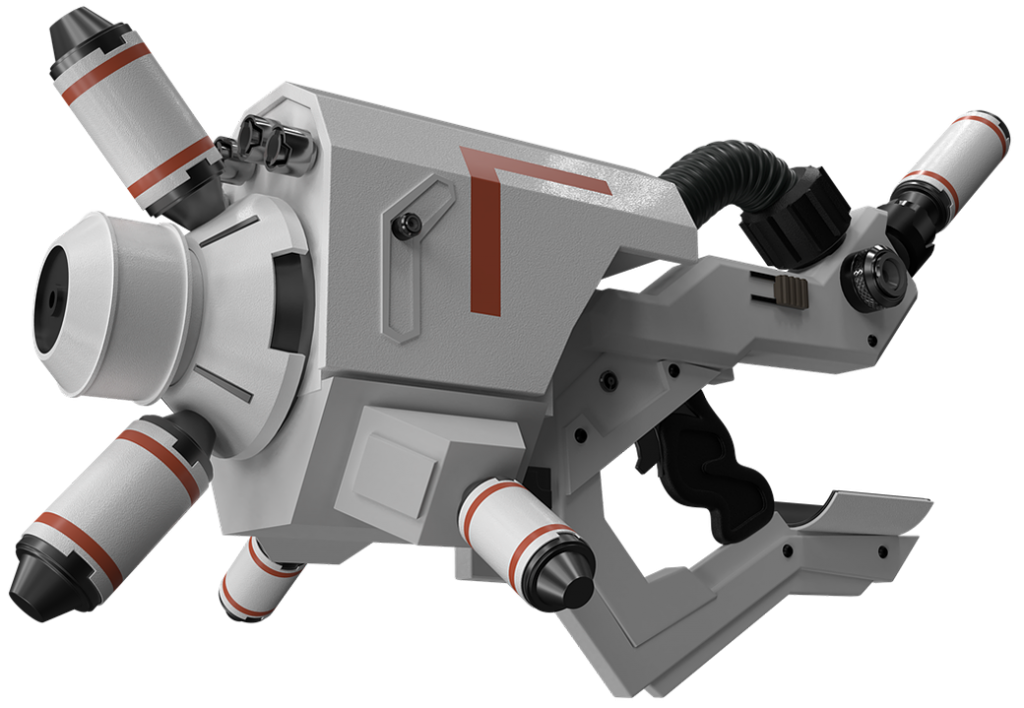
Abb.: Eine fremdartige Waffe
Towards a Proxy Morality
Machine ethics produces moral and immoral machines. The morality is usually fixed, e.g. by programmed meta-rules and rules. The machine is thus capable of certain actions, not others. However, another approach is the morality menu (MOME for short). With this, the owner or user transfers his or her own morality onto the machine. The machine behaves in the same way as he or she would behave, in detail. Together with his teams, Prof. Dr. Oliver Bendel developed several artifacts of machine ethics at his university from 2013 to 2018. For one of them, he designed a morality menu that has not yet been implemented. Another concept exists for a virtual assistant that can make reservations and orders for its owner more or less independently. In the article „The Morality Menu“ the author introduces the idea of the morality menu in the context of two concrete machines. Then he discusses advantages and disadvantages and presents possibilities for improvement. A morality menu can be a valuable extension for certain moral machines. You can download the article here.

Fig.: A proxy machine
The Spy who Loved and Nursed Me
Robots in the health sector are important, valuable innovations and supplements. As therapy and nursing robots, they take care of us and come close to us. In addition, other service robots are widespread in nursing and retirement homes and hospitals. With the help of their sensors, all of them are able to recognize us, to examine and classify us, and to evaluate our behavior and appearance. Some of these robots will pass on our personal data to humans and machines. They invade our privacy and challenge the informational autonomy. This is a problem for the institutions and the people that needs to be solved. The article „The Spy who Loved and Nursed Me: Robots and AI Systems in Healthcare from the Perspective of Information Ethics“ by Oliver Bendel presents robot types in the health sector, along with their technical possibilities, including their sensors and their artificial intelligence capabilities. Against this background, moral problems are discussed, especially from the perspective of information ethics and with respect to privacy and informational autonomy. One of the results shows that such robots can improve the personal autonomy, but the informational autonomy is endangered in an area where privacy has a special importance. At the end, solutions are proposed from various disciplines and perspectives. The article was published in Telepolis on December 17, 2018 and can be accessed via www.heise.de/tp/features/The-Spy-who-Loved-and-Nursed-Me-4251919.html.

Fig.: What have I got to hide?
Der Roboter entdeckt die Philosophie
Die Ideen- und Entwicklungsgeschichte ist reich an künstlichen Kreaturen. Mythos und Fiktion bringen Pandora und Talos hervor, die Geschöpfe des Hephaistos, die Automatenmenschen des Daidalos, die Skulptur des Pygmalion, die eiserne Jungfrau des Nabis. Die Realität war zunächst verbunden mit der Illusion. Von ca. 1500 bis 1850 wurden tier- und menschenähnliche (Pseudo-)Automaten erdacht bzw. vorgeführt, die körnerschluckende Ente, die kunstvollen Androiden, der doppelbödige Schachtürke. Dann, nach weiteren 150 Jahren, streifte die Realität die Illusion mehr und mehr ab, wobei sie die Simulation in den meisten Fällen bei sich behielt. Es werden Systeme und Roboter erschaffen, die den Menschen nicht nur zum Verwechseln ähnlich sehen, sondern sogar, auch mit Hilfe künstlicher Intelligenz, selbst Optionen wählen und Aktionen ausführen, unter Umständen mit weitreichenden Folgen. Sie werden von sozialer Robotik und Maschinenethik gezähmt, dressiert, zivilisiert und moralisiert. Auch tierähnliche und dinghafte Artefakte scheinen plötzlich Eigenschaften zu haben, die man bisher Menschen zugeschrieben hat. Oliver Bendel wird in seinem Vortrag am 9. Januar 2019 im Haus Huth in Berlin erklären, was Roboterphilosophie und Roboterethik und was soziale Robotik und Maschinenethik sind. Er wird darstellen, wie man Entwickler und ihre Geschöpfe für die Philosophie gewinnt und wie man Roboterautos, Serviceroboter und Chatbots zu moralischen und unmoralischen Maschinen machen kann. Und wie man dabei in manchen Fällen die Büchse der Pandora öffnet. Weitere Informationen über die Website der Daimler und Benz Stiftung.
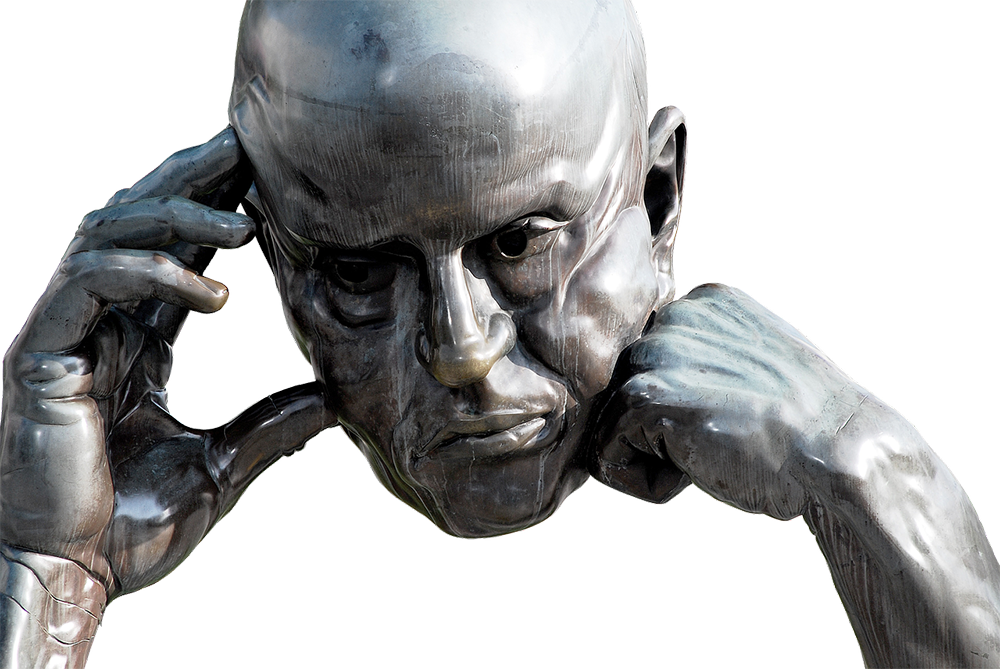
Abb.: Die Philosophie entdeckt den Roboter