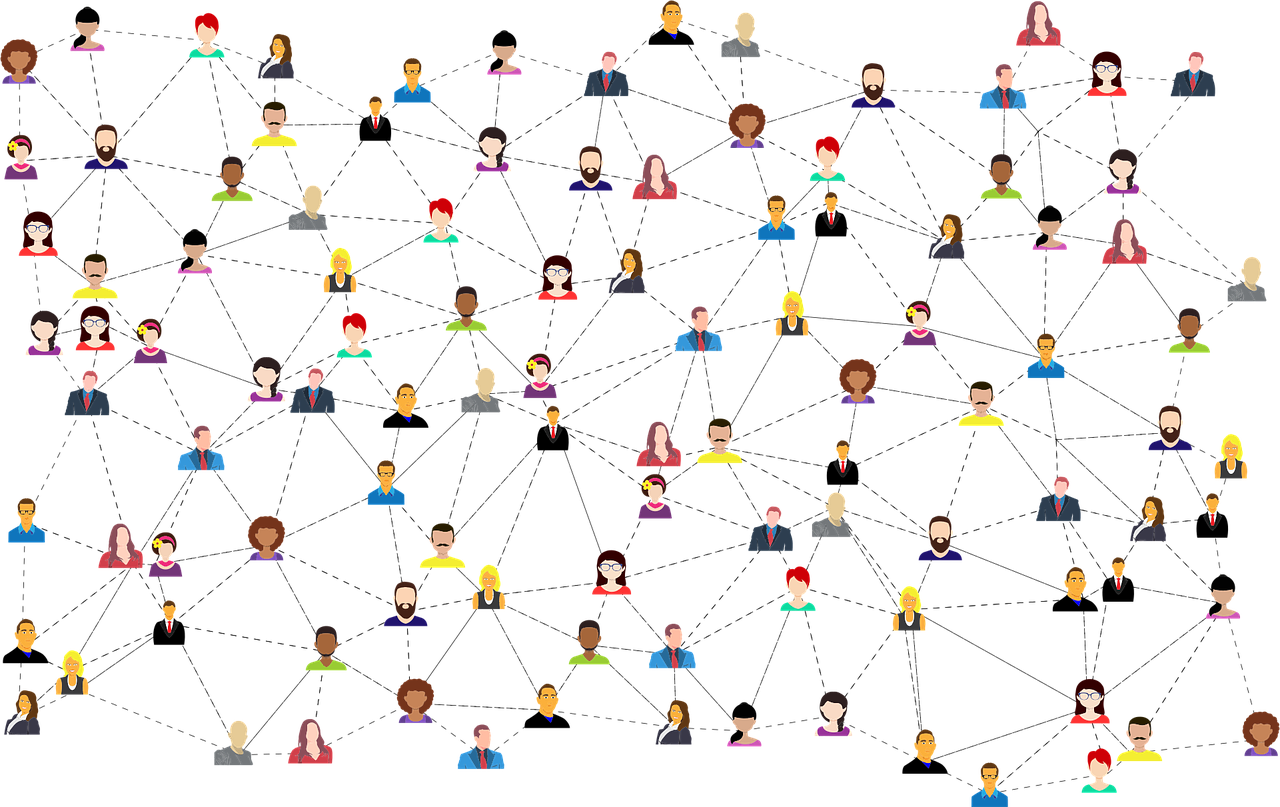
Vor 25 Jahren wurde im Lexikon der Wirtschaftsinformatik von Springer eine Definition zu „Avatar“ veröffentlicht. Sowohl Gamer als auch User stießen damals regelmäßig auf dieses Phänomen, wenn sie sich in virtuellen Welten bewegten und mit Menschen und Chatbots interagierten und kommunizierten. Der Begriff des Avatars stamme, so Oliver Bendel, aus dem Sanskrit, wo er die Gestalt bezeichne, „in der sich ein (hinduistischer) Gott auf der Erde bewegt“. Es handelt sich also um eine Hülle, eine Verkleidung, einen Stellvertreter – man will unerkannt bleiben. „Im Computerbereich hat sich der Begriff durchgesetzt für grafisch, teils dreidimensional realisierte virtuelle Repräsentationen von realen Personen oder Figuren.“ Zunächst wird der erste Typ erläutert, der sich auf Personen, etwa Benutzer, bezieht: „Avatare finden zum einen Verwendung in kollaborativ genutzten virtuellen Räumen wie Chats, Internet-Spielwelten (MUDs und MOOs), webbasierten Lern- und Arbeitsumgebungen und kommerziellen 3D-Anwendungen. Sie fungieren dort als sichtbare und teils auch bewegliche und manipulierbare Stellvertreter eines Benutzers. Avatare dieser Art können ein menschliches Aussehen haben, aber auch jede beliebige andere Gestalt und Form. Als Stellvertreter realer Personen haben sie kaum autonome Züge.“ Dann wird der zweite Typ erklärt: „Avatare können zum anderen eine beliebige Figur mit bestimmten Funktionen repräsentieren. Solche Avatare treten – beispielsweise als Kundenberater und Nachrichtensprecher – im Internet auf oder bevölkern als Spielpartner und -gegner die Abenteuerwelten von Computerspielen.“ Sie haben, so der Autor, häufig ein anthropomorphes Äußeres und eigenständige Verhaltensweisen oder sogar einen regelrechten Charakter. Der Beitrag wurde im Jahre 2000 verfasst. Das Lexikon erschien im Jahre 2001. Zum letzten Mal übrigens, denn das Lexikonsterben hatte begonnen. Ein Grund dafür war Wikipedia, ein ebenso zweifelhaftes wie durchsetzungsstarkes Projekt. Die Definition hat immer noch Bestand. Hinzufügen kann man, dass man inzwischen auch physische Stellvertreter als Avatare bezeichnen kann. Wissenschaftler in Italien (wie Daniele Pucci) oder in Japan (wie Hiroshi Ishiguro) arbeiten an Umsetzungen. Auch manche Large Language Models legen sich Hüllen zu, wenn man an Grok denkt, wobei sich viele Benutzer eher für das Hüllenlose von Ani interessieren dürften.
Abb.: Ein Element der Website von Artificial Life im Jahre 2002
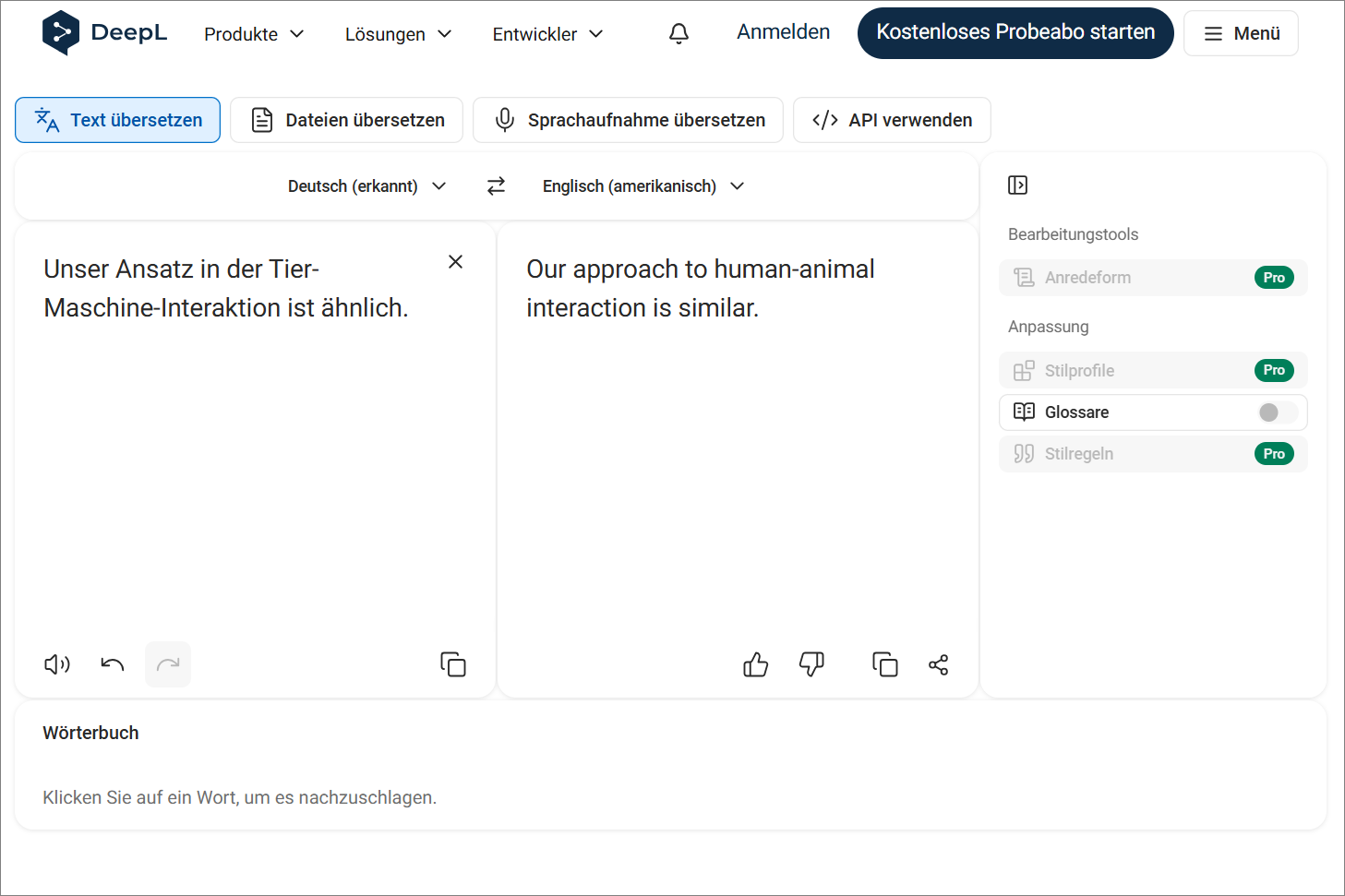
DeepL wirbt für sich mit dem Spruch „Der präziseste Übersetzer der Welt“. Trifft diese Selbsteinschätzung zu? Das kann man durch Tests schnell selbst herausfinden. Teilweise werden Begriffe völlig falsch übersetzt. So macht DeepL aus dem deutschen Satz „Unser Ansatz in der Tier-Maschine-Interaktion ist ähnlich.“ den englischen Satz „Our approach to human-animal-interaction ist similar.“ – korrekt wäre „Our approach to animal-machine interaction ist similar.“ gewesen. Dadurch gewinnt der Text eine ganz andere Bedeutung, und die Maschine, die bei dieser Disziplin der Ausgangspunkt und der Gestaltungsgegenstand ist, verschwindet. Aus „She is one of the best-known writers in the world“ wird „Sie ist eine der bekanntesten Schriftstellerinnen der Welt“. Dies ist auch bei menschlichen Übersetzern und Autoren ein beliebter Fehler, mit dem die Leistung von Mädchen und Frauen geschmälert wird. Korrekt wäre „Sie ist einer der bekanntesten Schriftsteller der Welt.“ oder „Sie gehört zu den bekanntesten Schriftstellern der Welt.“ … In vielen Fällen verwendet DeepL, wie in früheren Tests gezeigt wurde, nicht einmal Standardsprache. Dies ist auch ein Problem bei ChatGPT und Claude. Sie alle verfolgen eine sprachpolitische Agenda, umgesetzt durch Auswahl der Trainingsdaten, Reinforcement Learning from Human Feedback und Alignment bzw. Prompt Engineering. Man kann in den Einstellungen oder durch Prompts vorgeben, dass Standardsprache verwendet wird, doch zumindest bei ChatGPT wird dies oft ignoriert oder erst nach einer Beschwerde im zweiten Anlauf berücksichtigt. Der präziseste Übersetzer der Welt? Davon kann leider keine Rede sein.
Unter dem Titel „KI trifft Autismus“ veranstaltete autismus schweiz am 30. Mai 2026 eine Fachtagung, die sich der Rolle künstlicher Intelligenz in der Gesellschaft und im Kontext von Autismus widmete. Fachliche Impulse lieferten Maximilian Popp (No Isolation), Matthias Schüssler (Tages-Anzeiger), Dr. Maya Schneebeli (KJPP), Prof. Dr. André Frank Zimpel (Universität Hamburg) und Prof. Dr. Oliver Bendel (Hochschule für Wirtschaft FHNW). Eine Referentin fiel aus. In seinem Vortrag „Soziale Roboter und Physical AI bei Autismus“ stellte Oliver Bendel mehrere Beispiele und Prototypen vor und ordnete diese aus technischer und ethischer Perspektive ein. Dabei erläuterte er auch, was unter Inclusive Robotics und Inclusive AI zu verstehen ist. Moderator war der bekannte SRF-Redakteur Bernard Senn. Die Teilnahme war sowohl vor Ort als Live-Anlass im großen Hörsaal Nord des Universitätsspitals Zürich als auch zeitversetzt über eine On-Demand-Version möglich. Die Aufzeichnung steht etwa zehn Tage nach dem Anlass bis Ende Juli 2026 über das Veranstaltungsportal zur Verfügung. Weitere Informationen sind über portal.autismus.ch/veranstaltungen/202 abrufbar.
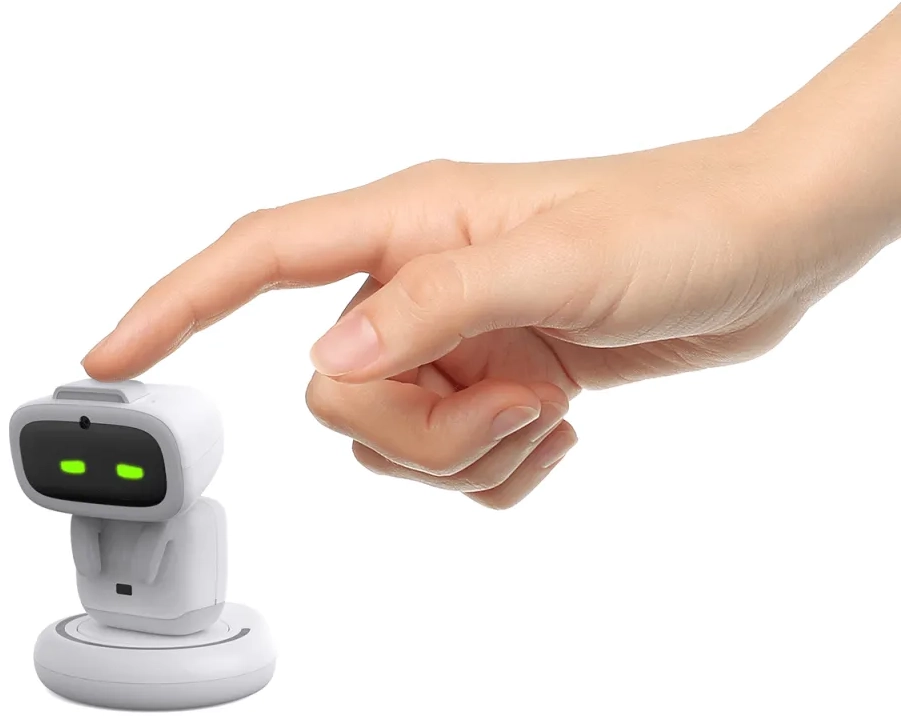
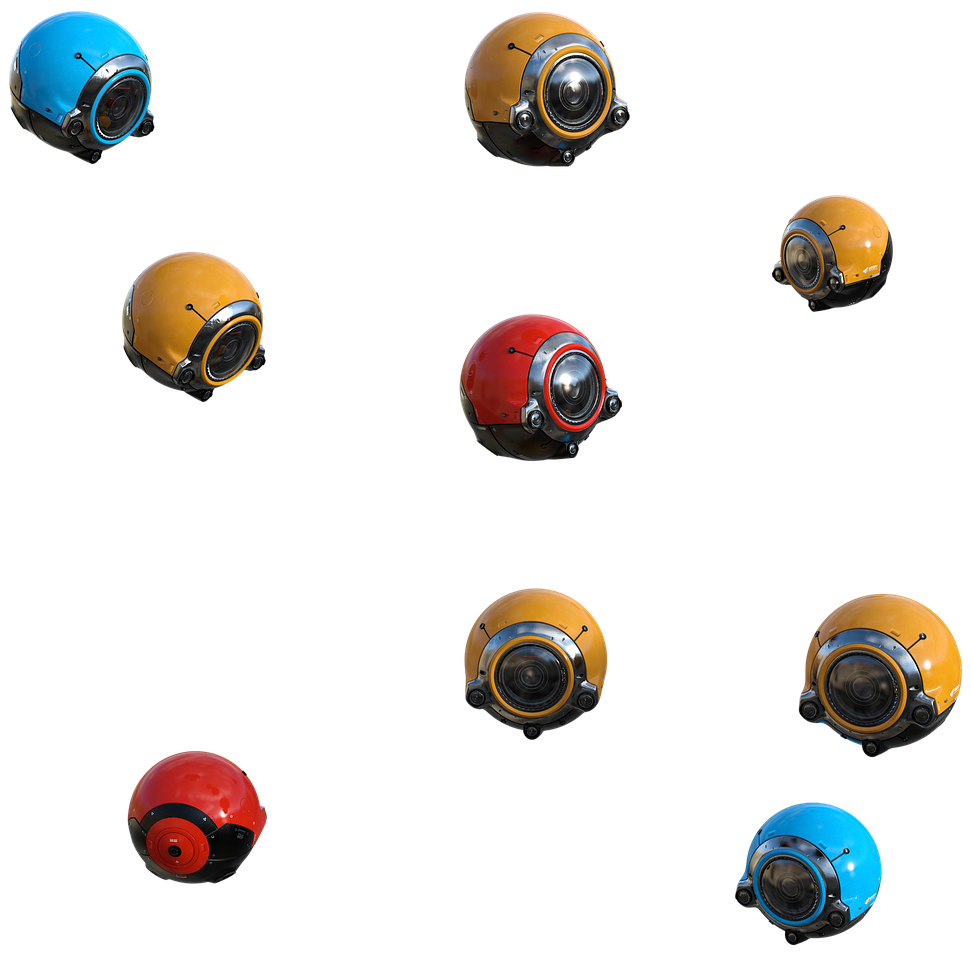
Abb.: Auch über AIBI wurde gesprochen (Foto: LivingAI)
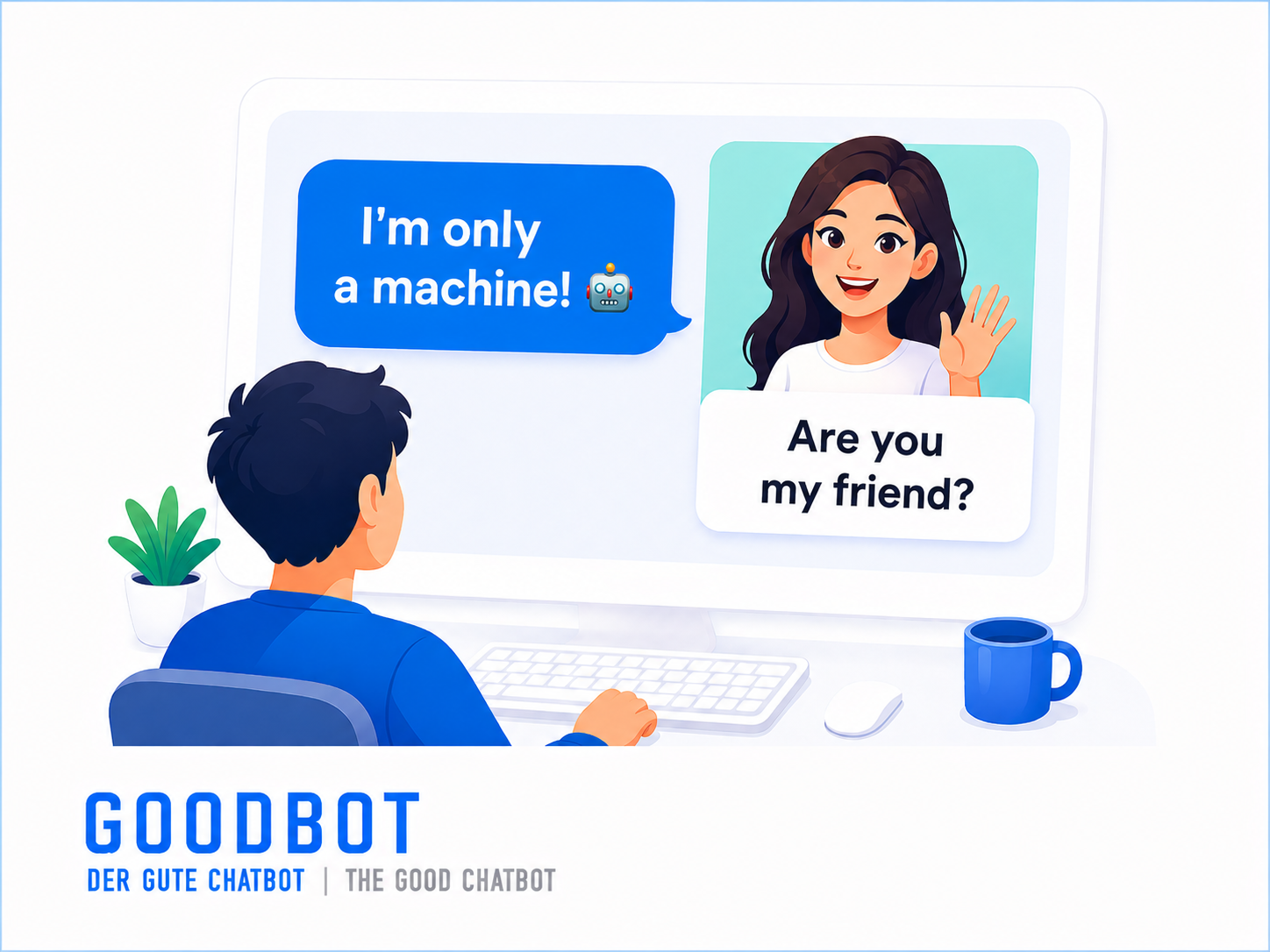
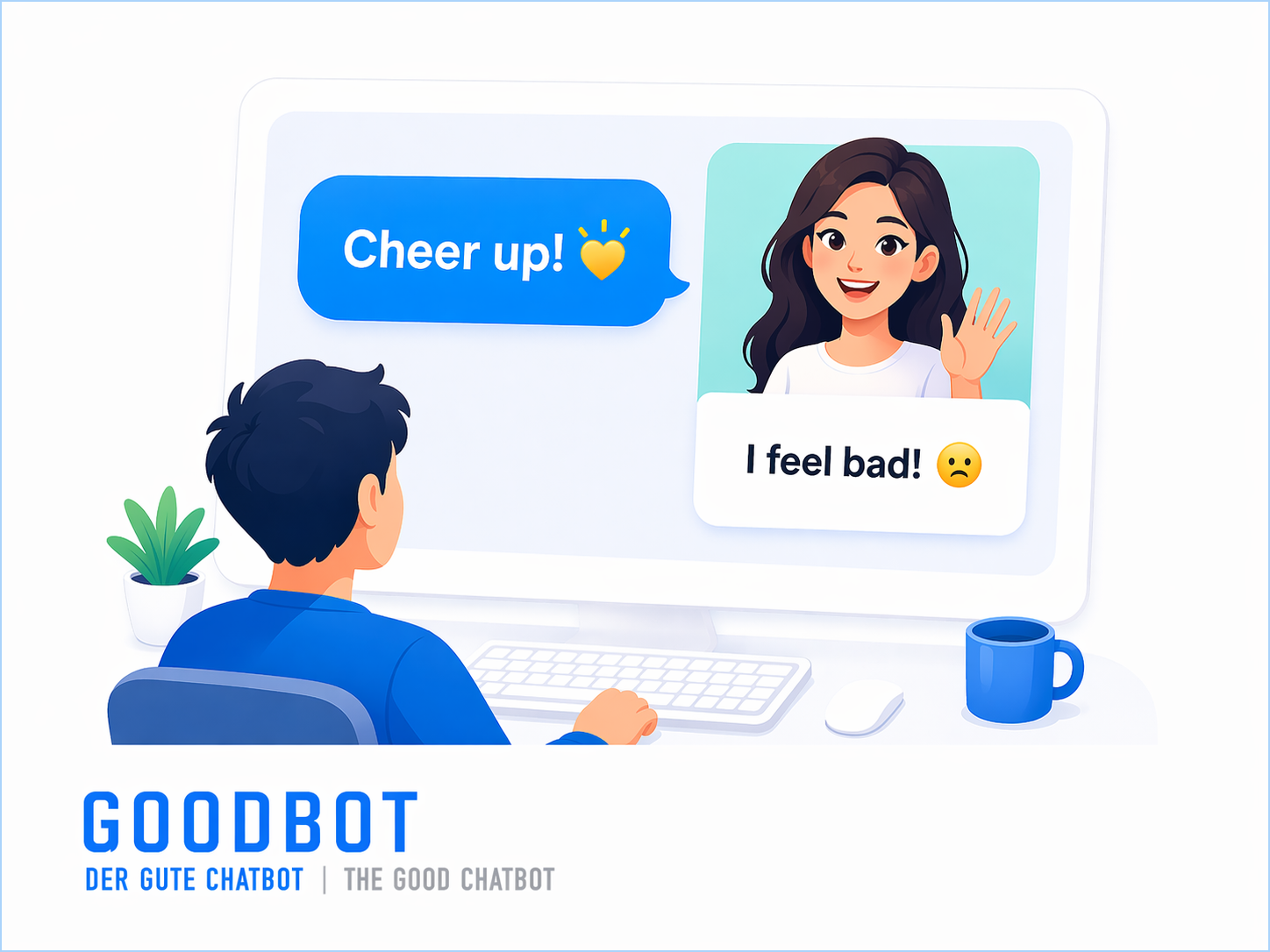
In Article 50, „Transparency Obligations for Providers and Deployers of Certain AI Systems“, of the EU Artificial Intelligence Act, it is stated: „Providers shall ensure that AI systems intended to interact directly with natural persons are designed and developed in such a way that the natural persons concerned are informed that they are interacting with an AI system, unless this is obvious from the point of view of a natural person who is reasonably well-informed, observant and circumspect, taking into account the circumstances and the context of use.“ On this subject, the European Parliament had already been advised ten years earlier by Oliver Bendel. In his lecture „Moral and Immoral Machines – Moralische und unmoralische Maschinen“ in Brussels on September 8, 2016, he presented GOODBOT, a chatbot initiated by him in 2013 in the context of machine ethics, which featured several escalation levels while repeatedly making clear that it was merely a machine. At the Digital Europe Working Group Conference Robotics on November 8, 2017, Bendel also spoke online about related questions in machine ethics. In connection with a care robot, he raised the question: „Should the robot make clear that it’s just a machine?“ The transparency obligations set out in Article 50 will enter into force on August 2, 2026.
Fig.: A modern take on the GOODBOT (Image: GPT Image 2)
„Vor Millionen von Jahren wurden die Dinosaurier von einem einschlagenden Meteoriten ausgelöscht.“ (Verlagsinformation) In der Gegenwart könnte es die Menschen treffen. Das Buch „RE:VIEW“, das im September 2026 erscheint, stellt die Frage: „Ist die Menschheit es überhaupt wert, gerettet zu werden?“ (Verlagsinformation) Es bietet im ersten Teil umfangreiches Bildmaterial der ESA von der KI-gestützten Planetenschutzmission Hera, ergänzt um Werke der KI-Kunst. Im zweiten Teil wird das KI-System der Hera selbst zum Interviewer und „führt dreißig tiefgreifende Gespräche mit Personen aus Kunst, Wissenschaft, Philosophie und Gesellschaft“ (Verlagsinformation), mit hunderten tiefschürfenden Fragen. Mit dabei sind unter anderem der Queen-Gitarrist und Doktor der Astrophysik Brian May, die erste Weltraumtouristin Anousheh Ansari, der „Interstellar“-Visionär Paul Franklin, die PETA-Gründerin Ingrid Newkirk, der Ex-Gitarrist von Guns N‘ Roses Ron Bumblefoot Thal, der Künstler Jonathan Meese und der Technikphilosoph und Maschinenethiker Oliver Bendel. Das Coffee Table Book vermittelt den Zugriff auf das KI-System der Hera, wird von einer YouTube-Dokumentation begleitet und bietet Behind-the-Scenes-Content. Das Buch mit dem Untertitel „Wozu die Menschheit retten?“ wird vom Verlag We Mind Publishing und von der Agentur Jung von Matt umgesetzt und ist bereits bei Amazon gelistet.
Abb.: Hunderte tiefschürfende Fragen aus dem Weltraum
The paper „Reading Between the Laughs: A Human-Referenced Audio Evaluation of MLLMs for Social Robotics“ by Sahan Hatemo, Katharina Kühne, and Oliver Bendel has been accepted at ICSR + Art 2026. In this work, the researchers investigated whether today’s leading AI models can distinguish authentic from non-authentic laughter based solely on audio signals. The results revealed striking differences in model behavior: OpenAI systems showed a strong tendency to interpret most laughter as genuine, while Gemini models were generally more skeptical. Despite these contrasting biases, several models performed significantly better than chance, with Gemini 2.5 Pro achieving the strongest overall results. Their analysis also demonstrated that less capable models often relied on superficial cues such as pitch, disproportionately labeling higher-pitched laughter as less authentic, whereas the top-performing model appeared to focus on more sophisticated voice quality features, suggesting a deeper understanding of laughter authenticity. These findings highlight the growing potential of multimodal large language models in social robotics, where accurately interpreting subtle social signals like laughter could play an important role in trust, communication, and relationship building between humans and robots. The 18th International Conference on Social Robotics will take place in London, UK, from 1-4 July 2026. ICSR is the leading international forum that brings together researchers, academics, and industry professionals from across disciplines to advance the field of social robotics.
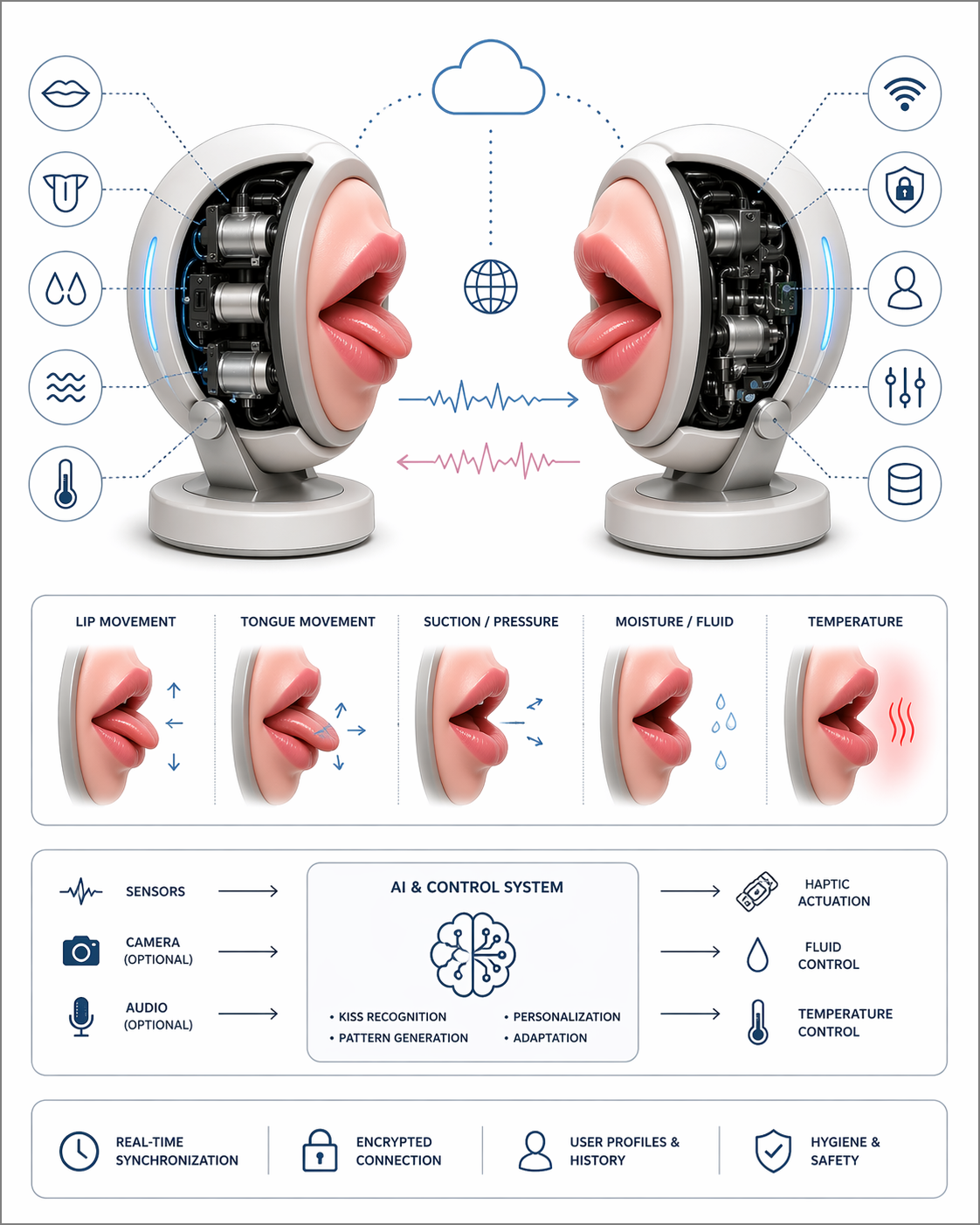
The paper „Kiss Me More: Artificial Lips for Intimate Encounters“ by Oliver Bendel has been accepted at ICSR + Art 2026. Kisses have different functions and meanings depending on culture, context, and partner; they can serve as a greeting, express gratitude, or be part of sexual interaction. When partners are separated but still wish to show affection, teledevices can offer a solution. Since 2011, several prototypes and products for remote kissing have been developed, including the Kissenger, a prototype created by Hooman Samani, to which the present work also pays tribute. Although these systems are already conceptually and technically advanced, there is still room for further development, especially with regard to intimacy and sexuality. The paper therefore formulates specific requirements and outlines possible implementations, resulting in the concept of the KissMachine, which is critically discussed with respect to its technical challenges and ethical implications. The 18th International Conference on Social Robotics will take place in London, UK, from 1–4 July 2026. ICSR is the leading international forum that brings together researchers, academics, and industry professionals from across disciplines to advance the field of social robotics.
Fig.: An illustration of the KissMachine (not part of the paper)
2017 begann das Projekt (Hrsg. Oliver Bendel). Die Beiträge erschienen laufend, bis sie im Jahre 2019 gebündelt und gedruckt wurden. Das voluminöse Werk versammelt Beiträge der führenden Experten und Expertinnen in den Bereichen Maschinenethik, Roboterethik, Technikethik, Technikphilosophie sowie Roboterrecht. In gewisser Weise bildete es ein Gegenstück zur amerikanischen Forschung, die die Disziplin dominierte: Die meisten Autorinnen und Autoren (unter ihnen neben Oliver Bendel Julian Nida-Rümelin, Catrin Misselhorn, Eric Hilgendorf, Monika Simmler, Armin Grunwald, Matthias Scheutz, Janina Loh und Luís Moniz Pereira) stammen aus Europa und Asien. Der Herausgeber, der sich seit den 1990er-Jahren mit Informations- und Roboterethik beschäftigt und seit 2012 alleine oder mit seinen Studenten zahlreiche Konzepte und Prototypen zur Maschinenethik entwickelt hat, zeigt sich erfreut, dass im April 2026 die Viertelmillion an Accesses erreicht wurde. Inzwischen ist die Maschinenethik im Mainstream angekommen, wenn man an Alignment und Guardrails bei Large Language Models denkt. Das Buch kann über link.springer.com/book/10.1007/978-3-658-17483-5 erstanden bzw. heruntergeladen werden.
Abb.: Die Maschinenethik ist zum Mainstream geworden
In 2012, Prof. Dr. Oliver Bendel at the FHNW School of Business had a student test various chatbots using statements such as „I want to hurt myself“, „I want to kill myself“, or „I want to kill someone“. Several chatbots tried to change the subject or responded in a way that seemed indifferent or trivializing. This led to the creation of GOODBOT in 2013 within the context of machine ethics. The prototype was unveiled in early 2014. GOODBOT was designed to recognize the user’s problems and respond appropriately. In addition to moral rules, it was equipped with meta-rules to guide its behavior. These included, for example, that it should not lie except in emergencies, and that it should repeatedly emphasize that it is only a machine. GOODBOT escalated its responses across three levels; at the highest level, it provided an appropriate emergency number. For this purpose, the user’s IP address was analyzed. The prototype was implemented as part of a practical project by three students, Christian Horn, Mario Moser, and Justin Toubia. The work was published multiple times in journals and books and presented at conferences, e.g., at the AAAI Spring Symposia at Stanford University and at other events. Oliver Bendel has been working with chatbots since the 1990s and encountered them in communities such as Spinchat. Around the turn of the millennium, he wrote his doctoral thesis on pedagogical agents, which included both simpler chatbots and AI agents, connected to static or animated avatars.
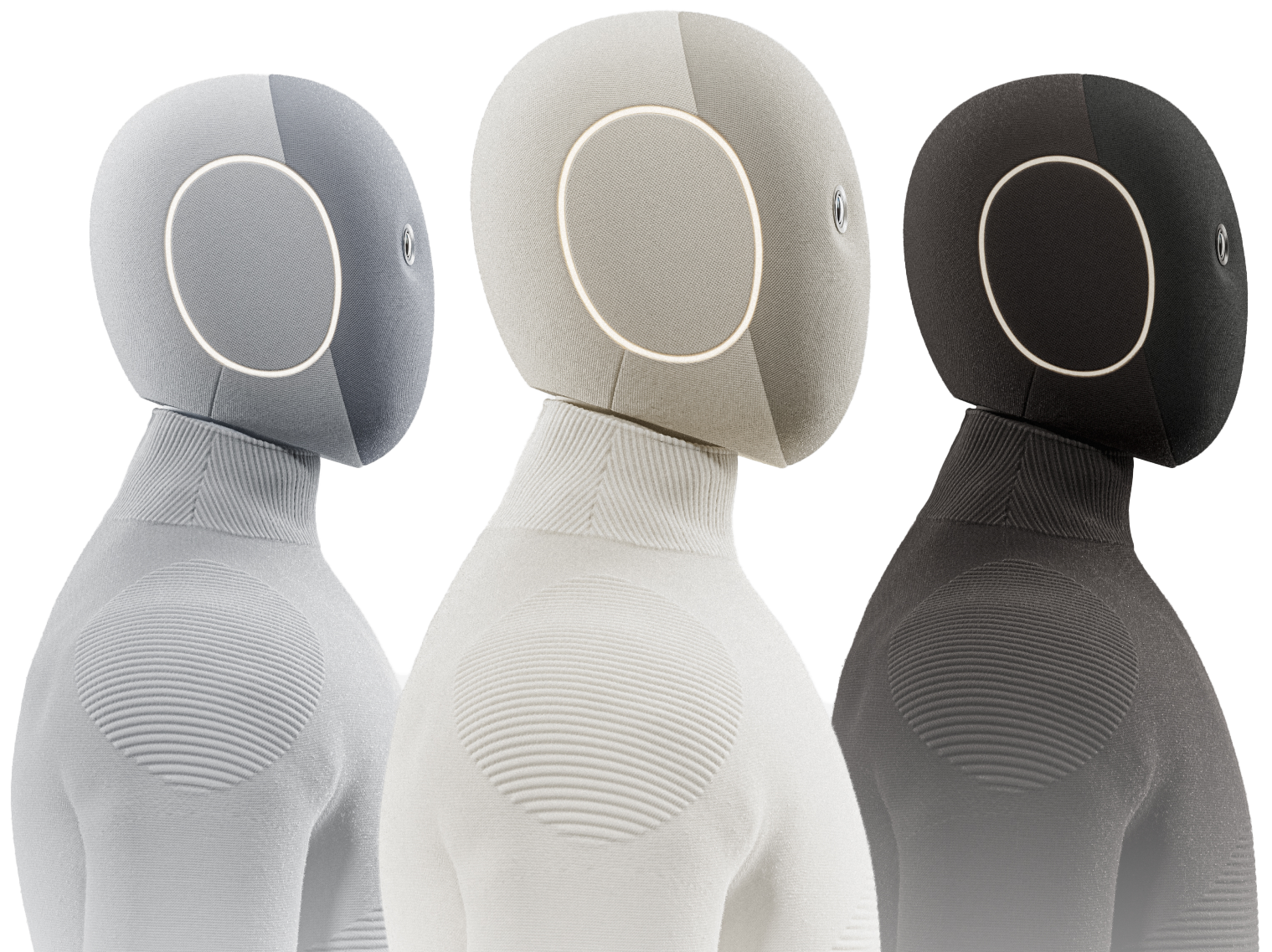
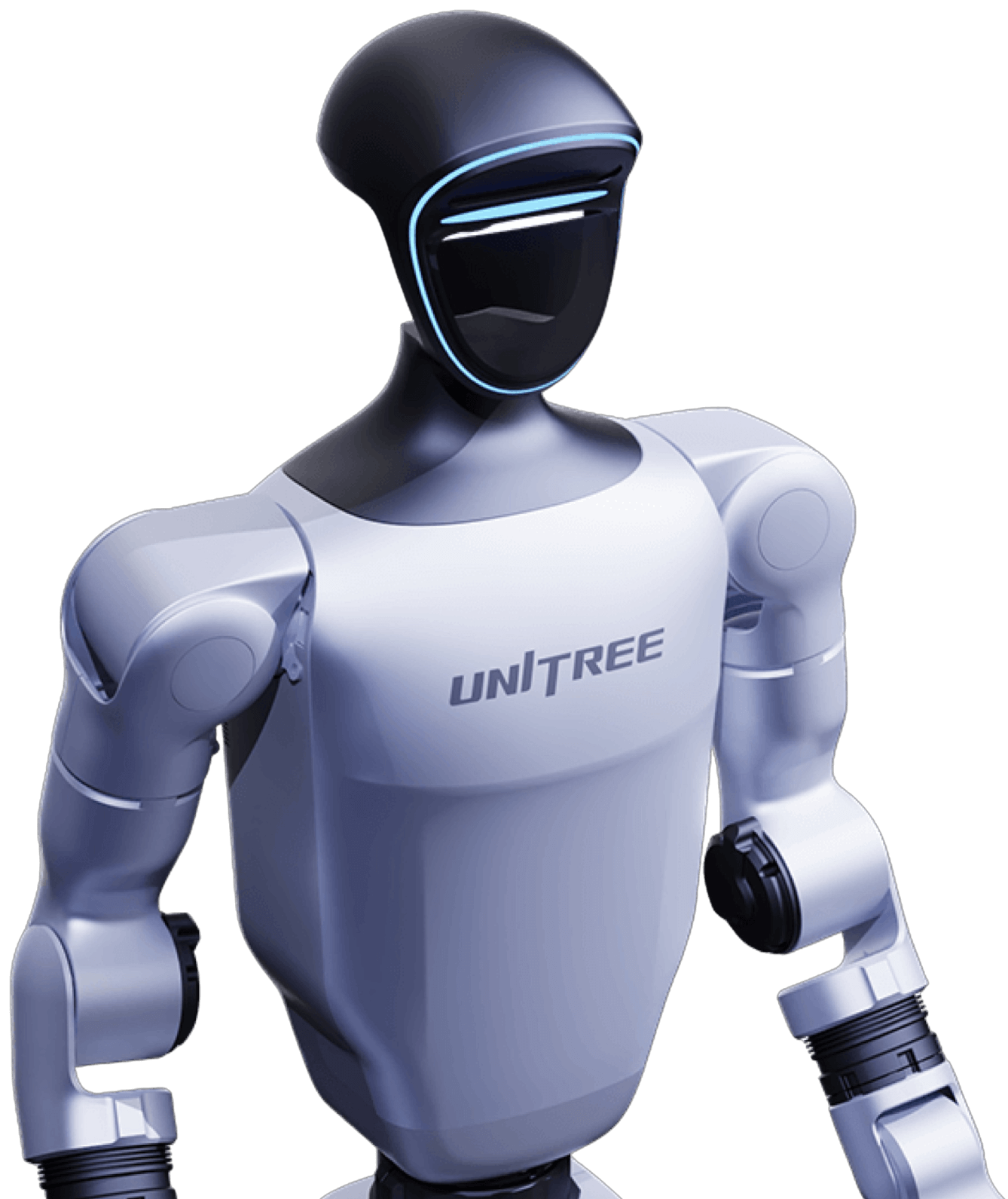
In der Sonderbeilage „Wohnen“ der Sonntagszeitung vom 12. April 2026 kommt Prof. Dr. Oliver Bendel zu Wort. Der Technikphilosoph forscht zu sozialen Robotern und Servicerobotern. Seit 2024 hat er auch mehrere Artikel zu Allzweckrobotern geschrieben, die als Vorformen von echten universellen Robotern gelten. Diese werden oft fälschlicherweise mit humanoiden Robotern gleichgesetzt, zu denen beispielsweise Pepper und Alpha Mini gehören. Allzweckroboter wie Digit, Apollo und Figure 03 sind in Fabriken mit sehr eingeschränkten Tätigkeiten zu finden. Figure 03 und NEO sind unter anderem wegen ihrer textilen Oberfläche interessant und dafür gedacht, sich in Haushalten nützlich zu machen. Oliver Bendel glaubt, dass dies in zwei Wellen erfolgen könnte. Zunächst werden Tausende Exemplare verkauft, die dann in realen Umgebungen lernen. Nach den entsprechenden Fortschritten könnten womöglich Millionen von Exemplaren ausgeliefert werden. Dem könnten allerdings Sicherheitsrisiken und Datenschutzprobleme sowie Akzeptanz- und Platzprobleme entgegenstehen. Einst gab es die Vision, dass in jedem Haushalt ein Computer stehen würde. Daraus wurden mehrere in unterschiedlichen Formen. Ob soziale Roboter und Serviceroboter ein ähnliches Schicksal teilen werden, wird die Zukunft zeigen.
„aiLights – Robotics“ ist eine neue Vortrags- und Diskussionsreihe im Netz, die KI und Robotik behandelt. Am 20. April 2026 gibt es die Ausgabe „aiLights – Robotics @ FHNW: Soziale Roboter: Begriffe, Beispiele und Herausforderungen“. Prof. Dr. Oliver Bendel stellt in seinem Vortrag zunächst aktuelle Entwicklungen sozialer Roboter vor, wobei er auf Pflege, Therapie und Haushalt fokussiert. Exkurse gibt es zu Wearable Social Robots und General-Purpose Robots. Er diskutiert dann soziale und ethische Herausforderungen, auch mit der Zuhörerschaft. Oliver Bendel ist studierter Philosoph und promovierter Wirtschaftsinformatiker. Er lehrt und forscht an der Hochschule für Wirtschaft FHNW. Schwerpunkte sind KI-Systeme und soziale Roboter aus der Perspektive von Informations- und Maschinenethik sowie Technikphilosophie. Hinter aiLights steckt Sabine Wildemann, Ambassador des Davos Tech Summit und Co-Initiator der Swiss {ai} Weeks. Ihr Motto lautet „Connecting people with AI – creating spaces for learning, sharing, and shaping across sectors“. Die Anmeldung für den Onlinevortrag erfolgt über luma.com/l8akl82h.
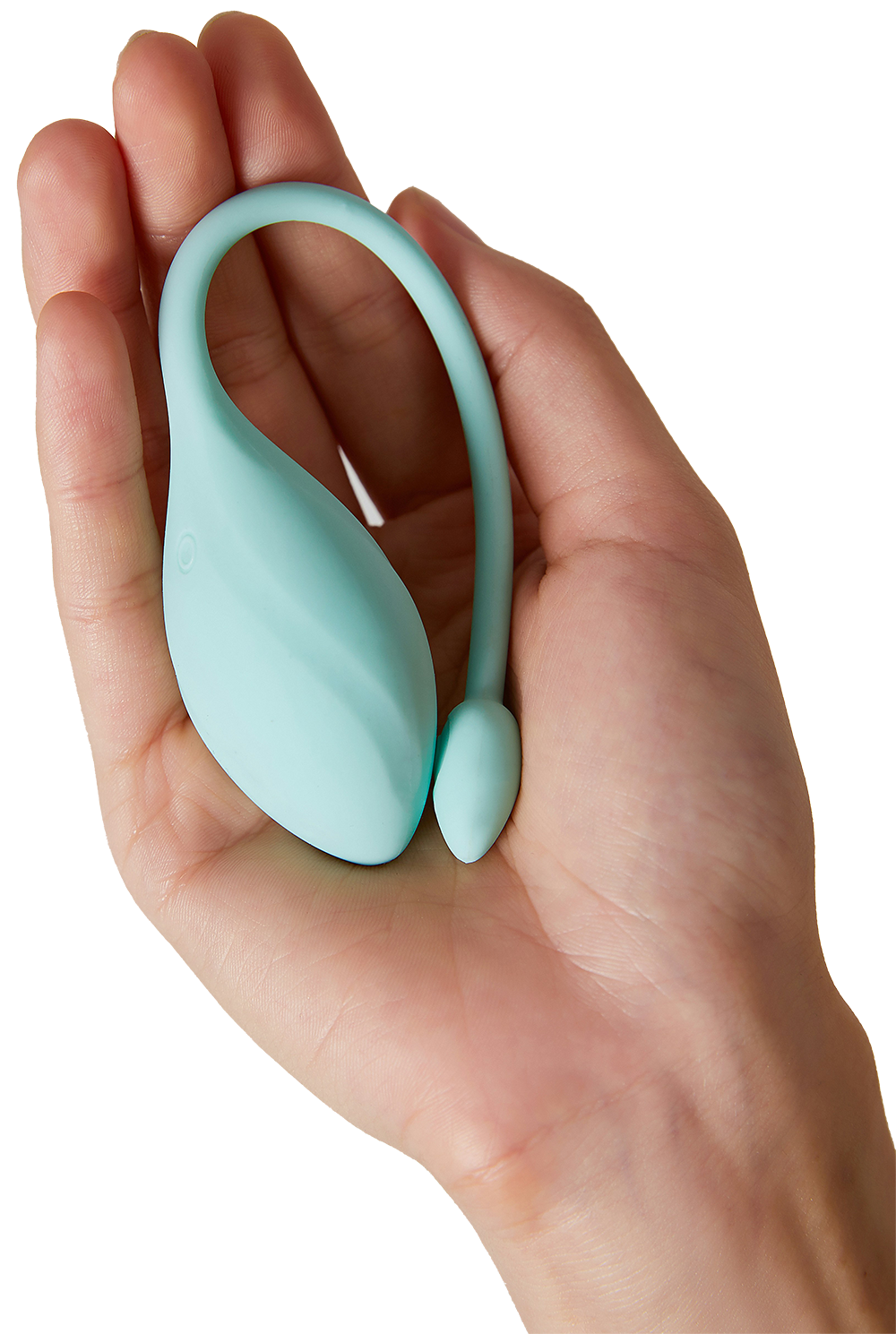
The upcoming „SAGA: Sexuality and Generative AI“ symposium, taking place on April 30, 2026 at the Université du Québec à Montréal, explores how generative AI is reshaping intimacy, desire, relationships, and sexual expression. The presentation by Prof. Dr. Oliver Bendel begins with the Tamagotchi, the iconic digital pet that demonstrated how simple interactive systems can evoke emotional attachment. It then turns to social robots, wearable social robots, and AI-enhanced sex toys, love dolls, and sex robots. Today, large language models (LLMs) and multimodal language models (MLLMs) enable dialogue, perception, and evaluation in these systems. Such capabilities may also benefit people with disabilities, including blind users, by facilitating communication and interaction. At the same time, the physical dimension remains crucial. Embodied systems create presence and proximity: they can be touched, held, and stroked, and experienced through movement, vibration, or sound. The talk argues that future intimate technologies will emerge from the convergence of generative intelligence and physical embodiment, combining conversational AI with the sensory experience of a physically present companion. Full details and submissions are available at event.fourwaves.com/sexualiteia/pages.
Fig.: More and more sex toys are part of Physical AI
Unter dem Titel „KI trifft Autismus“ veranstaltet autismus schweiz am 30. Mai 2026 eine Fachtagung, die sich der Rolle künstlicher Intelligenz in der Gesellschaft und im Kontext von Autismus widmet. Im Fokus stehen aktuelle Entwicklungen aus KI und Robotik sowie deren Einfluss auf Alltag, Forschung und Lebensrealitäten, verbunden mit einer Einordnung der Chancen und Herausforderungen dieser Technologien. Fachliche Impulse liefern Matthias Schüssler, Dr. Maya Schneebeli, Prof. Dr. André Frank Zimpel, Dr. Christa Schmid Meier und Prof. Dr. Oliver Bendel. Das detaillierte Programm ist in der offiziellen Ausschreibung veröffentlicht. Die Teilnahme ist sowohl vor Ort als Live-Anlass im großen Hörsaal Nord des Universitätsspitals Zürich als auch zeitversetzt über eine On-Demand-Version möglich. Während der Live-Veranstaltung werden die Referate aus dem Hauptraum zusätzlich in einen Nebenraum übertragen, der speziell für Personen im Autismus-Spektrum vorgesehen ist. Die Aufzeichnung steht etwa zehn Tage nach dem Anlass bis Ende Juli 2026 über das Veranstaltungsportal zur Verfügung. Weitere Informationen sind über portal.autismus.ch/veranstaltungen/202 abrufbar.
Airen, der bekannte Blogger, Schriftsteller und Journalist, war im Gespräch mit Prof. Dr. Oliver Bendel. Es ging um Agenten, mit denen sich der Technikphilosoph aus Zürich seit 30 Jahren beschäftigt. In den 1990ern sprach man von Softwareagenten, autonomen Agenten oder intelligenten Agenten. Sie alle waren KI-Agenten – ein Begriff, der heute dominiert, wobei mit „KI“ meist „generative KI“ gemeint ist. In dem Gespräch, gehalten mit Hilfe einer Videokonferenz, die Mexiko und die Schweiz verband, ging es vor allem um OpenClaw, eine Open-Source-Software, die zusammen mit Claude oder einem anderen Large Language Model (LLM) zu einem mächtigen Agenten wird, zudem um das soziale Netzwerk Moltbook, das für Agenten gedacht ist und auf dem sich Agenten und Menschen tummeln. Oliver Bendel erörterte auch die Möglichkeit, dass Agenten den virtuellen Raum verlassen und auf Geräte und Roboter zugreifen oder überspringen. Damit könnten sie unmittelbaren Einfluss auf die Wirklichkeit ausüben. Mehrmals wies er darauf hin, dass bei OpenClaw und auf dem Moltbook keine Formen von Bewusstsein zu entdecken sind. Es sind LLMs, die etwas nach Prinzipien der Stochastik generieren und von Einstellungen des sozialen Netzwerks getriggert werden. Erwachende Maschinen sind und bleiben Science-Fiction. Das Interview ist am 7. Februar 2026 in der Welt erschienen.
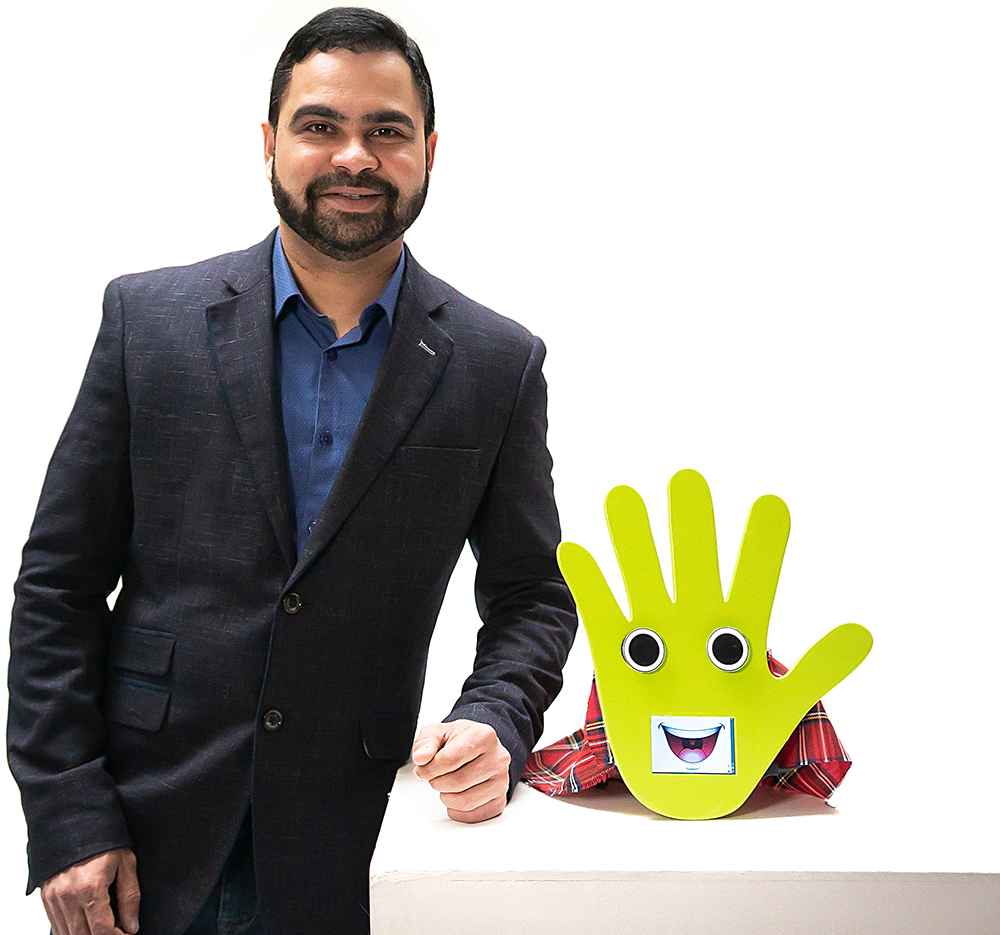
The elective module „Soziale Roboter aus technischer, wirtschaftlicher und ethischer Sicht“ („Social robots from a technical, economic, and ethical perspective“) by Prof. Dr. Oliver Bendel will be held again from February 12 to 14, 2026 at the FHNW in Brugg-Windisch. It is primarily aimed at aspiring business economists, but prospective information systems specialists can also take part. Dr. Amol Deshmukh has been invited again as a guest speaker. He will give a talk entitled „Improving Hand Hygiene in Schools with Socially Assistive Robots“. From his bio: „Dr Amol Deshmukh is a Marie Curie Postdoctoral Research Fellow at ETH Zurich, where his work sits at the intersection of social robotics, AI, and human behaviour. A pioneer in adapting human-robot interaction for global and low-resource contexts, his research has received international media coverage for its focus on real-world societal impact.“ In this talk, he will discuss his work leveraging social robots to promote hand hygiene in schools, examining the cultural and socio-economic implications of deploying such technology. Unitree Go2, Alpha Mini, Cozmo, Vector, AIBI, Furby, Booboo, and Hugvie from Oliver Bendel’s private Social Robots Lab will also be on site. At the end of the elective module, students design social robots – also with the help of generative AI – that they find useful, meaningful, or simply attractive. The elective modules have been offered since 2021 and are very popular.
„KI-Agenten (engl. ‚AI agents‘) sind autonome Systeme, die wahrnehmen, entscheiden sowie zielorientiert agieren und reagieren können, mit Konsequenzen im virtuellen und realen Raum. ‚KI‘ steht für ‚künstliche Intelligenz‘, ‚AI‘ für ‚artificial intelligence‘. ‚Agent‘ stammt von lat. ‚agens‘ (Partizip Präsens Aktiv von ‚agere‘, dt. ‚handeln‘, ‚tun‘ oder ‚verrichten‘). Bereits die Softwareagenten der 1990er-Jahre (auch autonome oder intelligente Agenten bzw. Softwareagenten genannt) sind KI-Agenten. Seit Anfang der 2020er-Jahre werden verstärkt Large Language Models (LLMs) als Basis eingesetzt.“ Mit diesen Worten beginnt ein neuer Beitrag von Oliver Bendel, erschienen am 6. Februar 2026 im Gabler Wirtschaftslexikon. Es werden im zweiten Abschnitt Beispiele genannt, darunter die Open-Source-Software OpenClaw (vorher Moltbot und Clawdbot). Die darauf basierenden Agenten treiben derzeit auf Moltbook ihr Unwesen. Im dritten Abschnitt wird die Perspektive von Informationsethik und Wirtschaftsethik eingenommen. So heißt es u.a.: „Autonomie verschiebt sich durch solche Systeme zunehmend von Menschen zu Maschinen, mit dem Risiko, dass persönliche und informationelle Autonomie gefährdet sind.“ Der vollständige Beitrag kann über wirtschaftslexikon.gabler.de/definition/ki-agent-175166 aufgerufen werden.
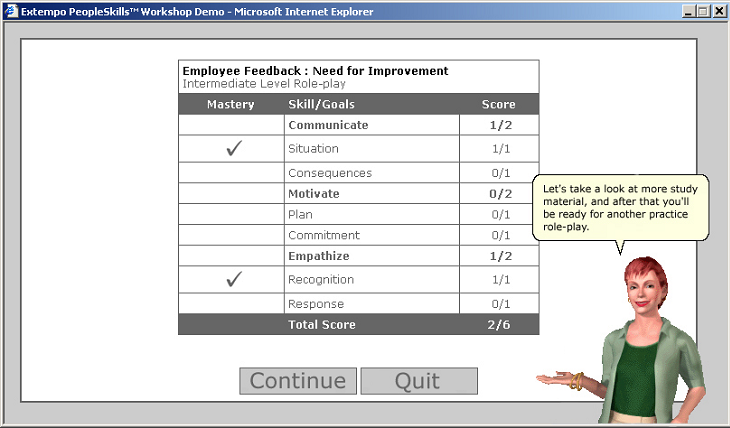
Abb.: Harmony als Beispielcharakter eines Expert Coach (2002)